



The timing of this year’s Jewish Community Relations Council (JCRC) Luncheon spoke volumes about the need for the JCRC’s mission.
The luncheon at the Denver Art Museum took place 11 days into Israel’s Operation Roaring Lion war with Iran and one day before the targeted truck attack on Temple Israel and its preschool filled with children in suburban Detroit.
As she welcomed the largest number of attendees ever at this annual JCRC event, JEWISHcolorado President and CEO Renée Rockford acknowledged the difficult moment that the Jewish community is enduring.
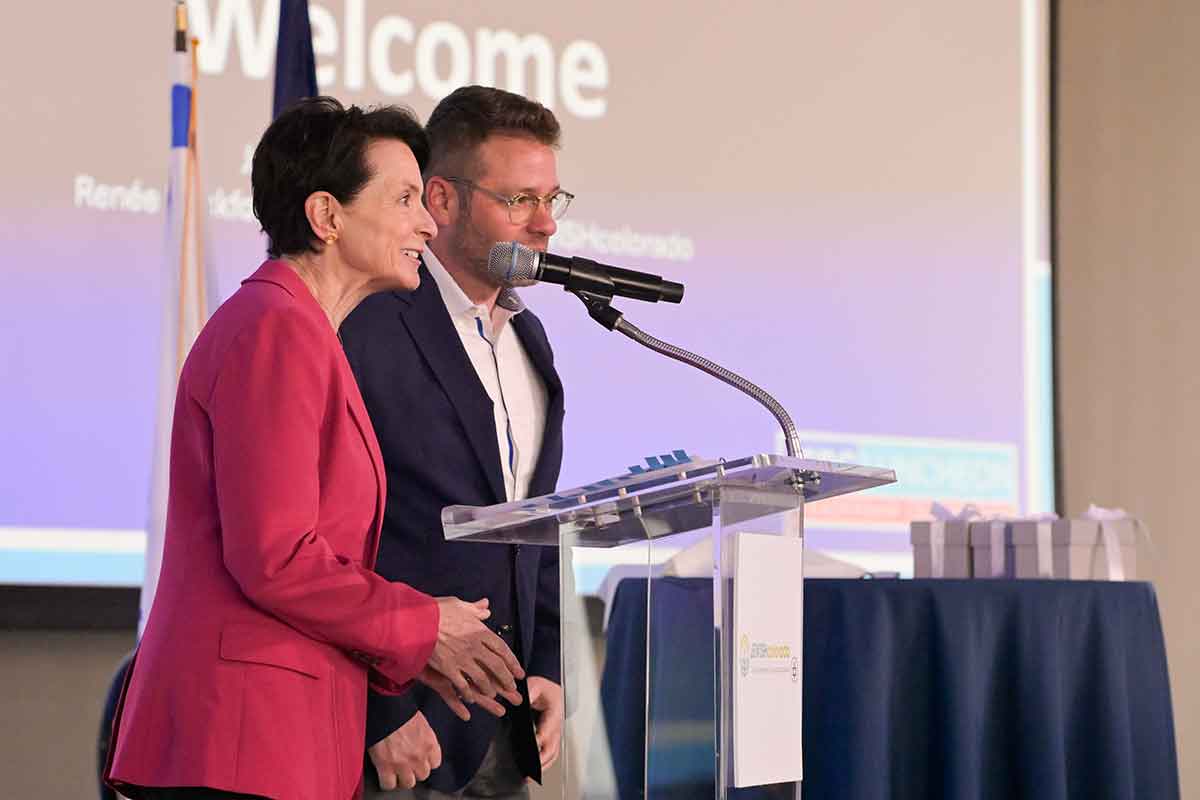
“As the conflict in the Middle East continues to unfold, Jewish communities everywhere are watching closely and holding the people of Israel, American troops in the region, and all those affected by the war in our hearts,” Rockford said. “We pray for the safety of those in harm’s way and for the day when this region can move toward greater stability and peace.”
“Moments like these also remind us of something enduring about the Jewish people: our resilience,” added Jules Kramer, Chair of the JCRC, as he welcomed representatives of the 45 member organizations that make up the JCRC. “It is in moments like this that the work of the JCRC matters most—ensuring that the Jewish community can participate safely and confidently in public life, building bridges across communities, and advocating for a Colorado where our community and our neighbors can thrive.”
Remarks from Brandon Rattiner
Brandon Rattiner, Senior Director of the JCRC, introduced a video focused on how the organization has evolved in the years since October 7th.
In his remarks, Rattiner addressed how Jewish identity is experienced locally, but Jewish challenges are experienced collectively.
“That’s why the JCRC is so focused on creating shared strategy inside the Jewish community and building relationships beyond it,” Rattiner said. “Advocacy is a team sport. In a community as diverse as ours, different groups will approach challenges from different angles. Some use honey and others vinegar. Some speak to liberals and others to conservatives. That’s a strength, not a betrayal.”
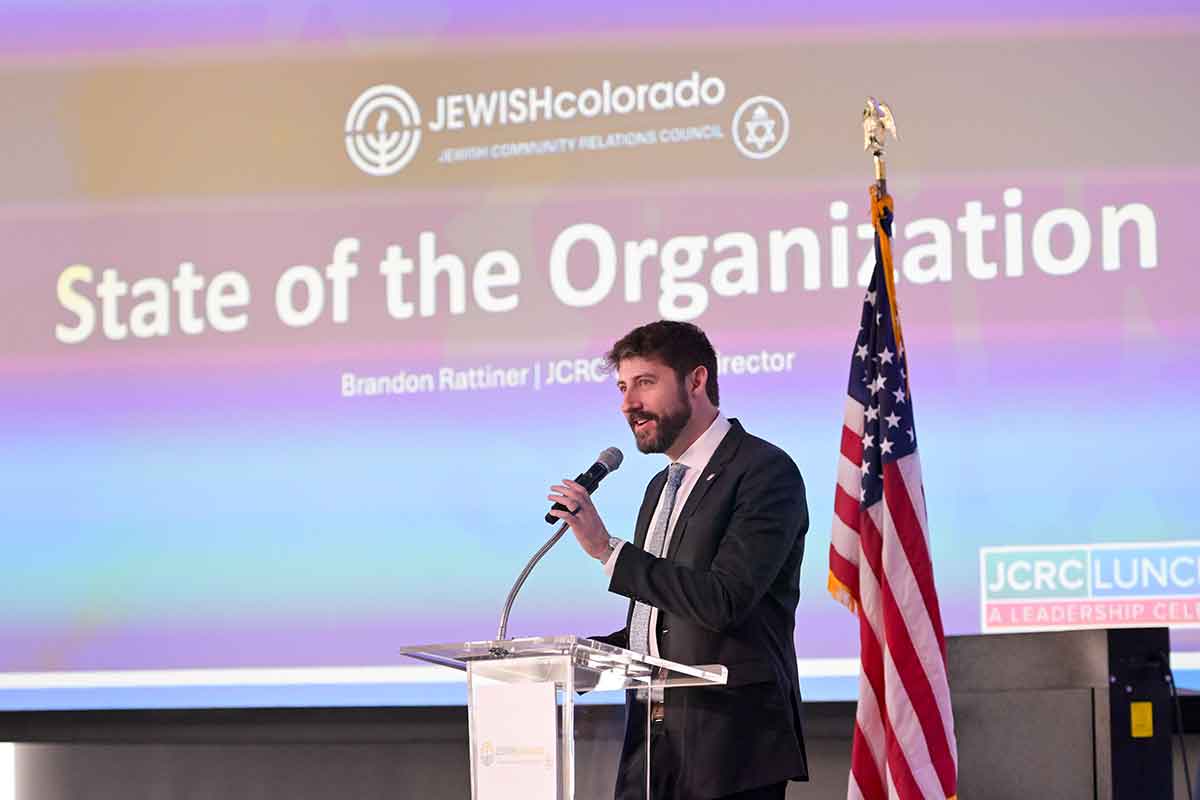
Rattiner emphasized a theme he also sounded in the JCRC video—that Jewish safety cannot be built by Jews alone.
“Allyship matters—not as symbolism, but as strategy,” Rattiner said. “Working with our neighbors to protect the shared values that keep all of us safe is not naïve, and it need not be partisan.
Because when those norms break down, antisemitism doesn’t stay at the margins—it spreads. The JCRC will continue to seek out those who share our commitment to pluralism and nuance—and we will continue to challenge those who seek to divide us.”
Remarks from David Farahi
The JCRC honored David Jacques Farahi with its 2026 Community Leadership Award. Farahi is a Colorado-based private investor and veteran of the hospitality and gaming industries. He is deeply engaged in community and civic life, including support for Israel and strengthening Jewish communal resilience. He received the Community Leadership Award at a particularly interesting moment since his ancestors have lived in Iran for hundreds of years, and his grandfather was born in Tehran and is buried in Jerusalem.
In introducing Farahi, JEWISHcolorado Board Chair Ben Lusher praised him for his eloquence but even more for the study and conviction behind his words.
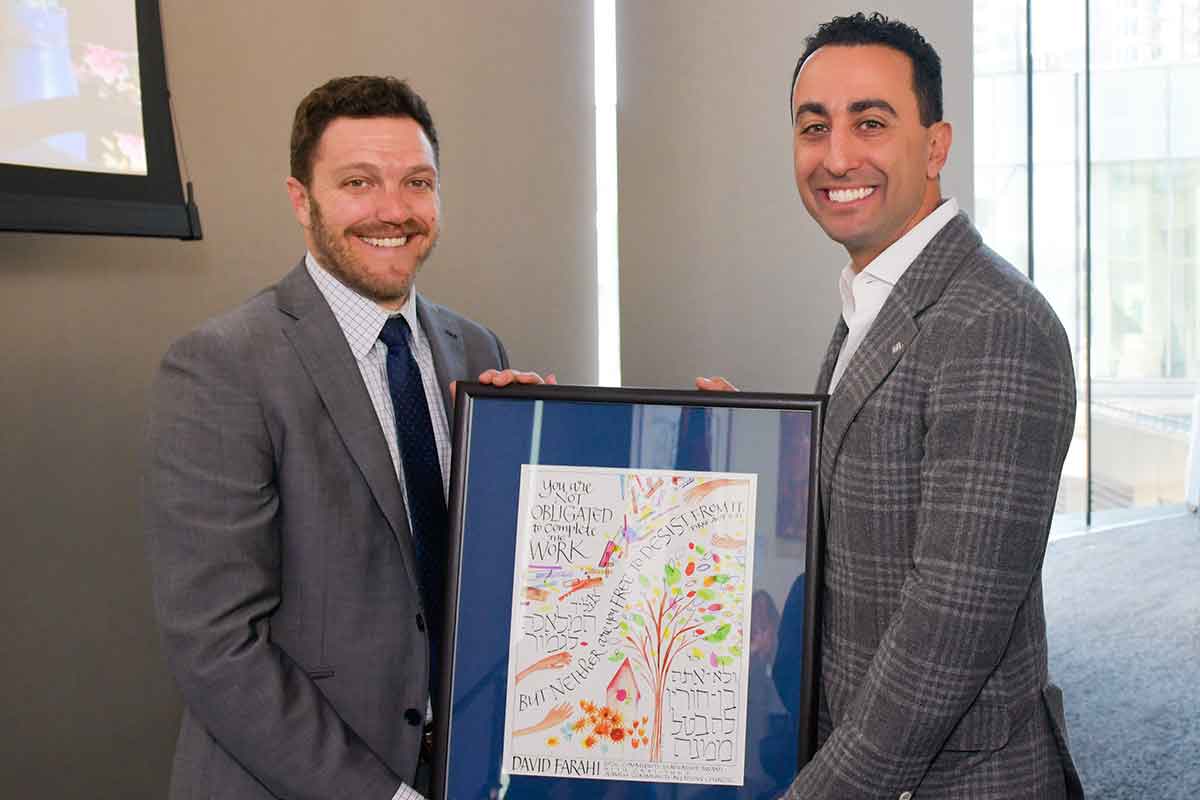
“David is one of the most values-driven people I know,” Lusher said. “His views are not casual, they are earned—rooted in thought, research, and a real willingness to do the work. He is not afraid to engage, and he is not afraid to evolve when a better argument is made.”
In accepting the award, Farahi spoke about the importance of shared values that may not produce agreement on issues but do encourage respect because, as Farahi said, “respectful engagement isn’t weakness. It’s strength.”
Farahi spoke about the importance of three ways to listen during a discussion: to listen with curiosity, to listen with humility, and to listen first—before trying to be understood. Most important, Farahi said, was the importance of being able to state the other side’s view first in a fair and complete way.
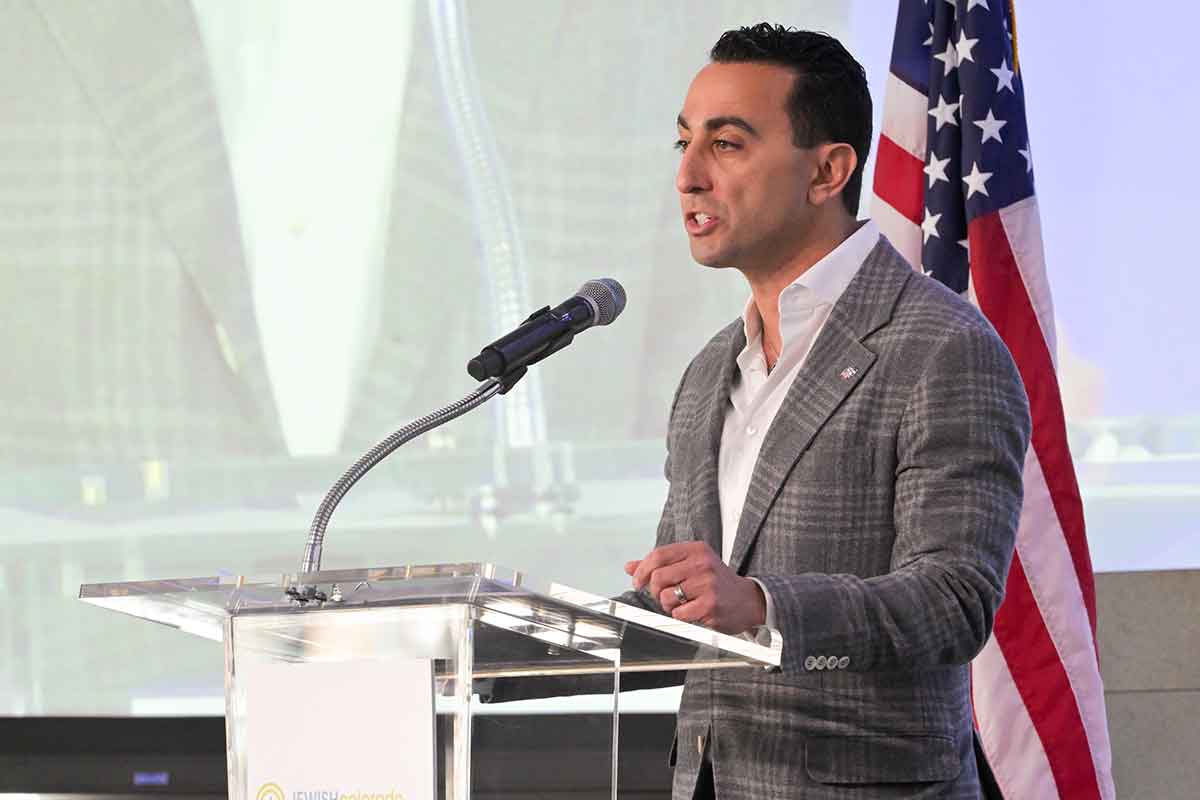
“That is a framework for civic life, for marriage, for parenting, for community, and for leadership,” he said. “And it is exactly what the JCRC does—showing up in rooms where we may not be understood at first, doing the hard work of being both principled and constructive.
“I’m honored by this award. But more than that, I’m grateful to be part of a community that believes this work is worth doing and invests in it.”
White Rose Awards
For the second year, the JCRC named multiple recipients of White Rose Awards, honoring non-Jewish people who stand with the Jewish people.
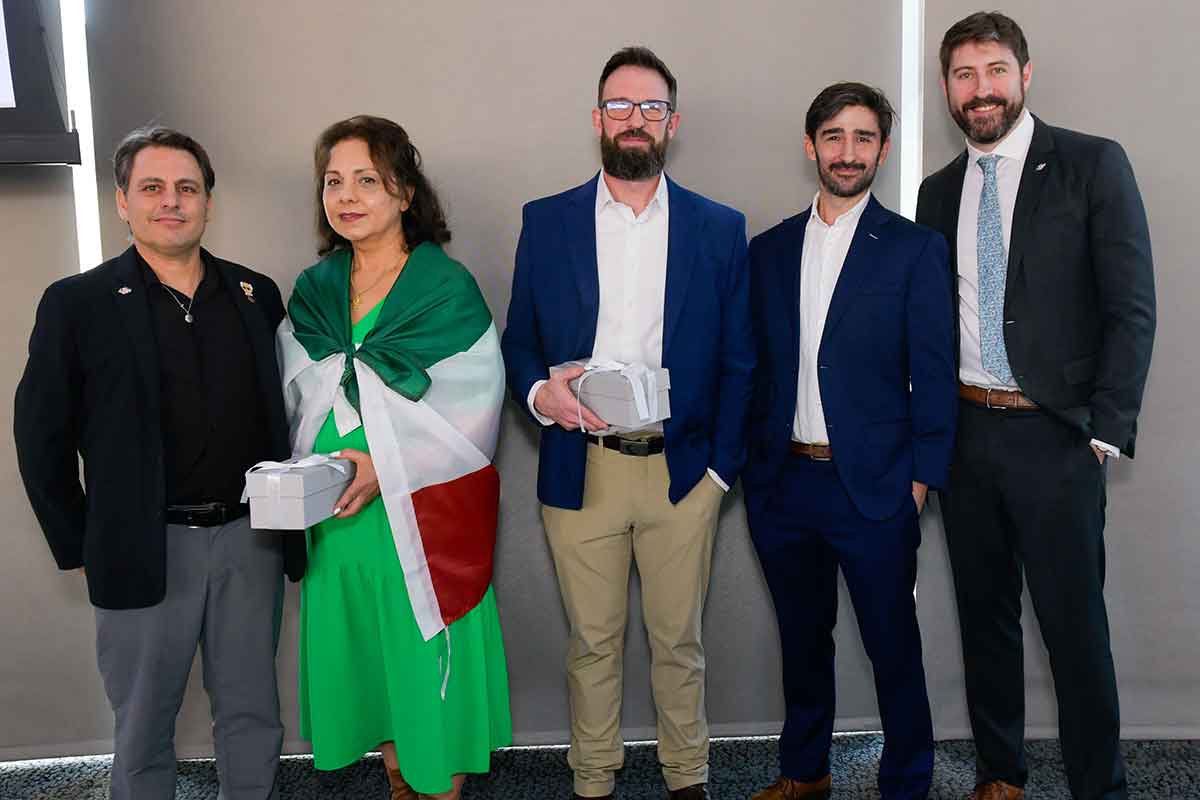
From left: Eldad Malka, Nushin Farjadi, Jeremy Jacobs, Ariel Nassau, Brandon Rattiner
In 2026, the White Rose Award went to Jeremy Jacobs, the founder of “Stories of Antisemitism,” an organization dedicated to educating Christians about the painful history of Christian antisemitism and building bridges of solidarity between Christians and Jews. Since 2020, Jacobs has organized panels, church conversations, and interfaith learning opportunities that bring Jewish and Christian leaders together across Denver to learn from one another, reflect, and build lasting relationships.
The second White Rose Award was given to Nushin Farjadi, who, along with David Farahi, brought a dozen Iranians and a dozen Israelis around one table and great food—to talk, to listen, and to truly see one another even as war has escalated between Israel and Iran through the year. What began as a conversation became a connection. What began as curiosity became friendship. Through this simple act of bringing people together for food and conversation, Farjadi demonstrated that people are not their governments and that real change begins with real relationships.