



David Jacques Farahi has been honored with JEWISHcolorado’s 2026 Jewish Community Relations Council Community Leadership Award.
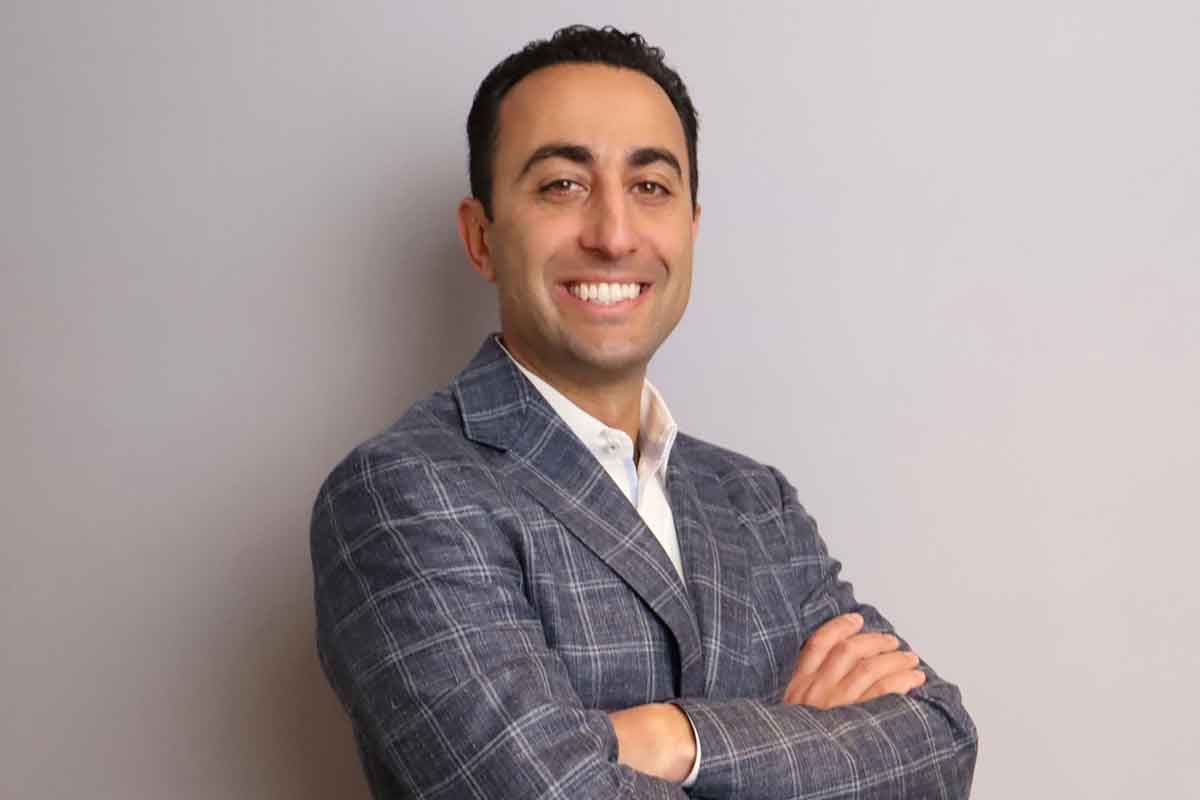 Farahi is a Colorado-based private investor and veteran of the hospitality and gaming industries. He is deeply engaged in community and civic life, including support for Israel and strengthening Jewish communal resilience. Farahi leads U.S. fundraising for Derech Eretz, a pre-army academy that changes the life trajectory of Israeli youth from the country’s socioeconomic periphery and is a founding member of the Israel Economic Forum. He also serves as an adjunct professor of hospitality at Metropolitan State University of Denver and as a Trustee of the Denver Center for the Performing Arts.
From 2010–2021, Farahi was the Chief Operating Officer of Monarch Casino & Resort (Nasdaq: MCRI), overseeing operations across two resorts, more than 2,000 team members, and the company’s investor relations and business development.
Recently, JEWISHcolorado spoke with him about his involvement with the JCRC through the past dozen years.
Congratulations on being honored with the Community Leadership Award!
I have been to many JCRC luncheons through the years, and I still remember my first. I saw the people who were being honored and heard about what they had accomplished. My immediate reaction was gratitude to them for leading the way and doing the work to strengthen the community. Through the years, I have watched other honorees including Bob Lembke, Jacki Cooper Melmed, and last year, Matt Most. To me, these are people who deserve to be emulated. I am humbled and honored and very appreciative to be among them now.
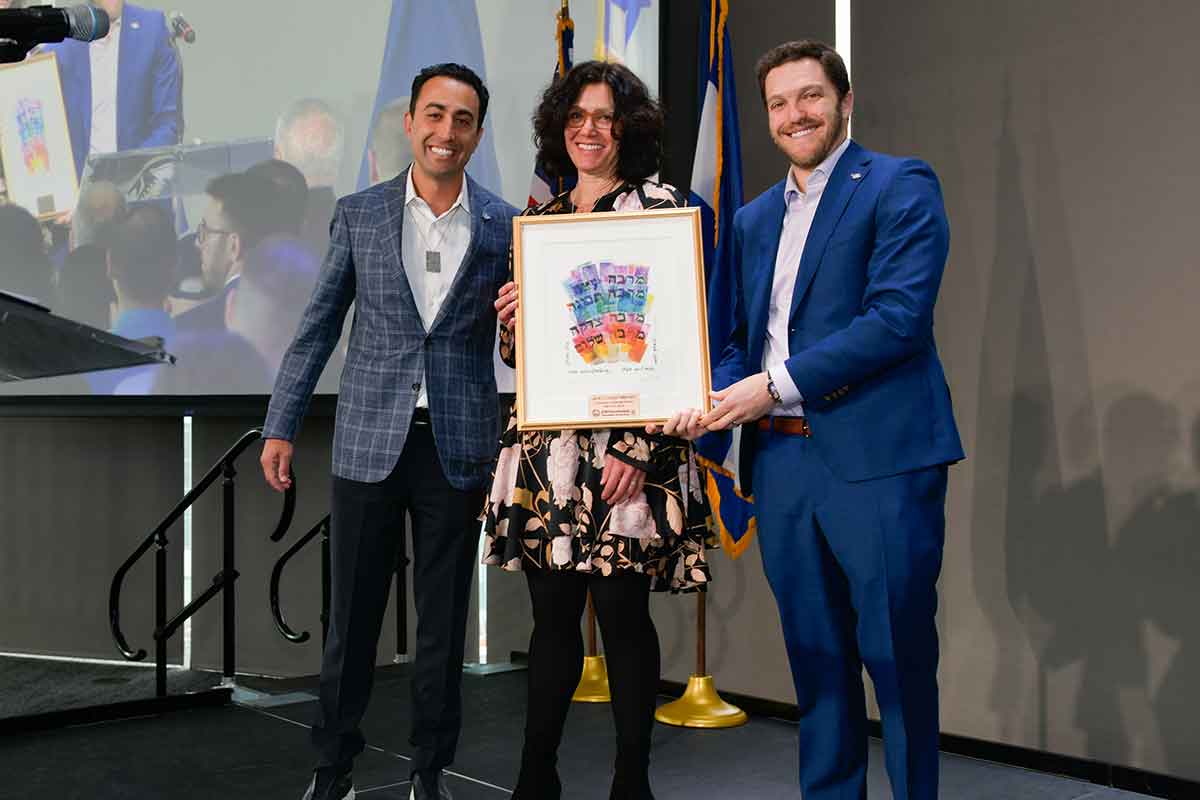
David Farahi and Ben Lusher present the Community Leadership Award to Jacki Cooper Melmed at the 2024 JCRC Luncheon
Do you remember how you first became involved in the JCRC?
I moved to Denver in 2012 during a very busy time in my professional life. About a year later, I was approached by Janet Sherman and Michal Uziyahu, who was then the JEWISHcolorado Shlicha. They asked if I would be interested in getting involved with the JCRC. I said, “What is the JCRC?” They told me about the ways that the JCRC connected the Jewish community to the larger community. I grew up in a small Jewish community in Reno, Nevada, and there was not a lot of Jewish communal life going on. The opportunity to be part of a body that represented the Jewish community in the community writ large seemed very interesting to me.
You immediately engaged in one of the JCRC’s important initiatives, the Public Officials Mission Trip. Why were you so willing to pack your bag and travel to Israel with a group of public officials?
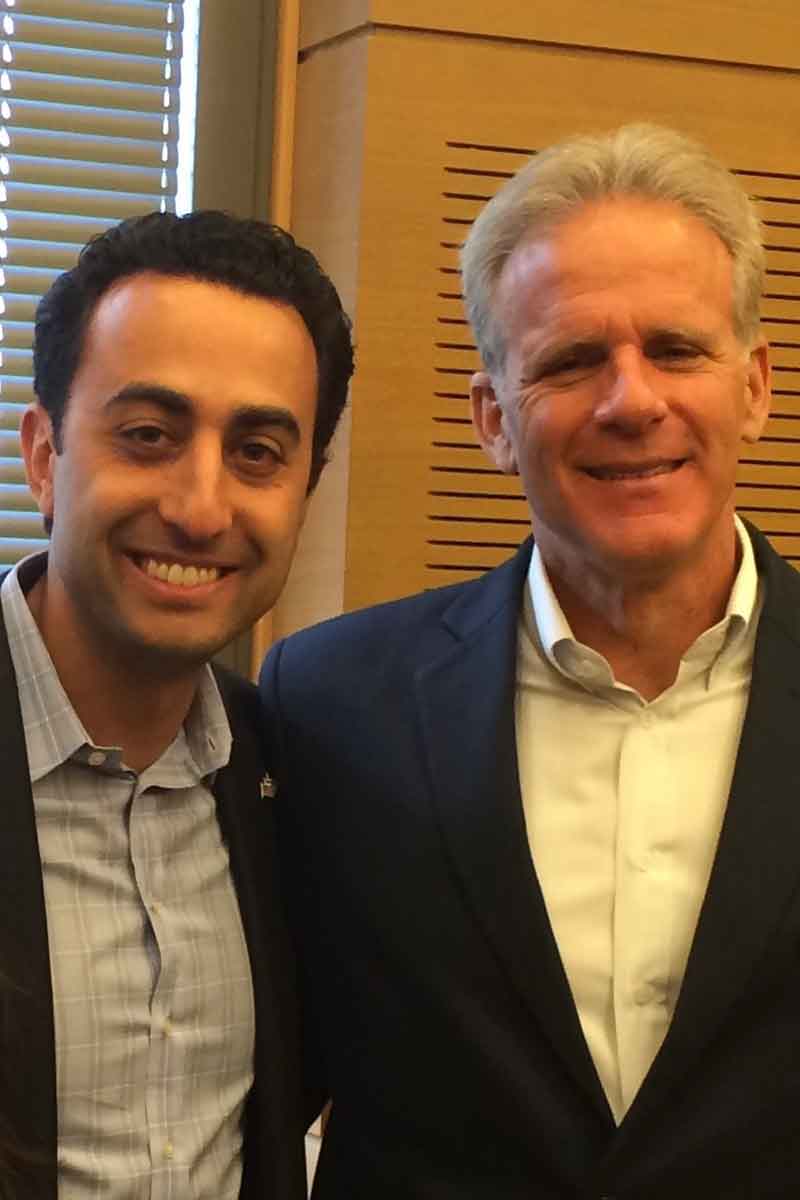
Farahi with Michael Oren, Former Israeli Ambassador to the U.S.
When I heard about this trip, it was a no-brainer for me. My parents were leading mission trips for non-Jewish community leaders in Northern Nevada before I was even born. For decades, they took future governors, senators, and business leaders to Israel with tremendous success. I carried that mantle into Business School at Columbia where, in 2006, I led the business school’s first mission trip to Israel. Most participants were not Jewish, and it was fabulous to see how people, literally from all over the world, connected with the country in very real ways.
I remember that we had an Iranian Muslim woman on the trip and before we left, she came to me and pointed out that she was wearing a head covering in her passport picture. She was worried that would be a problem, but I assured her it would not be. Then, on the flight from JFK to Tel Aviv, in the air, she found me again on the plane and said, “I have a stamp in my passport from Iran. Will that be a problem?” This time, I had to say, “Yes, that will be challenging.” It took a bit of extra time, but we did get her into the country and she had a wonderful experience. I remember her expression after she visited the Dome of the Rock and Al-Aqsa Mosque, a mix of joy and surprise. The fact that here, in the Jewish state, she was able to easily visit and pray at her holy site was very impactful.
Why was it so important to you to carry your parents’ example of trips to Israel to a new generation?
All evidence—every study, every poll—indicates that the number one way to fight anti-Zionism and antisemitism is for people to see the country of Israel and experience the culture, the history, and how welcoming the people are. I grew up in a house that taught me that, and I have since lived it myself.
You ultimately went on three Public Officials Mission trips, the first in 2013. Do you have memories from that first trip?
On that trip, I built lasting friendships with those legislators, relationships I enjoy to this day. The most impactful took root six months after we returned when Rep. Dan Nordberg, from Colorado Springs, called me and said, “Hey David, did you see that Illinois just passed the country’s first anti-BDS legislation? Should we do that in Colorado?” And I said to him, “Dan, I could kiss you.” Dan, along with Rep. Dominick Moreno and Sen. Leroy Garcia, led the push to pass the legislation. It was not easy—they were attacked from all sides, but with the involvement of many people and the great work of The Capstone Group, the JCRC lobbying team, Colorado became the fifth state in the country to pass an anti-BDS law. When Gov. Hickenlooper signed the bill, he handed the pen to Dan, and Dan gave me that pen. It’s one of my most prized possessions.
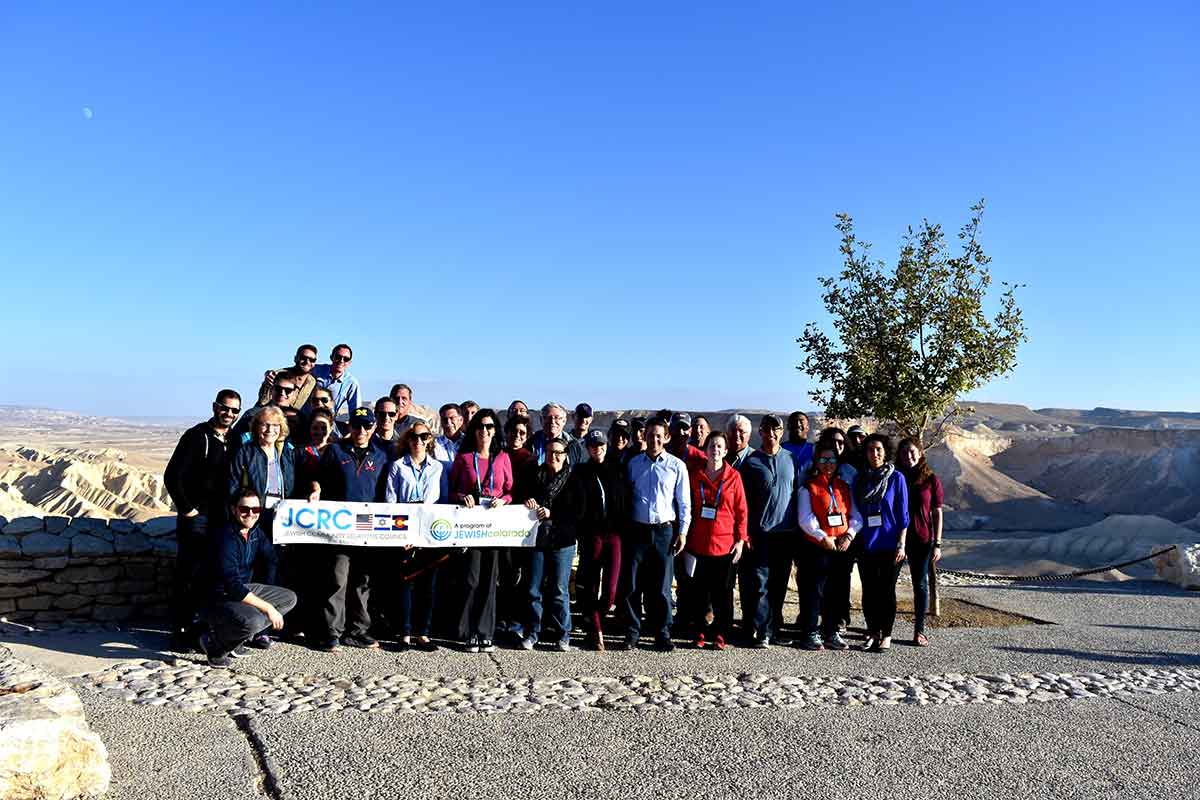
Public Officials Mission
Your second Public Officials trip was in 2015.
Yes, I chaired that trip and what really made it special was meeting Rep. Brittany Pettersen. At the time, she was a member of the Colorado House of Representatives, and now she represents Colorado’s 7th District in the U.S. House of Representatives. She was a person who really connected with Israel on the trip. She was elected to Congress in 2022 and traveled on the Freshman trip to Israel right before October 7th. At the event that we held at the State Capitol after October 7th, she spoke, and she was extremely emotional because she had been to the places that had been attacked. She knew people in those communities. She has taken a lot of heat for standing with Israel in Congress, but she has done it consistently. It’s a powerful thing to see, and her understanding of why Israel is an important ally to the U.S. started on that JCRC mission trip in 2015.
Do you think the role of the JCRC changed after October 7th?
The stated role and objectives of the JCRC have not changed. We are still determined to build effective coalitions that stand up against injustices, whether against the Jewish community or any other community. But after October 7th, I think everyone realized that we needed to reinvest in the tactics, strategies, and efforts. The work of the JCRC has always been supremely important, but now we must double down, with the primary goal of building coalitions. That means building relationships in good times so that you can work together for a common cause in bad times.
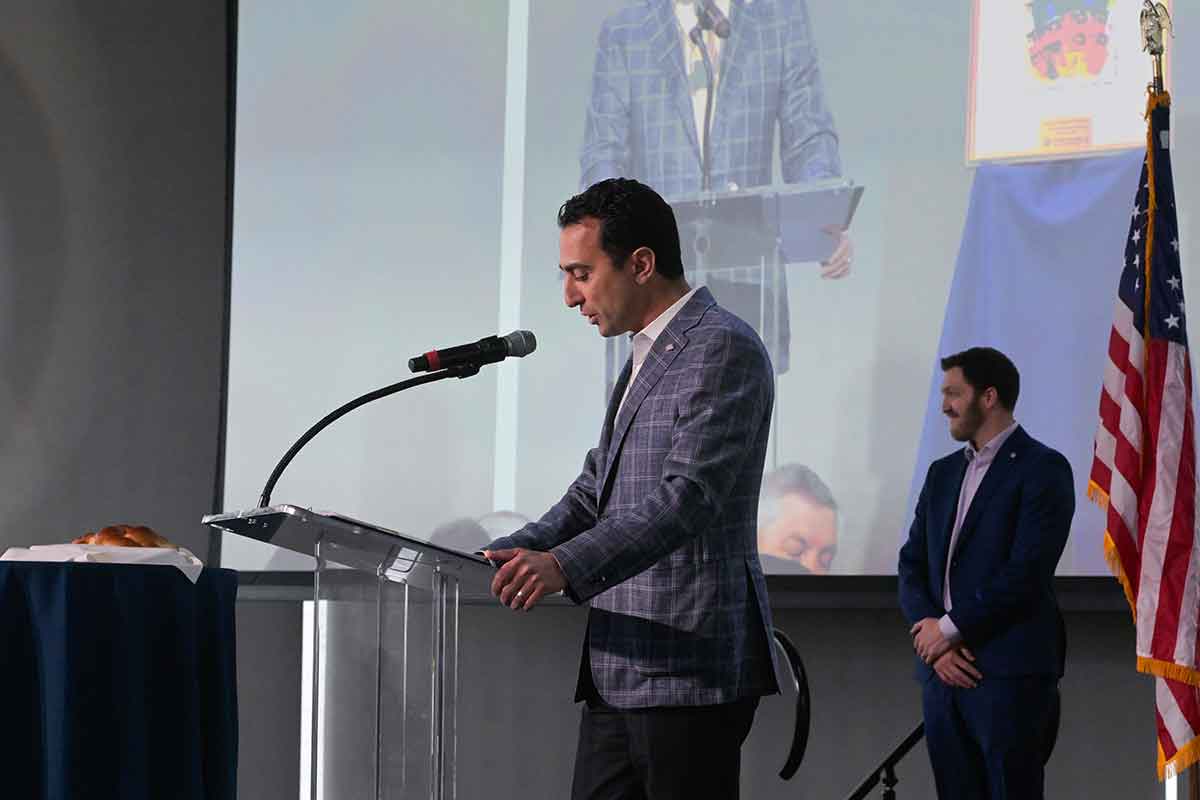
I very sincerely believe in the idea that the Jewish people are here to be a light unto all nations. Our responsibility is to be a good example. The JCRC is our political arm in that effort. We in the Jewish community have values, a moral code if you will, that we need to demonstrate, and we must use our ethical compass to build coalitions with like-minded groups for the benefit of the community and the world.
You have been involved in personal acts of coalition building.
I have. My favorite example is a recent idea that originated from Eldad Malka at the Israeli American Council when he called me and asked if I could help build bridges between the non-Jewish Iranian community and Israelis in Denver, given my Iranian heritage. I gave him the name of a representative of the Iranian community and after a coffee between the three of us, we planned and executed our first event, a very nice evening of food and drink plus sincere, open, honest conversation with about 10 non-Jewish Iranians and 10 Israelis. In December, we gathered again at Asli Grill for a joint celebration of Hanukkah and Yalda Night, which is an Iranian celebration on the longest night of the year. It was my first time celebrating Yalda, and it was wonderful!
The relationship between Jews and Iranians goes back thousands of years and for most of that history, there have been good relations, of course starting with Cyrus the Great who is mentioned in our Tanakh and allowed Jews to return to the land of Israel, for the first time, after the destruction of the first temple. These last 47 years with the Islamic Republic should not define what our relationship is going to be into the future. Before 1979, Israeli professionals routinely traveled to Iran to help modernize the country. The potential for Iranians and Israelis to work together to make the world better and more peaceful is tremendous. We should all be rooting for that outcome. Omidvaram Be’zoody (we hope, and pray, to see this day soon0.
You recently participated in a podcast on the topic of philanthropy. Why was it important for you to take time to do that?
Rabbi Menachem Lehrfield of Jewish Outreach Initiative Denver asked me to join him on his podcast “Zero Percent.” I have a lot of respect for Rabbi Lehrfeld and his wife Sarah because they do a tremendous amount for the community, especially with educating young children in their fabulous Sunday school, among other great initiatives.
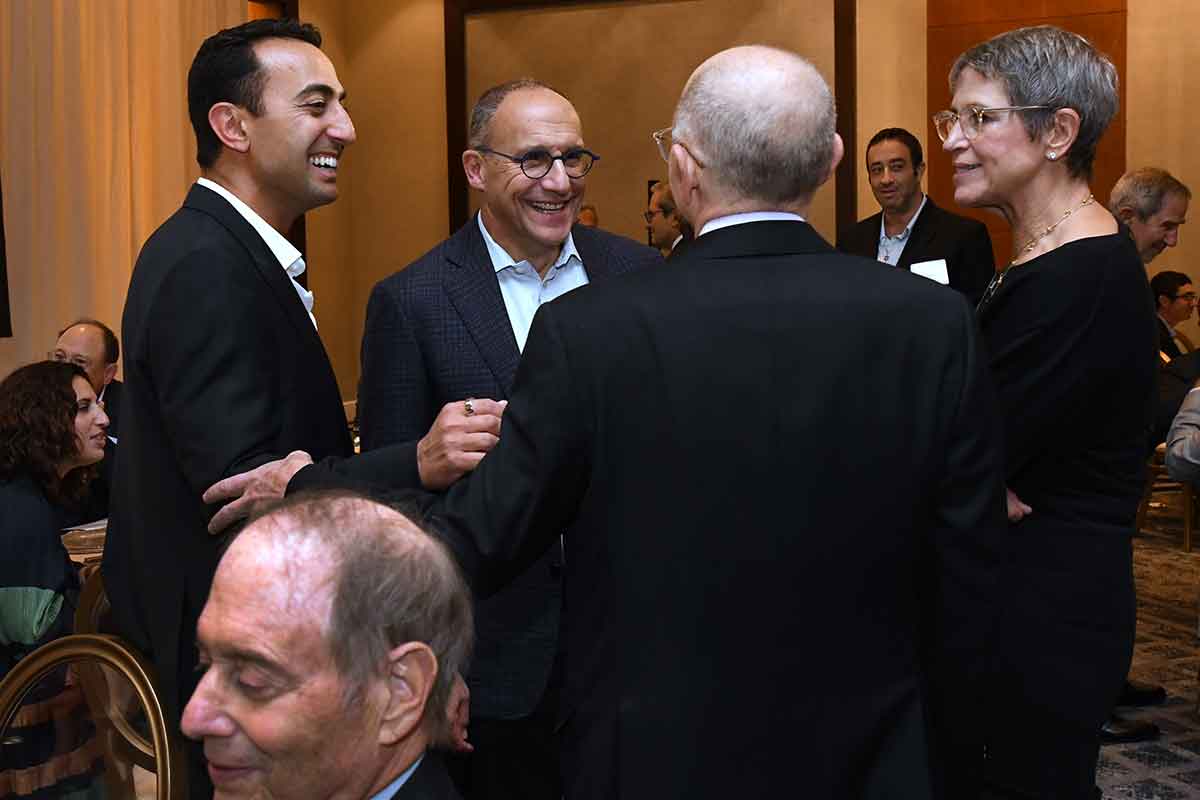
Our conversation crystallized for me how people could see philanthropy differently. For many, it’s just about writing checks. But for me, it’s also about time and talent. Whatever time you have or whatever your talent is, I want to encourage people to invest that in building the strength and resilience in our community.
Including investing in the JCRC?
Absolutely. Our tradition is unique. It prescribes agency as a core tenet. Agency means we have the ability to take action, to do the work, to make the world a better place with our own hands. That is an important message we should be amplifying these days. If you recognize you have agency you are more apt to invest your treasure, time, and talent in organizations like the JCRC and beyond, to do things like build relationships and coalitions with the ultimate goal of making the community a better place. Together, we can accomplish anything.