


“My Israeli Story”, a project by the Israel & Overseas Center at JEWISHcolorado, offers our community a chance to connect with and learn about the diverse stories of our emissaries. Each article will spotlight a different shinshin and their family’s unique journey.
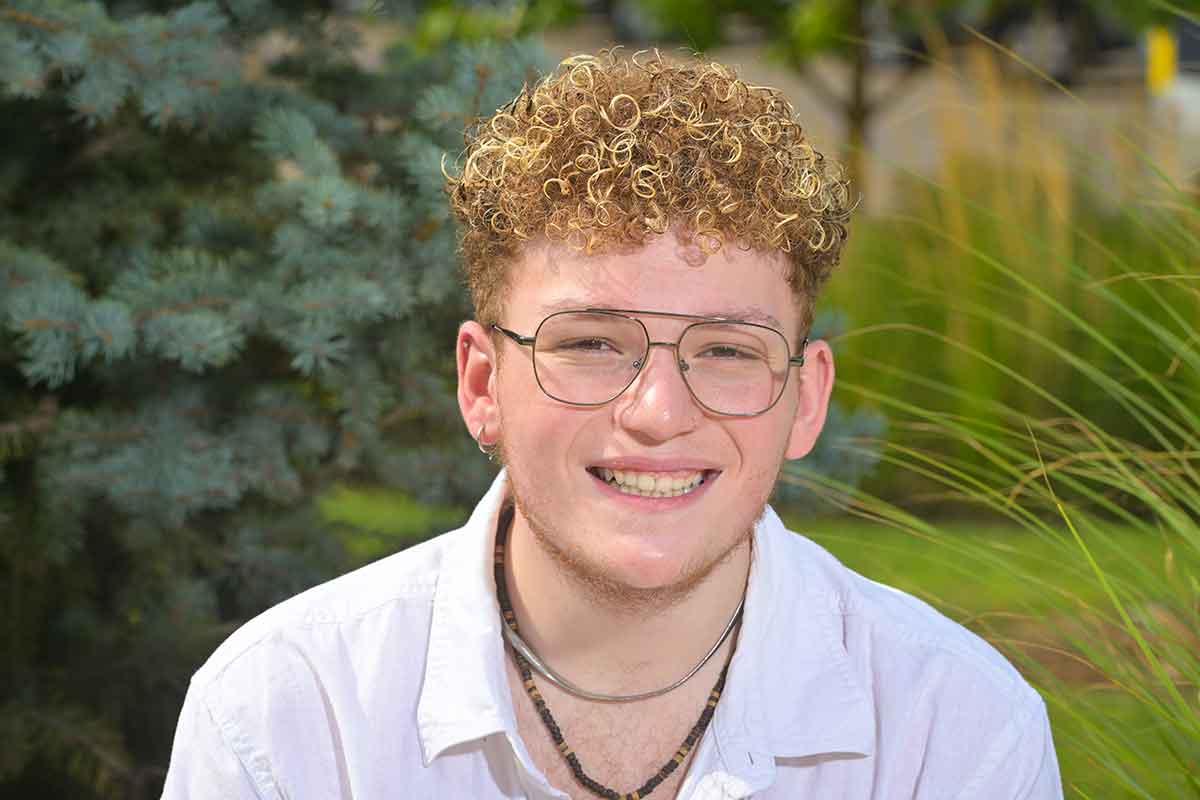
Hi everyone, Tomer here. In case you’ve never heard of me, I am one of Colorado’s Shinshinim this year, and I’m really excited to share a bit about my story, my family’s story, and all the milestones that led me to become who I am today.
My story doesn’t even start with me—it starts with four different people: my grandparents on my mom’s side and my dad’s side.
My grandfather, Nissim (a name that translates to “miracle”), moved to Israel alone at the age of 16 from Algeria. His older brother was already in Israel, in a moshav in northern Israel called Tzruffa, and he worked with him in agriculture, in banana plantations, for several years. At the age of 20, he moved to work at Machatzavat Hartuv in Beit Shemesh.
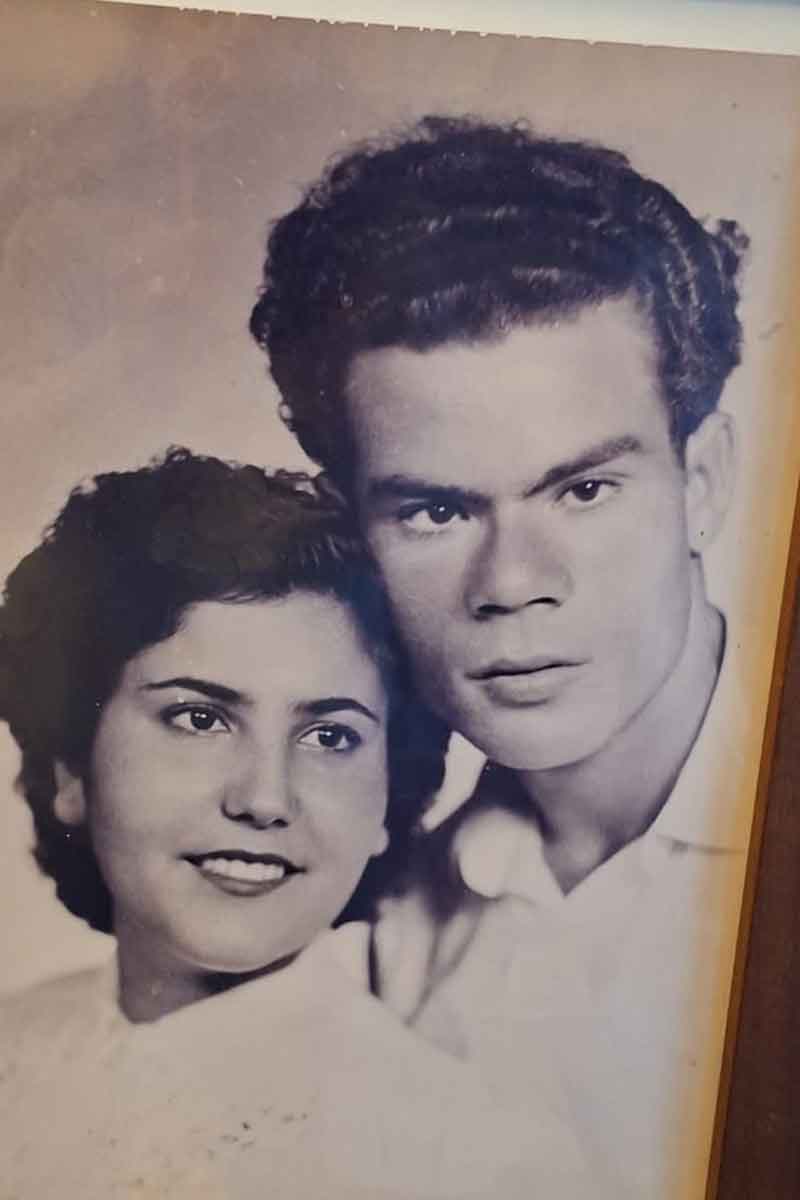
Tomer’s grandparents, Esther and Nissim
My grandmother, Esther, also came to Israel alone at the age of 16 through Aliyat HaNoar and lived for a few years in a kibbutz. When the rest of her family immigrated from Tunisia, she left the kibbutz and moved to live with them in Beit Shemesh. They met a few years later through a relative of my grandfather, got married a few years after that, and eventually separated when my grandmother passed away from cancer. These are my grandparents on my mom’s side.
On my dad’s side, there are also two very different stories.
My grandfather, Mordechai, talks about his childhood in Bulgaria in the 1930s. Even before the State of Israel was established, he describes how, as Jewish children, sometimes non-Jewish kids at school would organize in groups, gang up on the Jewish kids, and beat them. As Jews in Europe at that time, they had no one to turn to and no real way to deal with the violence.
So, when the opportunity came, my grandfather immigrated to Israel through Aliyat HaNoar to escape the constant rise of Nazism. When he arrived, he joined the founding group of Kibbutz Nirim, a kibbutz located near Gaza, which was also exposed to the horrific terror attack that happened on October 7th.
My grandfather was part of the group that established the kibbutz in 1948, and when the Egyptians attacked during the War of Independence, they stood their ground and defended it—because the country that had just been declared was already theirs.
He talks about days when they had almost nothing—two pairs of pants and three shirts—but he describes those times as happy, because even though they had nothing, they had a country.
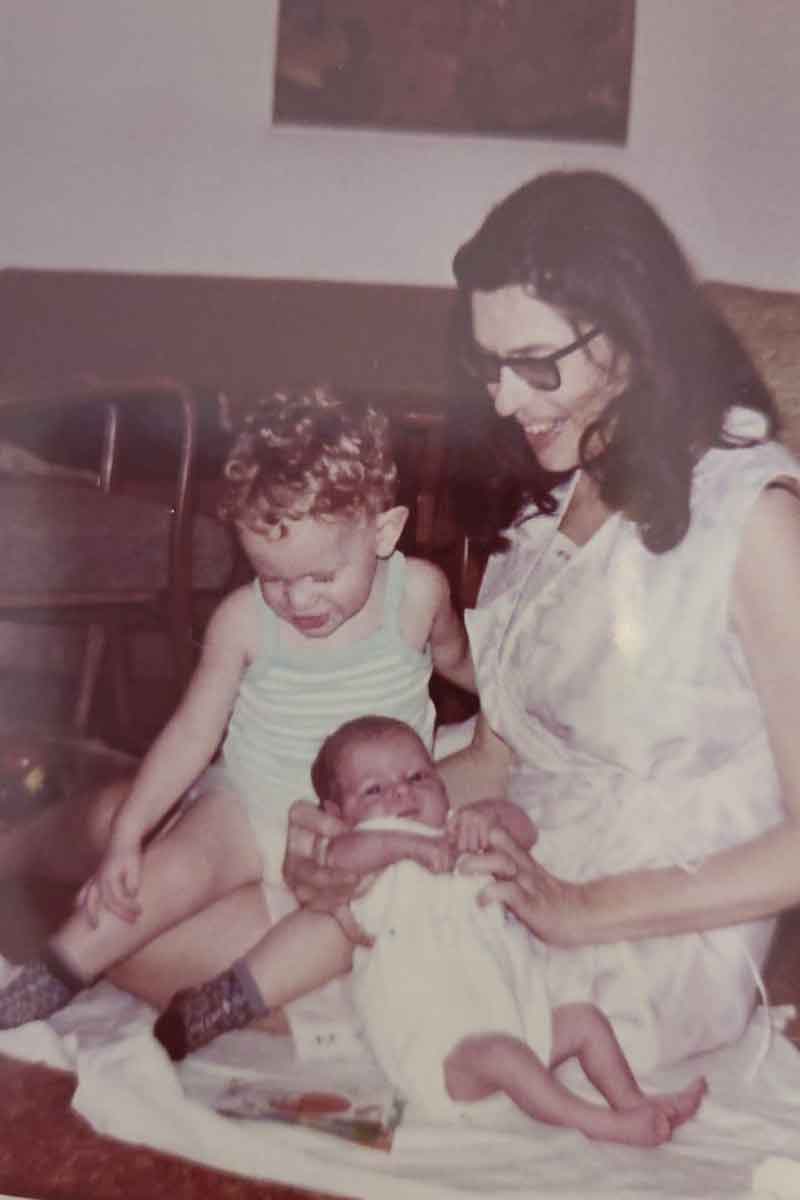
Tomer’s grandmother, dad, and aunt
My grandmother, Ruth, was a child in Romania when the Nazis were in power. Her family received an order to report to a train station that would take them to a ghetto (which later turned out to be an extermination camp). She talks about how her father, who was a very optimistic man, was banging his head against the wall from despair—and as a little girl, she didn’t understand what was happening around her.
Two hours before they were supposed to leave, they received “certificates”—permits allowing them to immigrate to Israel by ship. They boarded a shaky ship from Europe to Israel. My grandmother describes having severe seasickness the entire journey, to the point where she didn’t believe she would survive it. Eventually, they arrived at an absorption camp in Israel and were saved from the fate that awaited them at the hands of the Nazis.
When the War of Independence broke out in 1948, my grandmother was 13 and living with her parents in Tel Aviv. The Egyptians bombed the city from the air. She describes her mother as a true hero who didn’t panic. At the time, there were no bomb shelters, so she took my grandmother and hid under a table.
My grandmother remembers her mother saying, “The Nazis didn’t destroy us, and now that we have a country and an army, no one will harm us. We are strong.”
Four completely different people, each with their own personal journey, all come together into one Israeli story that represents the essence of the country—and their story lives on with my family and me.
I grew up in Pardes Hana, a small town north of Hadera. Within Pardes Hana, I grew up in a smaller area called Karkur—a few small neighborhoods where everyone knows everyone. My parents divorced when I was seven, but stayed within walking distance of each other and maintained a good relationship.
As a child, I would go with my family on vacations to Eilat, the southernmost city in Israel. While everyone else was relaxing, I was in the hotel rehearsal rooms, putting on a different show every year—one year I was SpongeBob, the next Aladdin, the next Mowgli. That was my vacation. From that age, I fell in love with theater, and from that moment on, no one could get me off the stage. That love will come back later in the story.
After finishing elementary school, I went to a school that mainly serves kids from moshavim and kibbutzim in my area. I arrived there with seven friends from my previous school, and that environment shaped me deeply. Kids who grow up in kibbutzim and moshavim grow up with a very specific set of values that have become part of me and my worldview. The idea that you can’t succeed alone—that together we are stronger—is something I strongly believe in.
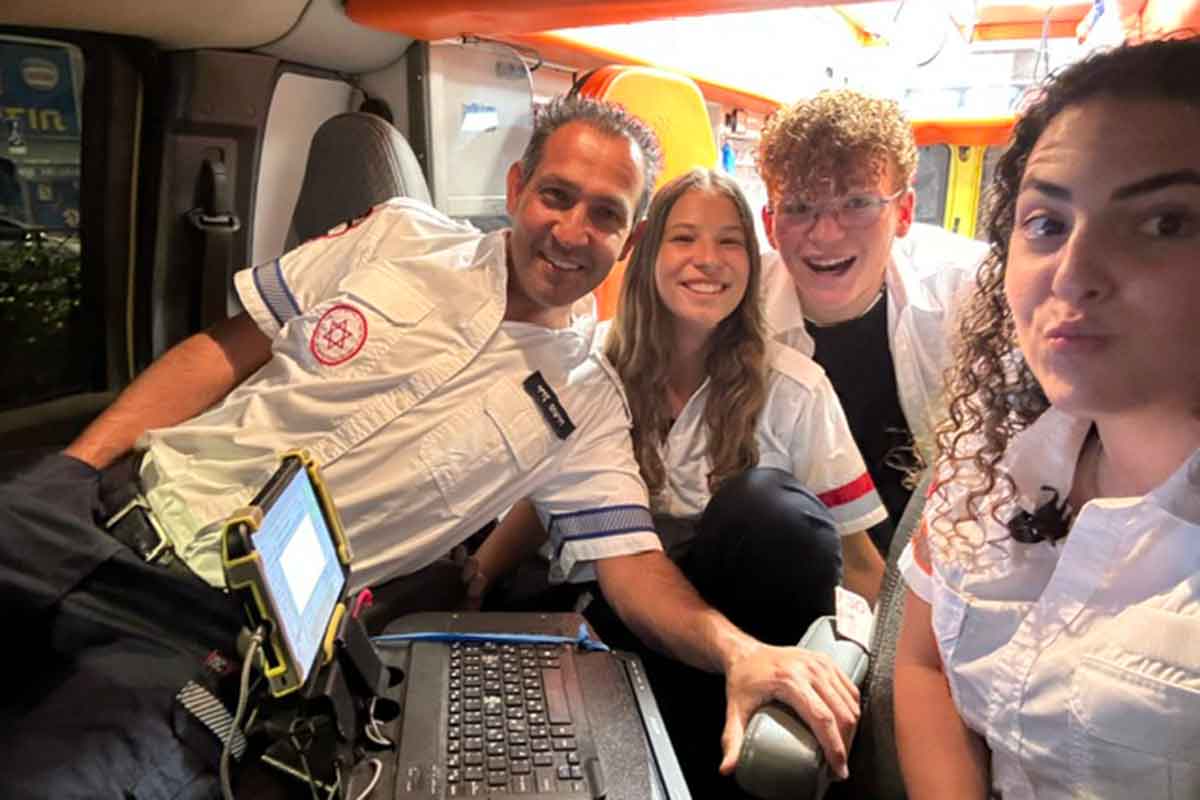
Tomer volunteering with Magen David Adom
In high school, I started volunteering with Magen David Adom, Israel’s national emergency organization. I began as a trainee in 9th grade, and by 11th grade, I became an instructor myself, leading year-long courses for high school students and training them to become young medics. I did more shifts than I can remember and learned the power of helping others from a genuine place and the true value of volunteering.
That place, which was supposed to be where I give from my abilities, ended up teaching and shaping me more than many other places in my life.
We grow through challenges and crises, and we learn to come out stronger. I believe challenges are opportunities to meet parts of ourselves that need work.
October 7th caught all of us by surprise. We felt helpless and overwhelmed like never before. My friends from all over the area opened their moshavim and kibbutzim to people escaping dangerous war zones and I did the only thing I could think of. I went back to Magen David Adom and helped take blood donations from civilians and sent them to the IDF so that, if needed, there would be enough for any soldier who required it.
My time in Magen David Adom is what led me to pursue becoming a combat paramedic in the army, which is my next step after this gap year. I’m very excited to serve my country in a meaningful way and to join my grandfather, my father, and my brother, who have all fought for this country since its establishment.
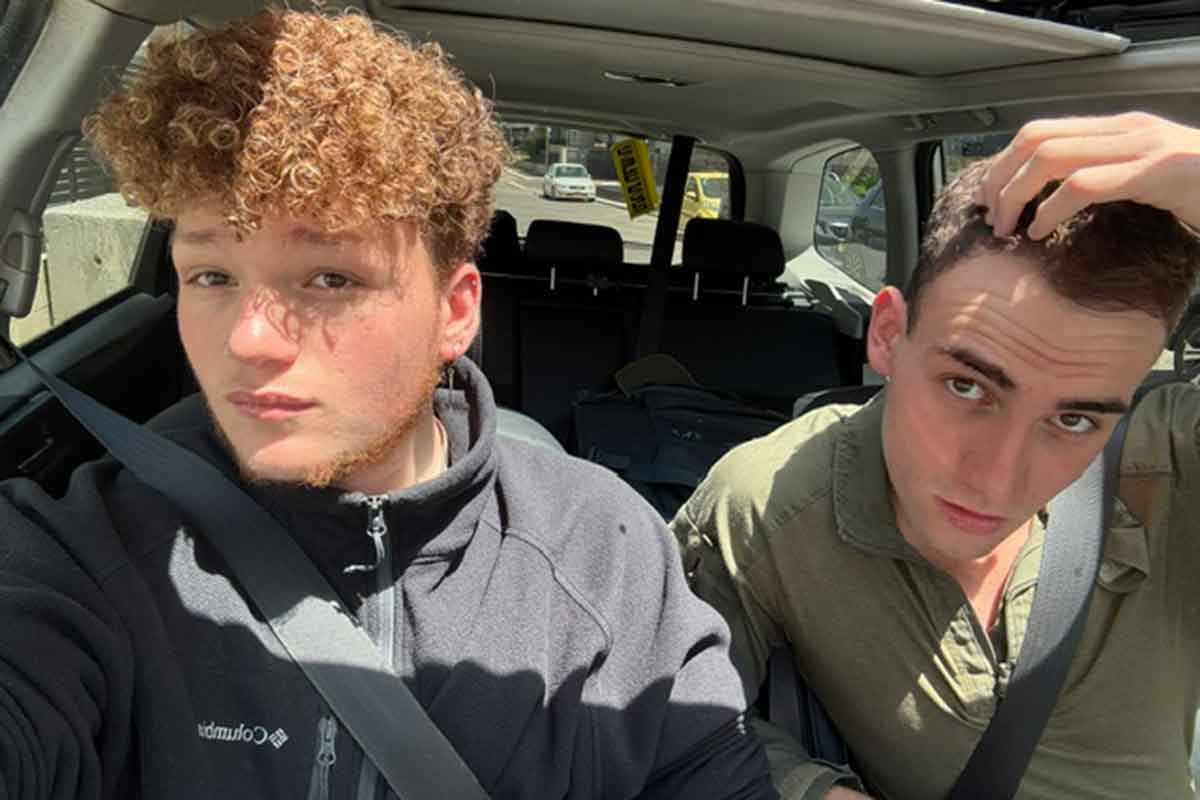
Tomer with his brother
My brother and I have a special bond. Even though he is three years older than me, our relationship has always felt like twins in a way. He protects me at school, and I cook for him when he’s hungry. Where I’m weak, he’s strong; where he thinks, I feel—we always complete each other. Today, my brother is in a commanders’ course in the Israel Defense Forces, and he will carry the values we grew up with into a new generation of soldiers at a critical time.
My parents raised me to believe that my limits are wherever I choose to set them.
“There’s nothing you can’t become,” they’ve told me for as long as I can remember.
So a few years ago, I decided to audition for the national theater program in Israel. Dreams exist to be fulfilled, and it’s never too early to start.
For the past two years, I studied at HaBima, Israel’s national theater, where I had the privilege of taking part in incredible projects with very talented actors.
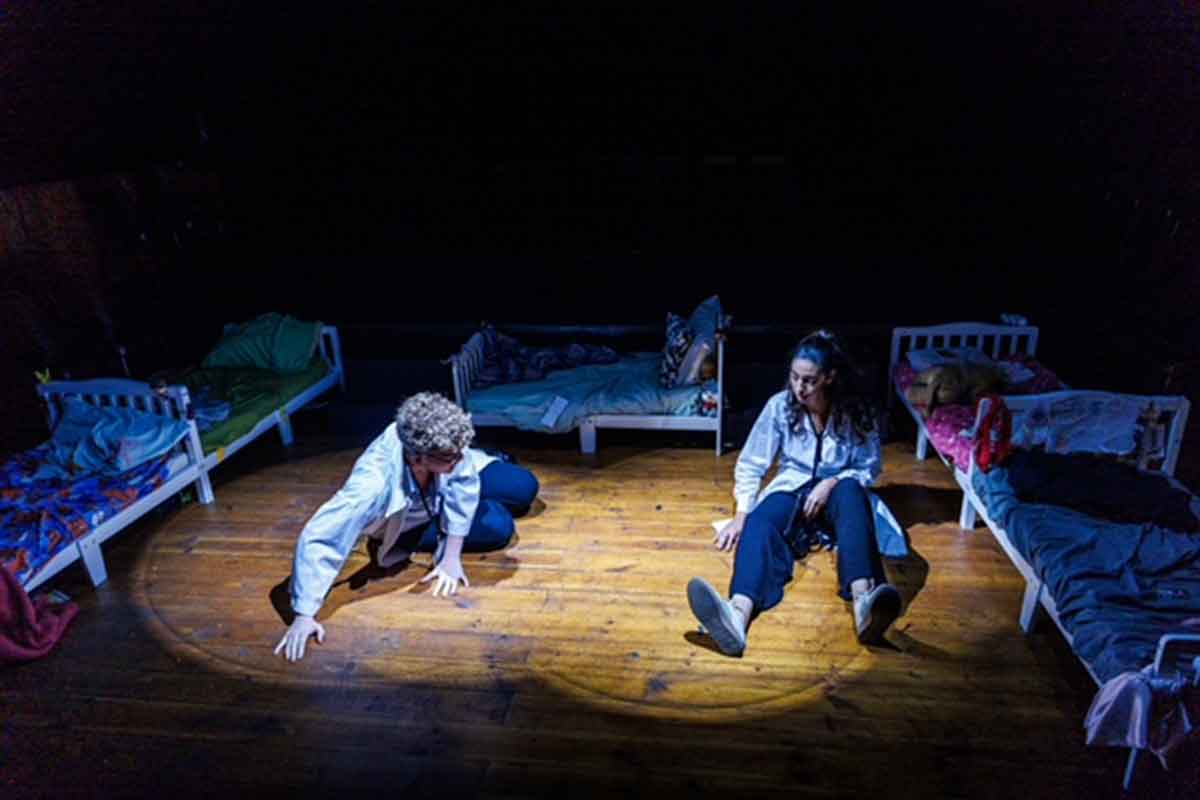
Tomer performing at HaBima
All of these dreams exist alongside what’s happening in my life right now—this gap year I’m currently in. I remember the day I first heard about doing a gap year in Jewish communities abroad, and from that moment, I knew—that’s where I’m going to be.
I remember sitting at my best friend Noy’s house during the first information session, even before the selection process started, and I looked at her and said, “That’s going to be me. There’s no other option.”
Being here in Colorado is a dream come true. It’s the full expression of everything I’ve learned and built over my life, turned into an opportunity that has taught me more than anything else I’ve experienced so far. I give everything I have to the Jewish community every single day—from the moment I wake up until I go to sleep. That’s my mission here: to create real connections that will last even after I leave.
My journey in Colorado has taught—and continues to teach—me so much about myself, about the world, and about my place in it, but most of all, about how much good there is in Judaism and in the communities we build.
I’m grateful for every moment here, and for every day I get to grow within this unique and special community in Colorado.
Thank you to everyone who read this, thank you to everyone who has been part of my journey, and thank you to those who came before me and made it possible for me to be here.
Tomer