



The Foundation at JEWISHcolorado offers Donor Advised Funds (DAFs) that allow individuals and families to support virtually any IRS-qualified public charity while strengthening JEWISHcolorado at the same time. Contributions are immediately tax-deductible and grow tax-free while fundholders decide how and where to direct their giving. Unlike DAFs offered by commercial providers, a DAF at JEWISHcolorado is more than a charitable transaction. It is an investment in Jewish community, philanthropy, and future generations. Recently, we spoke with three Foundation fundholders about why they chose to hold their DAFs at JEWISHcolorado and what that decision means to their families and their giving.
Jane E Rosenbaum
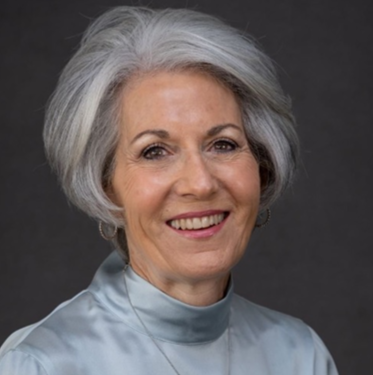 Jane E Rosenbaum still remembers what motivated her family to open their first DAF at JEWISHcolorado—then the Allied Jewish Federation of Colorado—more than four decades ago.
“My husband Stanton was an attorney doing estate and probate work,” she recalls. “We decided to open a DAF in memory of his cousin who was killed during WWII.”
A client of Stanton Rosenbaum z”l had introduced Jane E to the Federation. She was very active in the organization and was honored with the Golda Award in 1993. Her husband served as Campaign Chair and Board Chair in the late 1980s and ’90s.
Jane E recalls that during the years she and Stanton were raising their two children, the DAF provided a philanthropic safety net for their desire to support the community.
“Even if we didn’t have a huge amount of money on hand, we were always able to give through the DAF,” she says. “The DAF guaranteed that we could fulfill our desire to give.”
Jane E and Stanton have twins, a boy and a girl, who are forty years old. They opened a second DAF at the time of their children’s b’nai mitzvah.
“My daughter has autism, and at her bat mitzvah, we were trying to figure out an alternative to gifts,” she says. “We funded the DAF and people made donations to honor her.”
Today, Jane E uses that DAF to make donations to organizations that serve people with special needs.
Her husband persuaded his father-in-law to open a DAF, so Jane E now manages that third DAF opened by her father. One family—three DAFs—all at JEWISHcolorado.
“This is where my husband wanted to have our DAFs,” Jane E says. “He wanted to keep the money within the Jewish community and give money to support both the Jewish and general community.”
Jane E praises the ease with which she can make donations through the DAFs to organizations locally and around the country—both Jewish and non-Jewish.
“Just because you have the money invested at JEWISHcolorado doesn’t mean you only give to Jewish organizations,” she says. “We live in the world! There are non-Jewish organizations that mean a lot to me, and I want to help them when they need it.”
On occasion, JEWISHcolorado makes recommendations about where funds might best be donated, and Jane E says that is helpful particularly when emergency needs arise. But for the most part, she relies on her long and deep experience serving on multiple local and national boards to decide where to donate her DAF funds.
“I have passions and priorities,” she says. “I know where my funds need to go.”
Joe Sherman
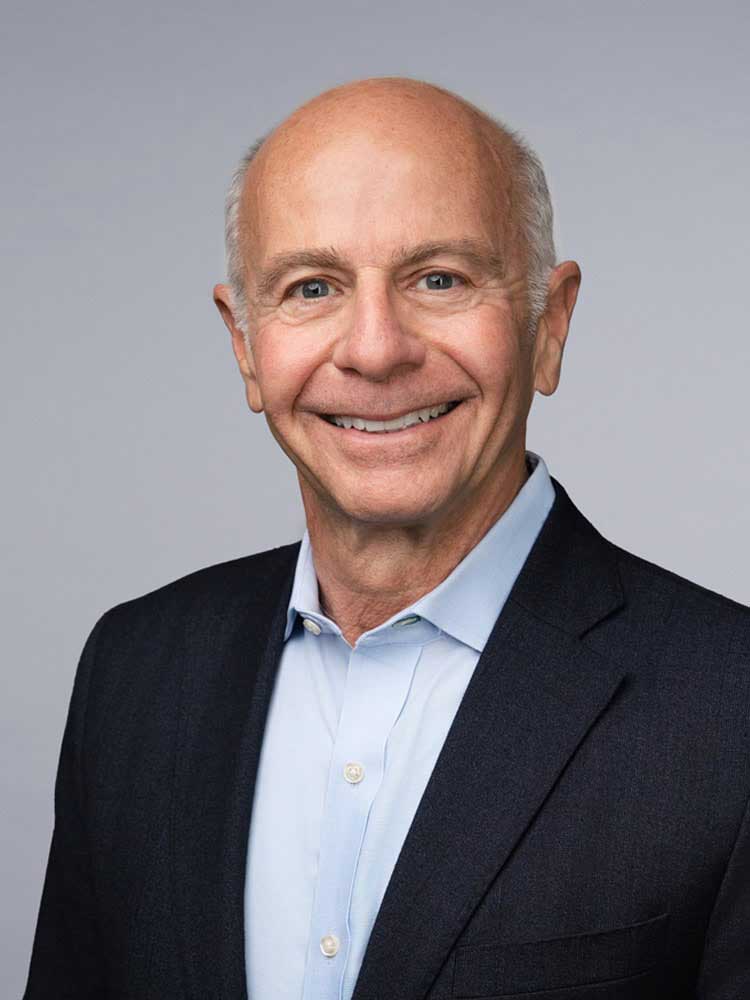 Joe Sherman believes there are “many very good reasons to have a DAF.” First, he says, a DAF gives him the opportunity to give in a “proactive rather than reactive” way. “In our current environment, there are no shortages of worthy causes and opportunities for giving, and the DAF acts as a filter, protecting our time,” he says. “There is no requirement to make an immediate or reactive gifting decision. A contribution into the DAF gives us time to research allocations and be thoughtful in our grantmaking.”
Joe is the Chief Executive Officer and co-founder of The Reliant Group and the co-owner and founder of Reliant Group Management and Reliant Property Management. When he moved from San Francisco to Aspen, he decided to move his DAF with him, bringing it from the San Francisco Jewish Federation to The Foundation at JEWISHcolorado.
Joe and his wife, Monica Vidal, focus their giving in two main areas: local Aspen cultural/community causes and Jewish philanthropy, including fighting antisemitism, supporting the US-Israel relationship, and Israel-related support around the globe, particularly in Monica’s native Spain.
“JEWISHcolorado is deeply connected to Israel-related philanthropy, Jewish education, and security for Jewish institutions,” Joe says. “Donors who want charitable capital anchored within the Jewish community may prefer that structure.”
He likes what he calls the “administrative simplicity” of a DAF.
“JEWISHcolorado’s Foundation handles tax receipts, record-keeping, due diligence on the charity receiving the donation, actual grant processing, and administration of the investment,” he says. “You make the DAF gift, and they invest the funds under your direction.”
He recently created a private foundation, so the administrative demands of that process are fresh in his mind.
“Creating a DAF is much easier,” he says. “With a private foundation there is IRS administrative work around the Foundation returns. In a DAF, you do not have that. With the DAF, you have no IRS Form 990 disclosure, no staff, no reporting requirements, and no boards, so your DAF grants can be made anonymously, and your total charitable strategy remains private. Across the board, the DAF is lower cost than a private foundation.”
Joe recently posed a question to his children: “What is the purpose of money?” All three said “tikkun olam.” He believes the DAF encourages fulfillment of tikkun olam, so his children can continue charitable donations into the next generation while the funds inside the DAF grow tax-free.
He knows that he could hold a DAF at a multitude of different financial homes. He prefers to keep his DAF at an organization that “aligns with Jewish causes and values” with a staff that is knowledgeable about Israeli nonprofits.
“I want Jewish ethical principles, Israel-related investment perspectives, and religious or community sensitivity,” he says. “DAF fees support communal infrastructure and JEWISHcolorado benefits from the scale and engagement. A DAF at JEWISHcolorado is not just a tax vehicle. It is serving the Jewish community ecosystem.”
Kim Schneider Malek
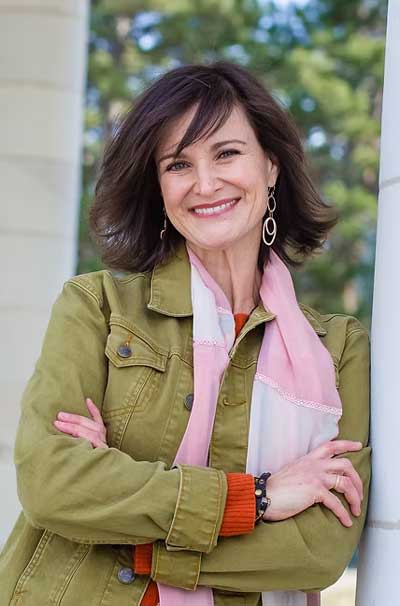 Kim Schneider Malek has been involved with JEWISHcolorado in a variety of ways, including her engagement with Women’s Philanthropy, various commitments to development, and her years with Jewish Federations of North America (JFNA) National Young Leadership Cabinet.
But it was her most recent role as a member of the advisory committee for The Foundation at JEWISHcolorado that prompted her to open a DAF at Jco.
Her motivation for this DAF is centered around her three college-aged children, all of whom have actively participated in multiple programs for Jewish young people, including trips to Israel with JEWISHcolorado’s Joyce Zeff Israel Study Tour (IST).
She believes her children have a strong sense of community connection to the actual JEWISHcolorado building and to the people who led their trip to Israel. With the DAF, she wants to broaden and deepen their understanding of the Federation work that goes on inside the building.
“I wanted them to see what purposeful giving is,” she says. “I want them to understand that we organize our giving through a DAF so we can be intentional, giving to and through the Jewish community.”
Kim’s father was involved with Federation, her generation was very involved, and now she wants to see her children take philanthropy into the next generation. She has turned her DAF into a teaching moment, with decisions made by the entire family—creating what she calls “a life experience for my three emerging adults.”
“I want them to understand that I am not giving away their inheritance,” she says. “Our values are that we work hard to create wonderful lives for ourselves, and we also want wonderful lives and opportunities for others.”
To that end, she is guiding her children to see that they can continue a relationship with JEWISHcolorado even after they no longer live in Colorado by continuing to give through Jco to programs like BBYO, JCC Ranch Camp, and IST—programs they have benefitted from.
This is the lesson: There can be continuity of philanthropy as a family value and continuity of the relationship with JEWISHcolorado as a place where donations are managed.
Kim also lists the practical advantages of the DAF—the freedom to fund the DAF in one year and stretch individual donations over several years, the ability to make transactions online, the fact that the Foundation maintains donation records, and the information that JEWISHcolorado shares with DAF holders, particularly about Israel.
“With my JEWISHcolorado DAF, I want to help build a Colorado that is Jewish-forward and Jewish-strong, and that includes Israel giving,” she says. “My heart is in Colorado, but my heart is also in Israel.”
As her children get older, Kim thinks that she might create an individual DAF for each child so that each can give in a way that reflects their values. She knows that she could open those individual DAFs at many other financial institutions outside of the Jewish Community Foundation.
“To me, that would feel more like a financial strategy rather than a values-driven alignment,” she says. “Yes, you may have the same advantages of a DAF anywhere else, but we want the experience of having a DAF to be more than just about money and process. JEWISHcolorado offers that.”