



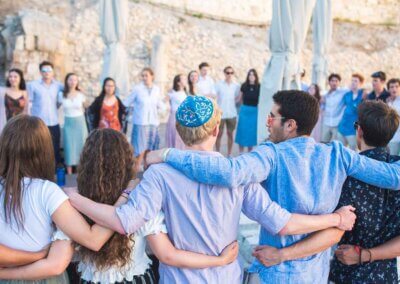
JEWISHcolorado President & CEO Renée Rockford recently participated in the “Shared Roots” lecture series, an interfaith program designed to create meaningful conversations around tolerance, welcome, and confronting hate. Below, she shares her reflections.
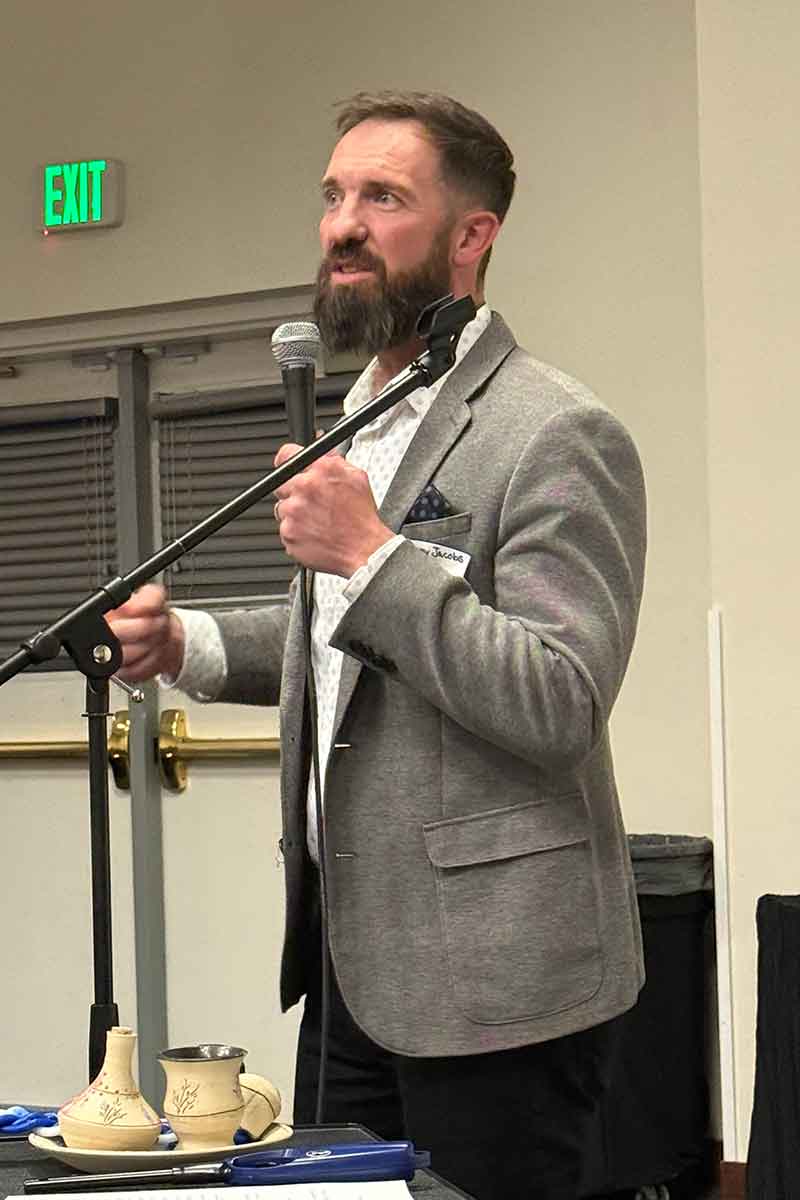
Jeremy Jacobs
Honored to have been with congregants and clergy from the Denver synagogues (Temple Sinai and Hebrew Educational Alliance) and Colorado churches (Emmaus Anglican, Resurrection Anglican, Castlewood Canyon, Legacy Hills Church of Lone Tree, BridgeWay Church of Denver, Faith Church in Arvada, Calvary Church in Aurora, and Springs Church in Colorado Springs) that have been part of the 10-part lecture series called “Shared Roots,” designed to create shared conversations around tolerance, welcoming, and combatting hate. Thanks, too, to Jeremy Jacobs of Stories of Antisemitism, who was instrumental in planning the course, and on a personal note, for his work on Stories of Antisemitism. Jeremy is from my hometown of Colorado Springs, where my father, a Holocaust survivor, was a pillar of the Jewish community and a longtime supporter of Temple Shalom.
Over the years, I have interviewed many Holocaust survivors—collecting their stories of antisemitism. I even wrote a book about nearly 100 survivors and how they rebuilt their lives after coming to the United States post-WWII. When I interviewed each of them, I asked them what message they might leave for future generations. Many of them spoke of “hope” or “resilience.” One in particular spoke about the importance of “knowing your neighbor,” because when we do, we are far more likely to care for and respect one another.
This work of caring for others is manifest through the work that we do at JEWISHcolorado—one of more than 140 local federations across the United States and Canada, working to support flourishing communities and Jewish life. We do that through the advocacy work of our Jewish Community Relations Council, lobbying local and state governments for initiatives that help all of us, from the Non-Profit Security Grant program—designed to support all houses of worship by providing local and federal dollars for physical security improvements, through our safety and security work and trainings provided at no cost to the community to keep our community safe.
We know that together, we can build better and stronger communities, and even if we don’t have all the answers about how to bridge the divides we are seeing in our country today, we know that as long as we are talking to one another through dialogue and through programs like this, we have a way forward.
In the Jewish tradition, we trace our story back to Abraham and Sarah, who opened their tent on all sides to welcome the stranger. That image has long symbolized the notion that faith is not a fortress; it is a home with doors. When we open those doors to one another, we rediscover that our roots are intertwined—ethically, spiritually, and humanly.
The late Rabbi Jonathan Sacks z”l taught that “God has spoken to humankind in many languages: through Judaism to Jews, Christianity to Christians, and Islam to Muslims.” He reminded us that the test of faith is not whether we see god in our own image, but whether we can see the image of god in someone who is not in our image. That insight calls us beyond tolerance toward responsibility and beyond just acceptance toward standing together in the work of justice, compassion, and peace.
Being in true dialogue with our neighbors does not require agreement on everything. It requires something deeper: trust, humility, and a commitment to the common good. In a world often fractured by fear, coming together like this is itself an act of courage—and an act of faith. So, thanks to all those who accepted the invitation to “Share Roots,” and may we all go from strength to strength.