




By: Jillian Feiger
Senior Director of Israel & Global Engagement
There are journeys we plan, and there are journeys that ask us to become something new.
This summer, 30 Colorado teens registered for the Joyce Zeff Israel Study Tour (IST) expecting a journey through Poland and Israel. When the war with Iran led to the cancellation of our flights, plans that had taken months to create were suddenly no longer possible.
Our team faced a choice: We could allow the loss of the original itinerary to define the summer, or we could hold on to the deeper purpose of IST—helping young people encounter Jewish history, build Jewish community, deepen their connection to Israel, and discover what it means to belong to the Jewish people.
The route changed. The purpose did not.
Over four weeks, the group traveled through Poland, Hungary, Slovakia, Czech Republic, Austria, and Germany. The teens encountered the many layers of our people’s history—communities that flourished, lives and traditions that were nearly destroyed, and Jewish life that continues today. They also explored new places, formed friendships, laughed together, and became a community. The journey held history and memory, but it also held joy.
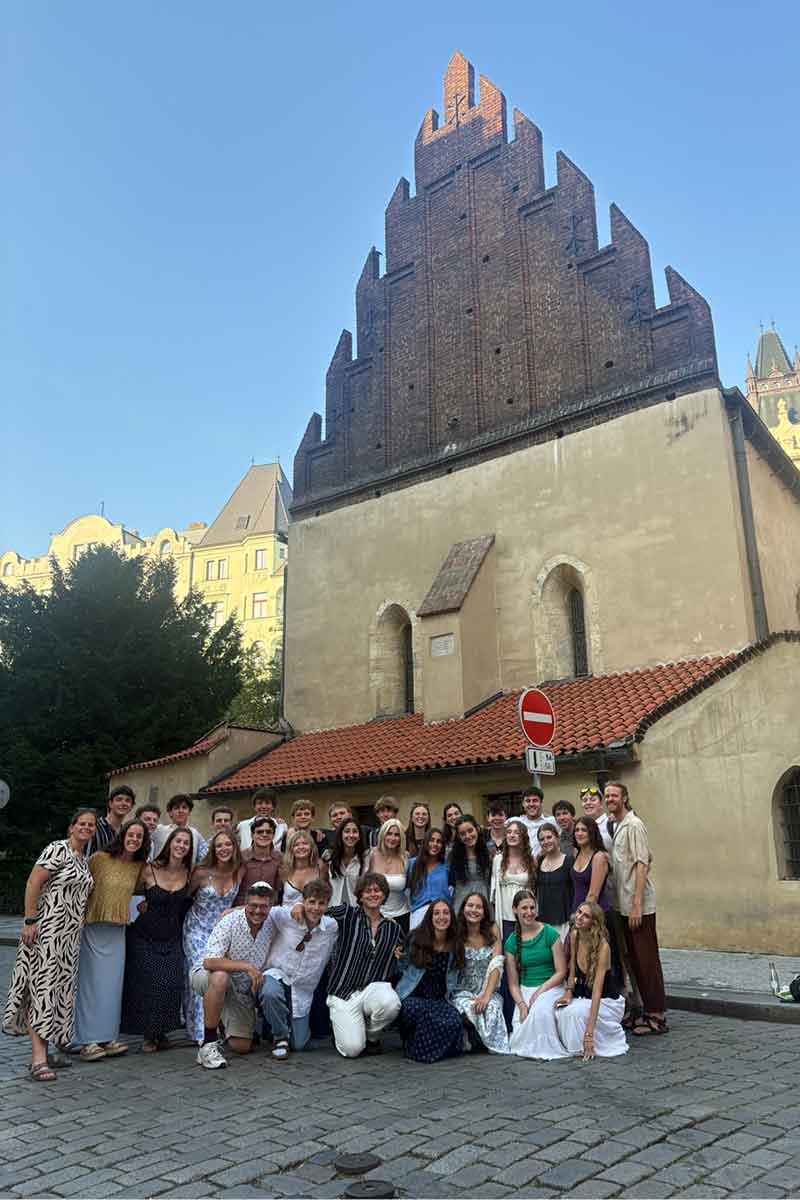 One moment I keep returning to is the group’s Shabbat at Prague’s Old-New Synagogue, the oldest active synagogue in the world. For more than seven centuries, Jews have gathered in that sanctuary to pray. This summer, 30 teenagers from Colorado added their voices to that living chain.
In this week’s Torah portion, Eikev, Moses asks the Israelites to remember the entire road they traveled through the wilderness. Although they are close to their destination, he focuses not only on the land ahead, but also on the journey behind them—the uncertainty, the hunger, the manna, the mistakes, and the lessons that shaped them. The wilderness was not simply an interruption before the real story began. It helped form them into a people.
The IST teens did not have the journey they expected. Europe did not replace Israel, and no one pretended that it could. Yet Israel remained present—in their conversations, their learning, and their reflections on the long and complicated story of the Jewish people. As they traveled through places that held both extraordinary Jewish achievement and devastating Jewish loss, they gained a broader understanding of our history. They also came to understand more clearly why Israel matters—not only as a destination, but as an essential part of Jewish identity, peoplehood, and belonging.
Eikev teaches us to remember how we arrived and who helped us along the way. Remembering is an act of humility and gratitude. It reminds us that none of us makes the journey alone.
I am grateful to JEWISHcolorado who made this pivot possible; to the parents who responded with trust; to our donors and community partners who continue to support IST; and to the entire Colorado Jewish community, which continues to invest in transformative Jewish experiences for our teens. Most of all, I am grateful to the teens who responded to uncertainty with openness, courage, and joy. They returned home not only with stories from Europe, but also with a stronger community, a deeper connection to Jewish history and Israel, and proud to be Jewish.
Perhaps that is one of Eikev’s enduring lessons: We do not get to choose every road we travel, but every road can teach us. The destination matters. So does who we become along the way.
May we all have the courage to adapt without losing our purpose, the wisdom to remember the whole journey, and the gratitude to recognize all those who walk beside us.
Shabbat Shalom.
Please email Jillian Feiger at jfeiger@jewishcolorado.org with questions or comments.