




In early July, JEWISHcolorado’s Joyce Zeff Israel Study Tour (IST) returned from four weeks in Europe. This year, the trip itinerary did not include travel to Israel because airline flights were canceled due to the war with Iran. Even without time in Israel, the 30 teens on the trip found that the experiences that make IST special were not lost as we learned in our conversation with Micah Dion from George Washington High School, Sonya Solomon from Monarch High School near Boulder, and Liv Gien from Cherry Creek High School.
Why did you decide you wanted to go on IST in 2026?
Micah: I had never been to Israel, and I wanted to see what it looked like. I knew the JEWISHcolorado staff from Jewish Club at school, and the staff made the trip sound fantastic. I already liked them, and if they were going, I knew it would be a good trip.
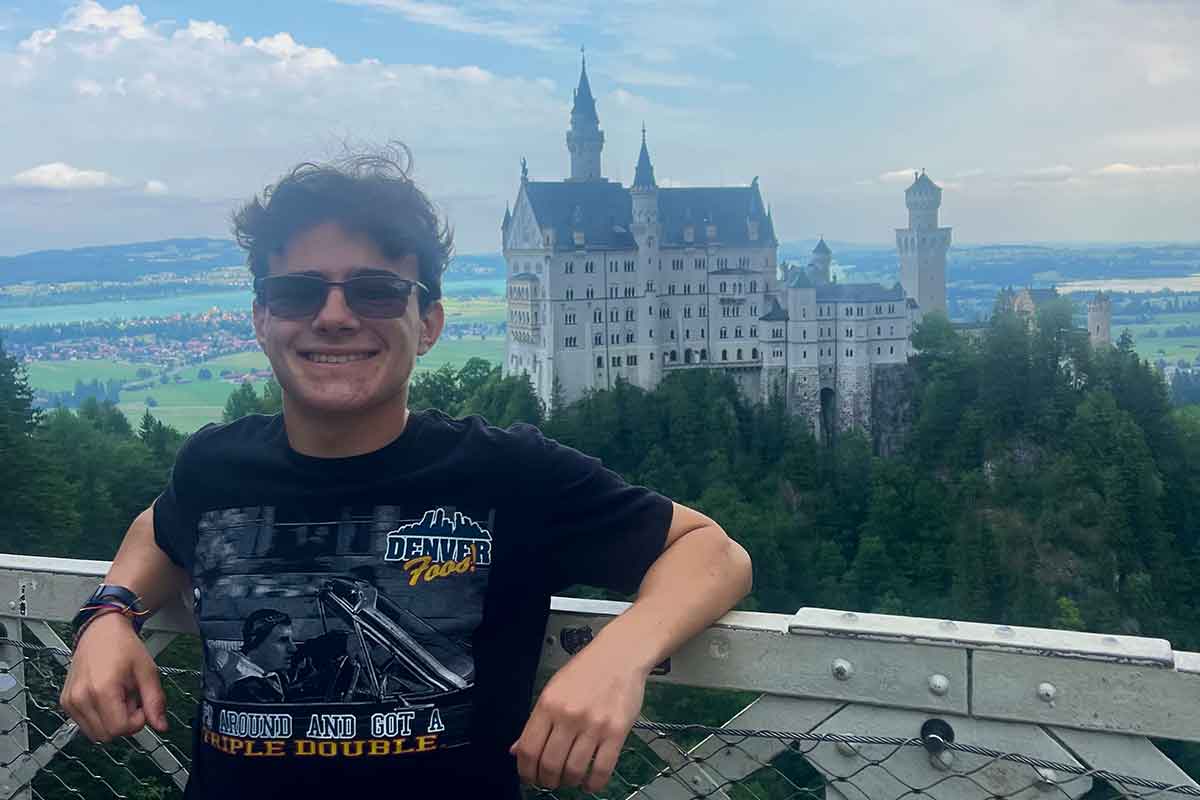
Micah Dion
Sonya: I had heard it was a great trip, but to be honest, I was really scared because I’m from Boulder and I didn’t know anyone in the group. Finally, I told myself “It’s Israel, you can’t have a horrible time. Even if you don’t know anyone, this will be an opportunity you will never have again.”
Liv: I have known about this trip my entire life because my mom grew up in Denver and she wanted to go on IST but her mom, my grandmother, wouldn’t let her go. My mom was born in Israel and had visited there often to see family, and my grandmother didn’t see the point of making another trip. My mom felt so bad that she missed the experience and has talked about it for as long as I can remember.
When the Iran War began with Israel and the U.S., did you start to have doubts about going on the trip?
Liv: In late April when we found out that the Israel part of the trip was canceled and we would be entirely in Europe, I did drop out. I thought I should spend the summer working, volunteering, and preparing my college applications. But my mom said, “You have your entire life to work. Go on this trip! You won’t regret it.” And she was unbelievably right about that.
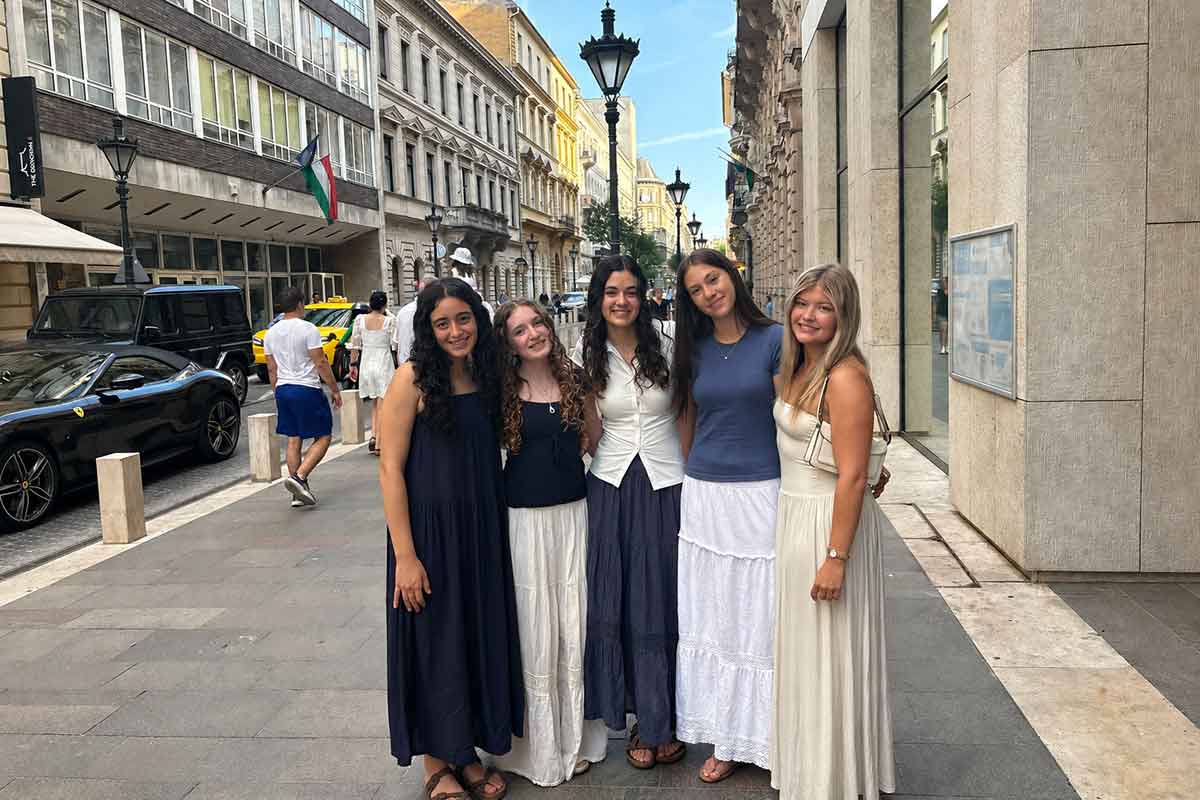
Liv Gien (left) and Sonya Solomon (second from right)
Sonya: We saw what was happening with the war in the news. We also knew that last year’s trip had to be cut short in Poland before they ever arrived in Israel. When the staff started to talk about making the trip entirely in Europe, it wasn’t a shock. I said to myself the same thing I had said about Israel: “It’s Europe. You can’t have a terrible time in Europe!”
Micah: I didn’t think JEWISHcolorado would let our group be in danger. The situation just felt too extreme for us to safely travel to Israel. I was so impressed with how well the staff was able to switch to Europe. They were dedicated to keeping the trip alive. We did not get to Israel, but I wasn’t disappointed because our four weeks in Europe were amazing.
When you think back on this trip in future years, which experience do you think will stand out in your mind?
Micah: The concentration camp at Majdanek in Poland looks exactly like it did when it was being used to kill many Jews who were not so different from me, except they were born in a different era. You could feel how evil the place was. Zachary [Zimmermann, one of the group leaders] led us in the singing of the Shema inside the gas chambers. Singing in the middle of death and despair will stay with me in future years.
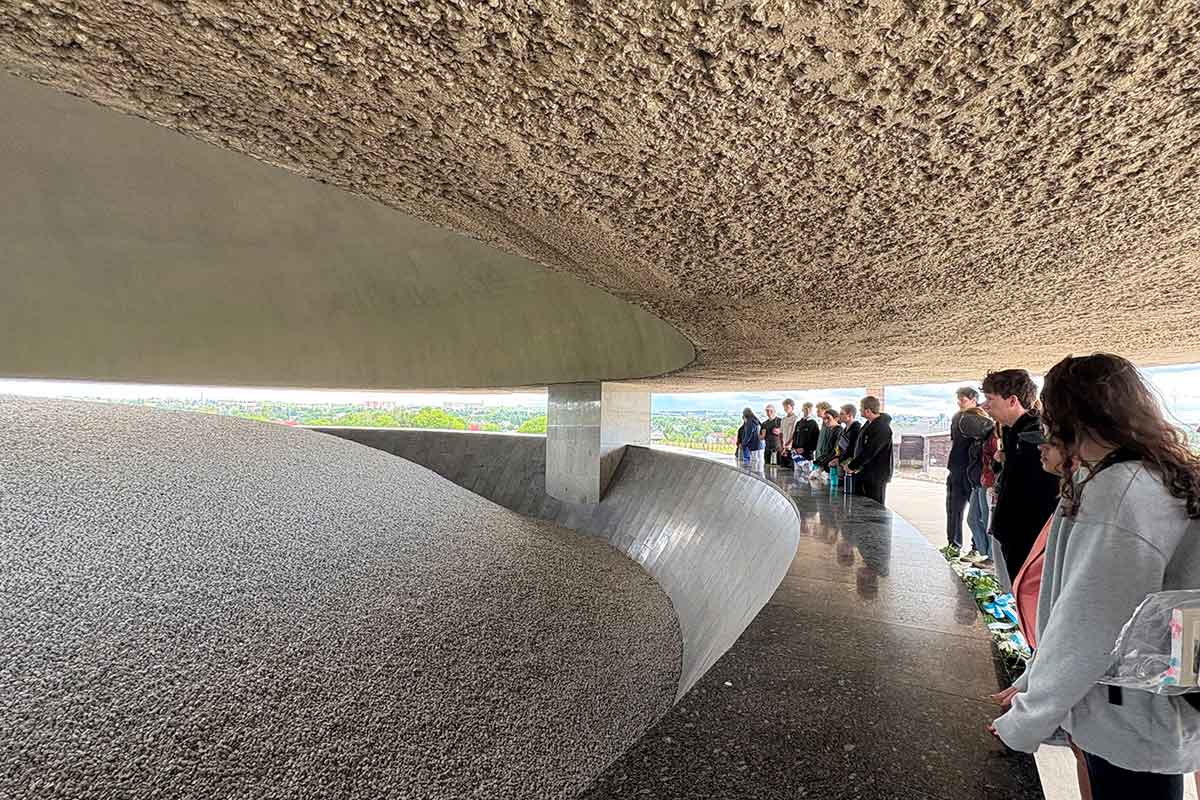
IST 2026 at Majdanek
Liv: As we drove up to Majdanek in the bus, we could see homes and apartment buildings out of one side of the bus and then suddenly, on the other side, the concentration camp appeared. The bus fell into complete silence. No one was talking. I will always remember that. They took down half the camp to build housing, and now people live so close they can see Majdanek out of their windows. They just go about their daily lives and don’t think about the lives that were destroyed there.
Sonya: Auschwitz was also very bleak but, compared to Majdanek where nothing has been refurbished, Auschwitz feels more like a museum telling the history of the Holocaust. What got to me at Auschwitz were the artifacts of people who died—the shoes, the clothes, the hair. In comparison, Majdanek feels very raw and real with not many tourists there. It’s hard to wrap your head around the fact that your own people were treated like they are not human.
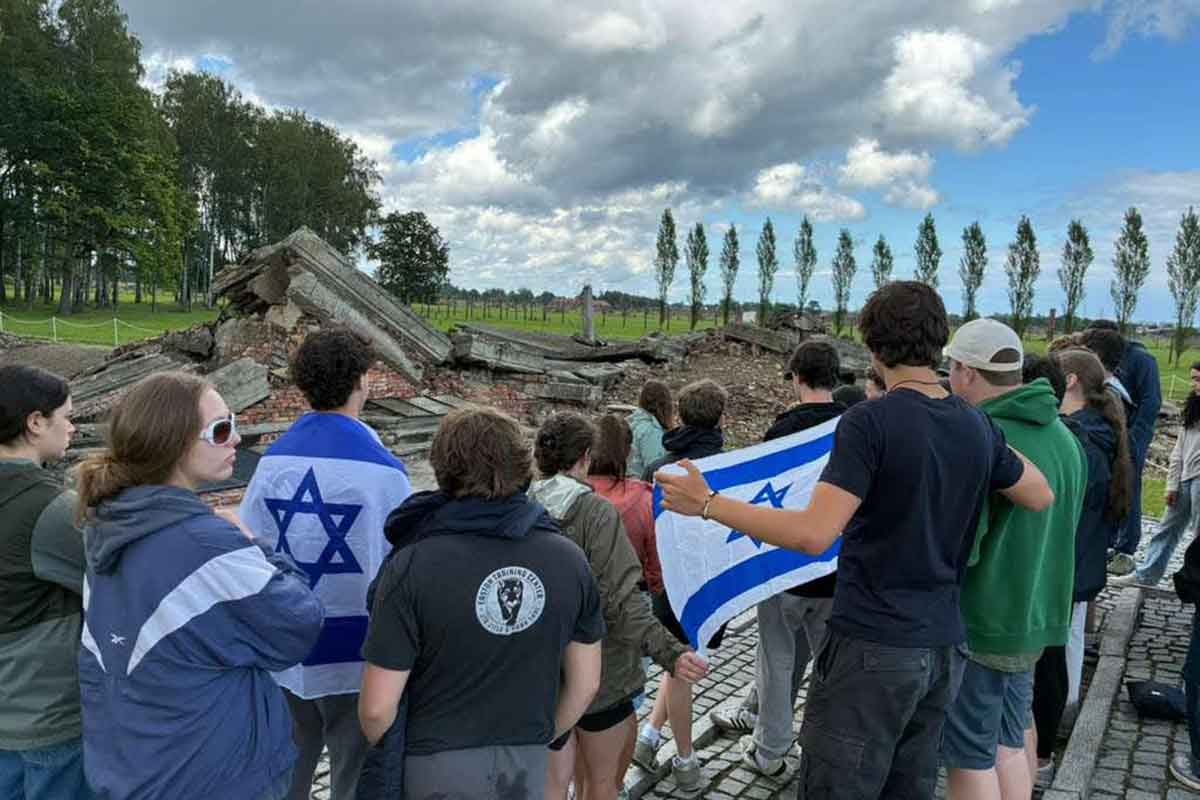
IST at Auschwitz
Can you share other experiences that will stay with you from this trip?
Sonya: In Poland, we visited a synagogue that had been made into a museum and the display included things like a Torah, a mezuzah, shabbat candles, a kippah, and a prayer book. But these were not artifacts from another time. These were items you would have around your house today. It was disconcerting and disheartening to see the entire religion of Judaism treated like a museum display. But it was also a unifying moment, a reminder that it’s important to proudly show that you are Jewish to the rest of the world.
Liv: When we were in Berlin in the Old Jewish quarter, we did a service project cleaning brass-topped cobblestones. More than 100,000 of these stones are set in sidewalks across Europe and are inscribed with the name of a victim of the Nazis who had lived there. They are called Stolpersteine (stumbling stones). The stones are meant to be a gravestone for people who never got one. We had seen these stones as we traveled, but we didn’t know what they were. But now we knew we had been walking in places where Jews walked before they died in the Holocaust. By cleaning their stones, we preserved and shared the story of that person.
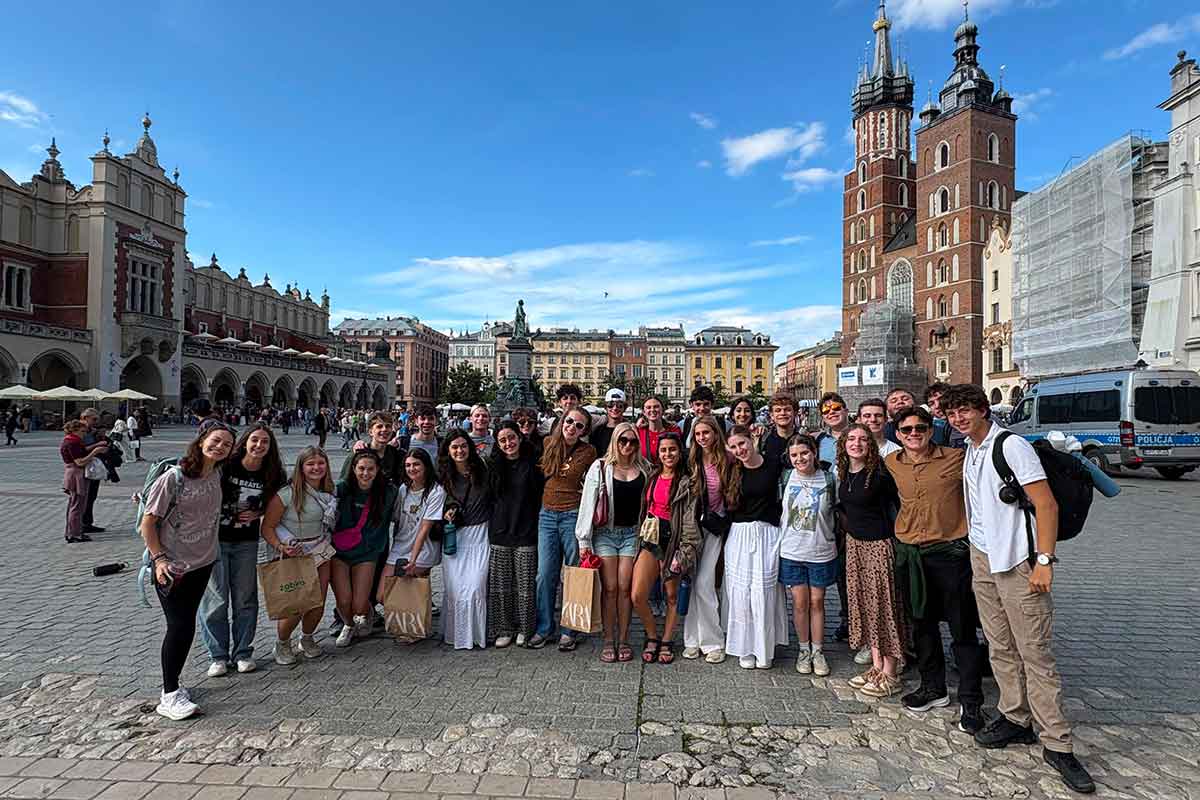
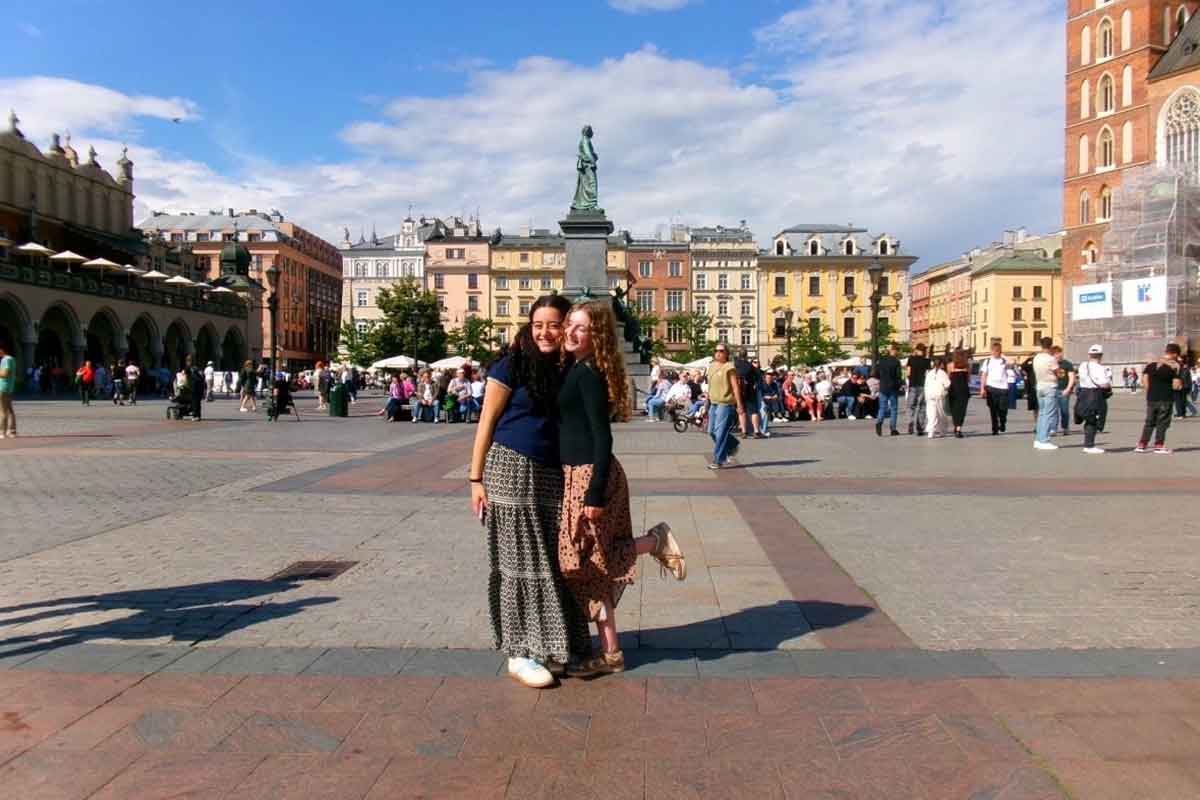
IST in Krakow, Poland
Micah: On a Saturday morning in Krakow, a group of us went with Zachary to a Chabad. They were auctioning off the honor of different jobs, so Zachary purchased spots for the four boys while the girls were in a separate section for women. We learned that this is a common way to raise funds for the synagogue and other charitable causes. My job was to raise the open Torah scroll after reading it. Everything was in Polish, but seeing that community of Jews and participating in their service was fascinating.
Sonya: I loved Shabbat on IST. For me, the hustle and bustle of being a high school junior makes it hard to slow down for Shabbat. But on IST, it felt like summer camp because you are so unified and the IST kids actually ran Shabbat. When you are around so may Jewish teenagers, it’s just nice to take a second and breathe and celebrate a special moment of rest together.
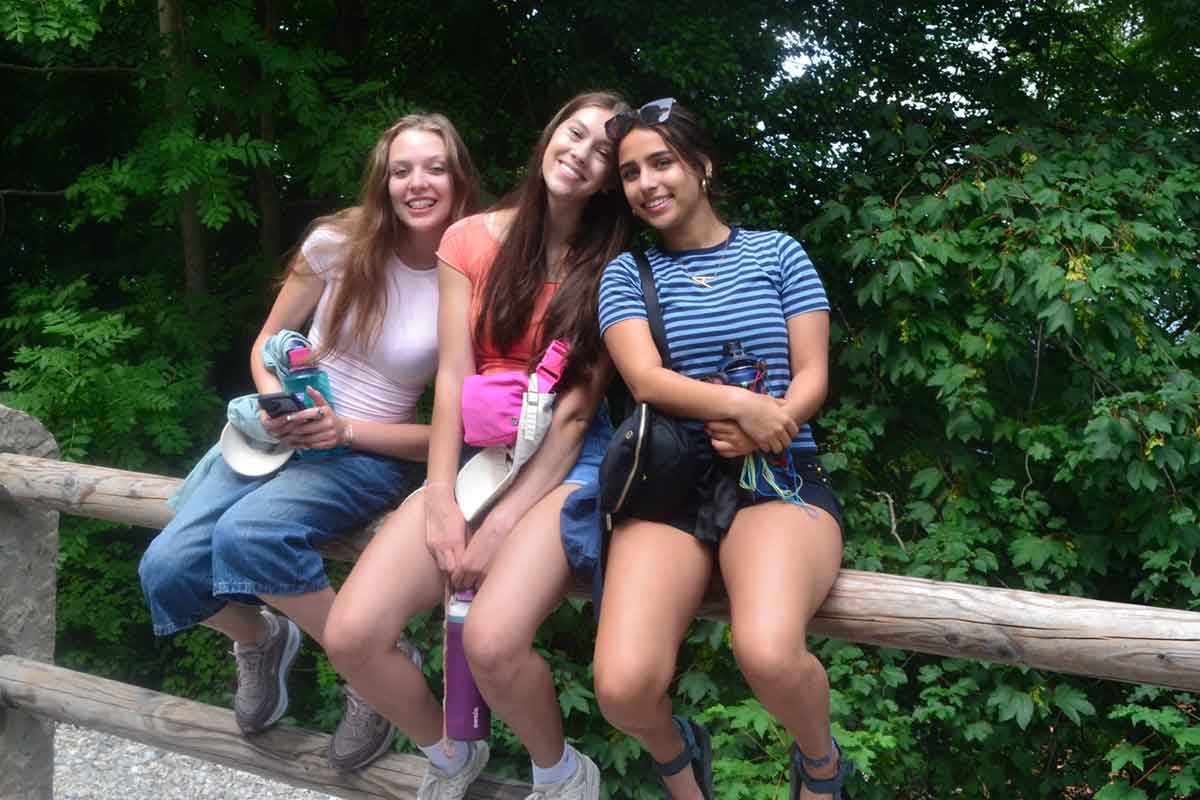
Sonya (middle)
Liv: In Bratislava, the bus suddenly came to a stop next to a highway. The trip leaders told us to get out and see what we could observe. It seemed like a completely random site, and we were hungry, so we just wanted to go get lunch. Then the staff told us that to build the highway, the government had torn down a synagogue that had survived World War I and World War II. It was a powerful reminder that antisemitism—people not wanting to coexist with Jews—did not stop when WWII ended. It continues today.
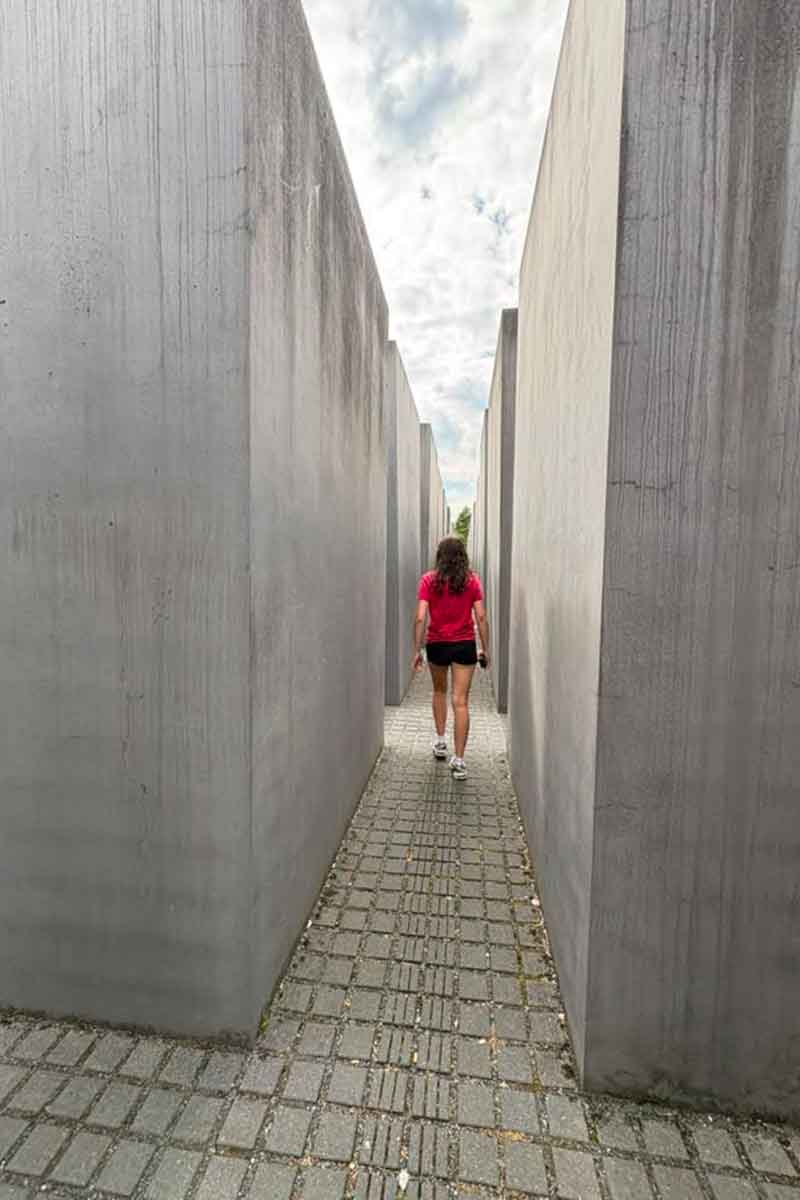
Memorial to the Murdered Jews of Europe
Micah: The Memorial to the Murdered Jews of Europe in Berlin was very powerful. It’s a series of grey concrete slabs on a sloping field. The blocks keep getting bigger and the ground gets deeper. Dwarfed by these tall stones, you experience the vastness of the Holocaust. There are also trees that are the same size as the stone blocks and to me they represented new life. The Holocaust did not destroy the Jews—Judaism still exists today.
Many generations of people who have gone on IST stay friends for decades after the trip. Did you make bonds with new people in Europe?
Liv: I have never been as close to people as I am to the IST group. The funny thing is that I came on this trip with my best friend. If she wasn’t going, I would not have gone because I didn’t think I would have fun without her. But by day four, we had both made new friends and we didn’t even spend that much time together! I think when you see the horrible things that happened to the Jewish people in a concentration camp and you are holding hands and hugging to get through the experience, you immediately become close. And when we got to the fun part of the trip, it was as if we had known each other for years.
Micah: This trip created community in a profound way. I made lifelong friends. Everyone I talked to after we got back was sad that we were no longer together on IST. We planned a pool party right after we got back and 25 of the 30 kids on the trip came and the JEWISHcolorado trip staff also came!
Sonya: I remember walking into the airport the day we were leaving Denver and thinking that maybe I should just turn around and go home. I was that terrified. By the end of the trip, there was not one person in the group that I had not talked to at least once. Everything we experienced connected us, and we will never have those experiences with anyone else. I have already hung out with my group of IST friends since I got back—no problem, I can drive down to Denver!
We have talked about a lot of serious experiences, but the trip had plenty of fun times as well.
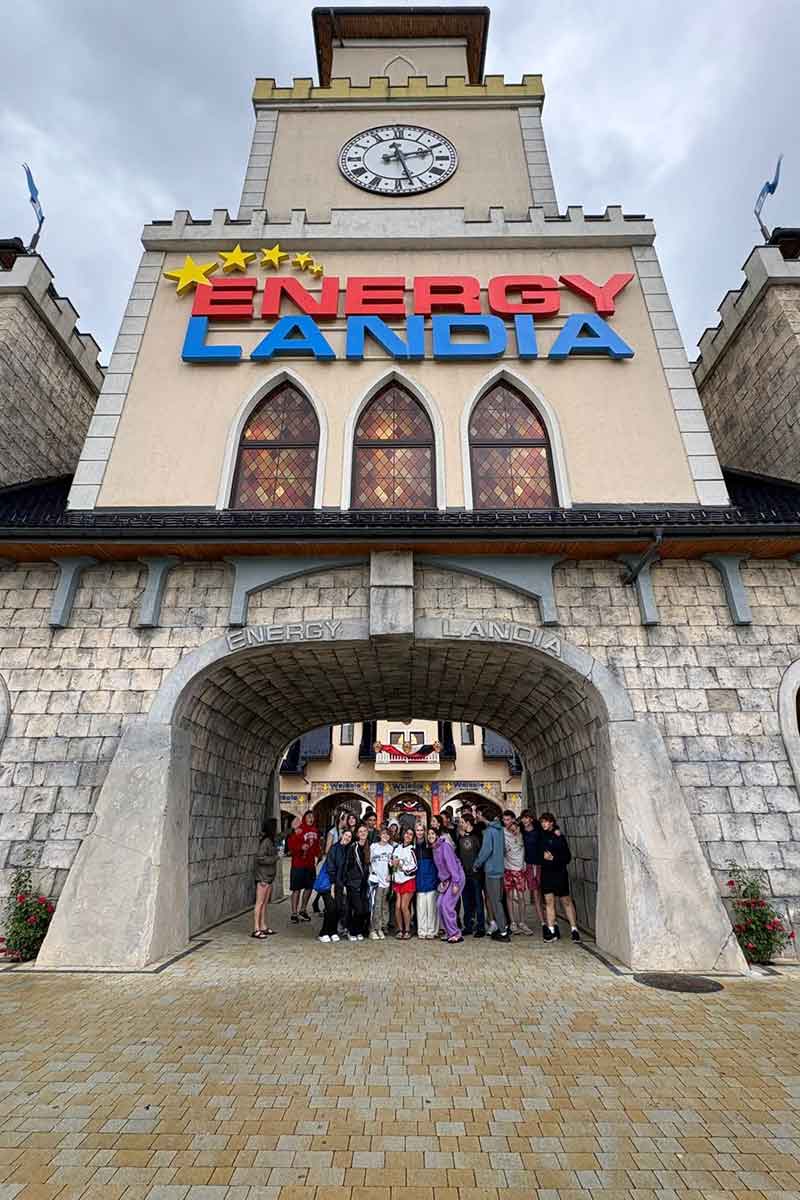 Micah: In Poland, we went to Energylandia which is this amazing amusement park. The day before we had been in Auschwitz, so we had a day of joy and happiness after the horrors of Auschwitz.
Sonya: In Budapest, I tried street food for the first time and that was cool. It was this Hungarian fried dough called lángos with sour cream and cheese. And at Energylandia, I met and got to know more IST people just standing in line for the rides!
Liv: The staff did a perfect job of balancing fun and serious activities. A good example was our time in Budapest. During the day, we took a walking tour of the city and heard about discrimination and at night we took a trip on the Danube River.
You were in Europe during a record-setting heat wave. How did that work out for you?
Sonya: It was so hot and humid! If there was one thing the entire group agreed on is that it was hot!
Liv: We were in Prague on the second hottest day in the city’s history, and our hotel had no air conditioning. We threw all the covers off the bed. I still could not sleep, but my roommate conked out. Every time I am that hot again, I will remember watching her sleep. This has really made me appreciate air conditioning at home!
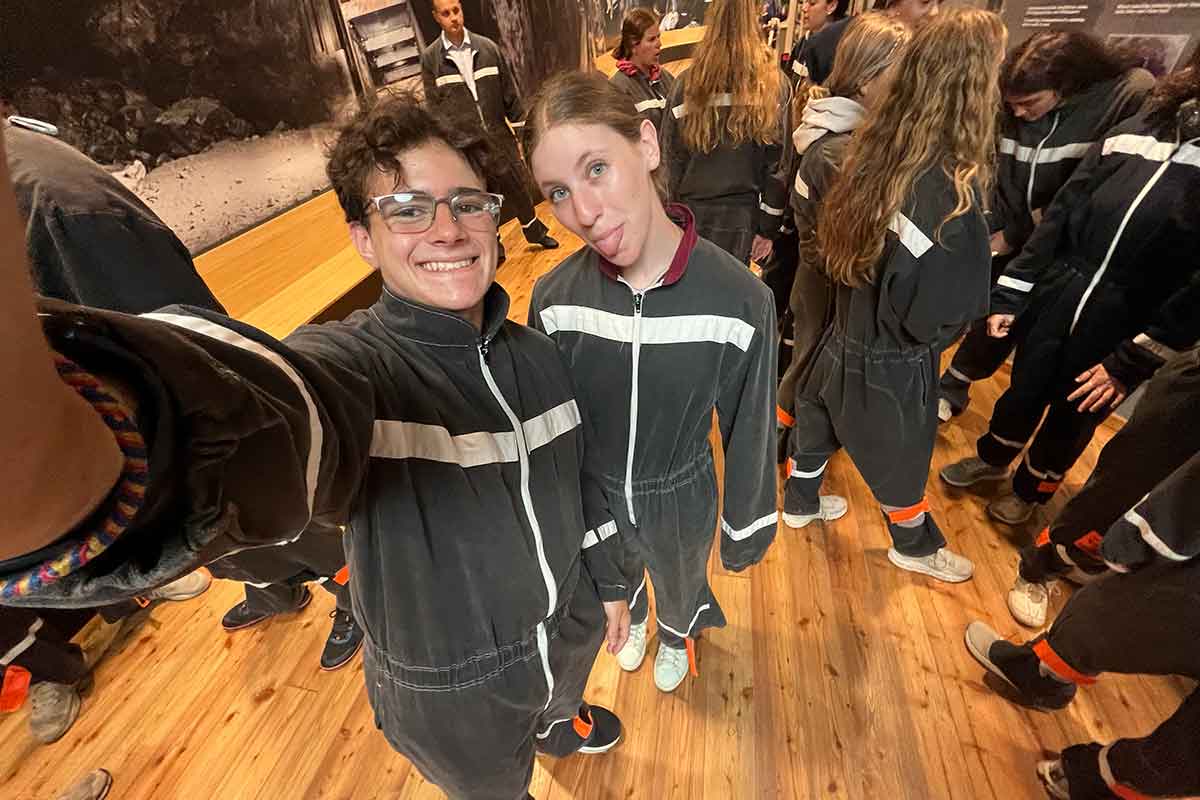
Micah: That first night in Prague with no air conditioning was so bad. By the second day, the staff had moved us to a nicer hotel with AC. It was just another example of the staff’s ability to pivot to make everything memorable and better.
Overall takeaway from Europe?
Micah: I had always heard there were few Jews in Europe, but you don’t really understand that until you see the numbers. In many areas where there were hundreds of thousands of Jews, there are now just thousands or fewer. With this trip, I internalized the impact of the Holocaust.
Liv: What do you do with a synagogue when there is no longer a practicing Jewish community? People were married in that synagogue and then forced to move away or died in a concentration camp. Lives were uprooted because of antisemitism. These are not just statistics. These are real people’s lives.
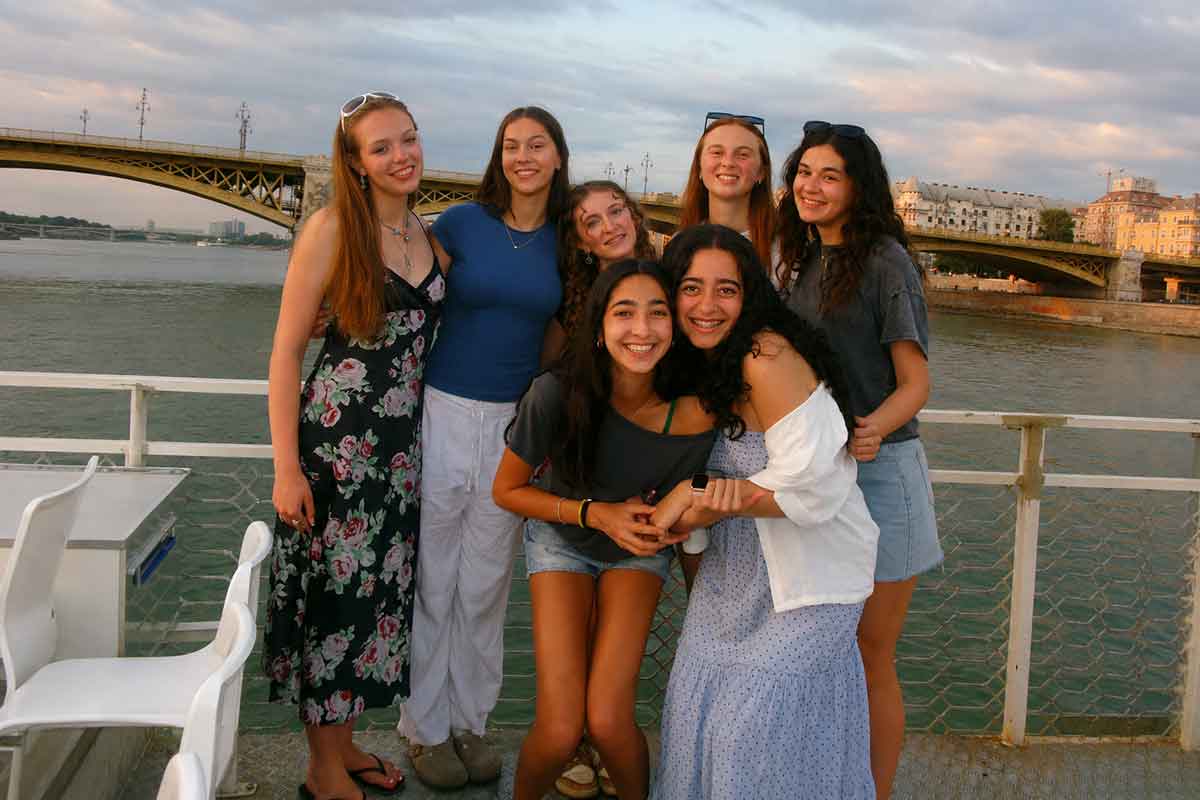
Sonya (back, second from left) and Liv (front right)
Sonya: Berlin was our last stop, and there was a thriving, vibrant Jewish community there. They were proud of being Jewish and they wanted the world to know. Even with the horrible history in Germany, we must continue visiting the country to help keep Judaism alive.
Did you return home changed by IST?
Micah: The staff had done such a good job of planning the trip even on a short timetable. Going on IST made me even more proud to be Jewish. People who did not feel very Jewish became more Jewish. People who were very Jewish gained a deeper understanding of their Judaism. Seeing all the places we visited makes me want to carry this legacy in my life for all those people who could not live their Jewish lives.
Liv (left)
Liv: I feel 100 percent changed by this trip. I now realize that I really need to marry Jewish and send my children to Jewish schools. Rather than just rushing into dating in high school, I will wait to meet someone who shares my Jewish values. That’s my personal transformation. That is the way we keep alive everything our ancestors fought for and remember the people who died.
Sonya: I am a completely different person. I grew up Jewish, but by the time I got to high school, it stopped being such a big thing in my life. That has now completely changed. Seeing the hate and horrible things that happened in Europe opens your eyes. Many people fought so that Jewish people can still be here today. I saw that firsthand, and I want to continue to be proud of my Judaism because for so much time in history Jewish people could not be proud.