



To camp or not to camp?
It’s the season when families across the country are making plans to keep their school-age children busy and with enriched summer experiences. For many parents, that means thinking about sleep-away camp. And for many Jewish families, it means giving strong consideration to the advantages of attending a Jewish sleep-away camp.
“Jewish summer camp offers immersive Jewish experiences that are woven into daily camp life,” says Cindy Coons, JEWISHcolorado’s Director of Family Engagement & Jewish Explorers. “These unique experiences help to strengthen Jewish identity, sense of self and belonging, and connections to Jewish community through shared Jewish values that help shape a camper’s love of Judaism and pride in being Jewish.”
No endorsement of a Jewish camp carries more credibility than one from someone who has gone to camp. JEWISHcolorado talked with two campers with very different experiences but with an unwavering commitment to the value of a Jewish summer camp.
Melinda Goldrich
Melinda Goldrich grew up in a California family with a father who was a Holocaust survivor and a “disenfranchised Jewish mother” who, she says, was not observant or traditional. Goldrich attended a Jewish day camp during the summer, but her parents were protective and, for many years, would not entertain the idea of a sleep-away camp.
It fell to Melinda, as a middle-schooler, to use her powers of persuasion to change her parents’ minds about camp. She spent three summers at Camp Ramah in Ojai, California.
“What I found was that it enforced a connection to Judaism that was stronger than what I had experienced in my household,” Goldrich recalls. “I came home every summer with a renewed sense of Jewish connectivity.”
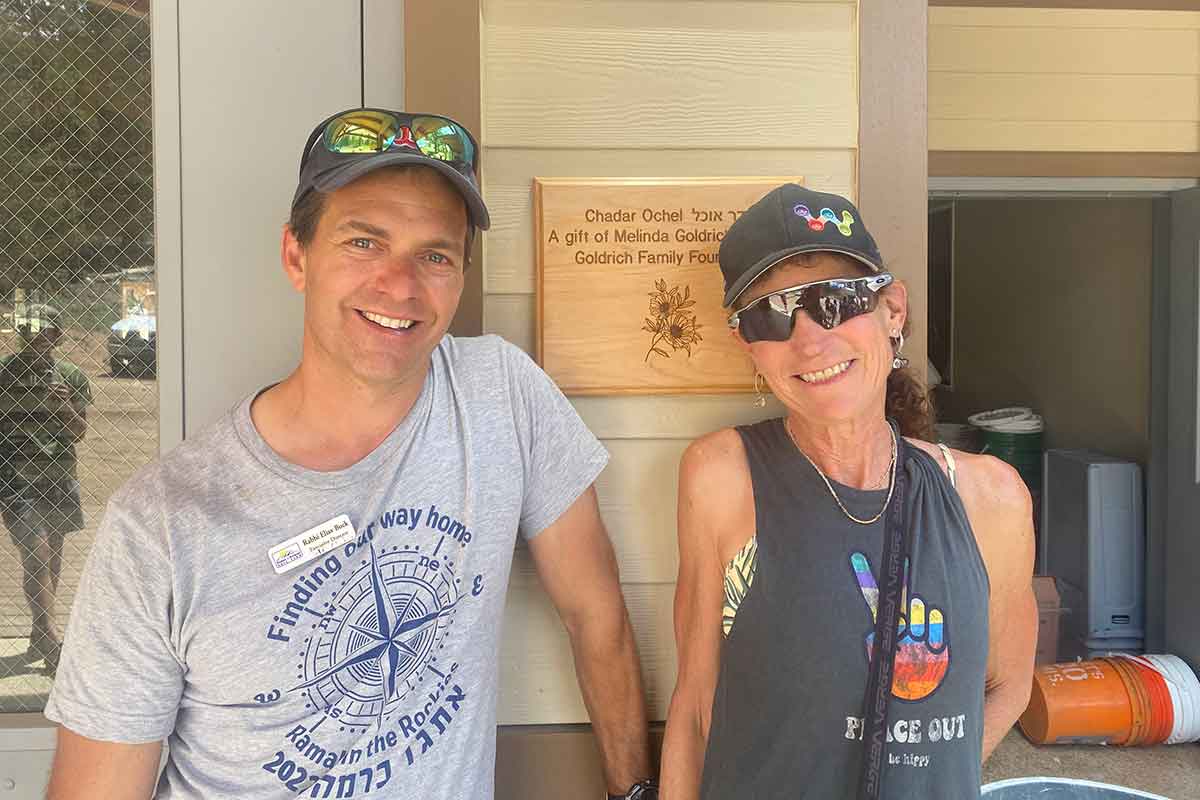
Melinda Golrich visiting Camp Ramah
When Goldrich talks about her memories of camp, she recalls the way religious content—including Hebrew—was integrated into her daily life from the moment she woke up. In particular, she recalls Havdalah, the end of Shabbat, and the excitement it brought as she looked ahead to a new week. The ritual was foreign to her, she says, but “the newness spoke to me—I found it exciting.”
“The requirements of honoring traditions brought all the kids and the counselors together,” she says. “No matter your background, you built relationships with other kids.”
At camp, Goldrich had access to a rabbi and to the adult administration of camp.
“They were approachable adults,” she says. “I loved that multi-generational feeling of camp.”
When she returned from camp, she stayed in touch with friends that she had met there, attending bar and bat mitzvahs. The traditions she learned stayed with her, even when her own attempts to integrate those traditions into her family’s household did not succeed.
The only reason Goldrich did not spend more years at Camp Ramah was because she gravitated to a secular camp with more outdoors and athletic experiences that were not available at that time at Camp Ramah. To this day, when she meets Camp Ramah alumni, she discovers shared memories of their camp years.
“My family celebrated holidays, went to Israel, and had Jewish experiences,” she says. “But when I got older, I realized my time at camp was the most positive experience of Jewish life in my life.”
For the past 20 years, Goldrich has been a camp philanthropist and advocate.
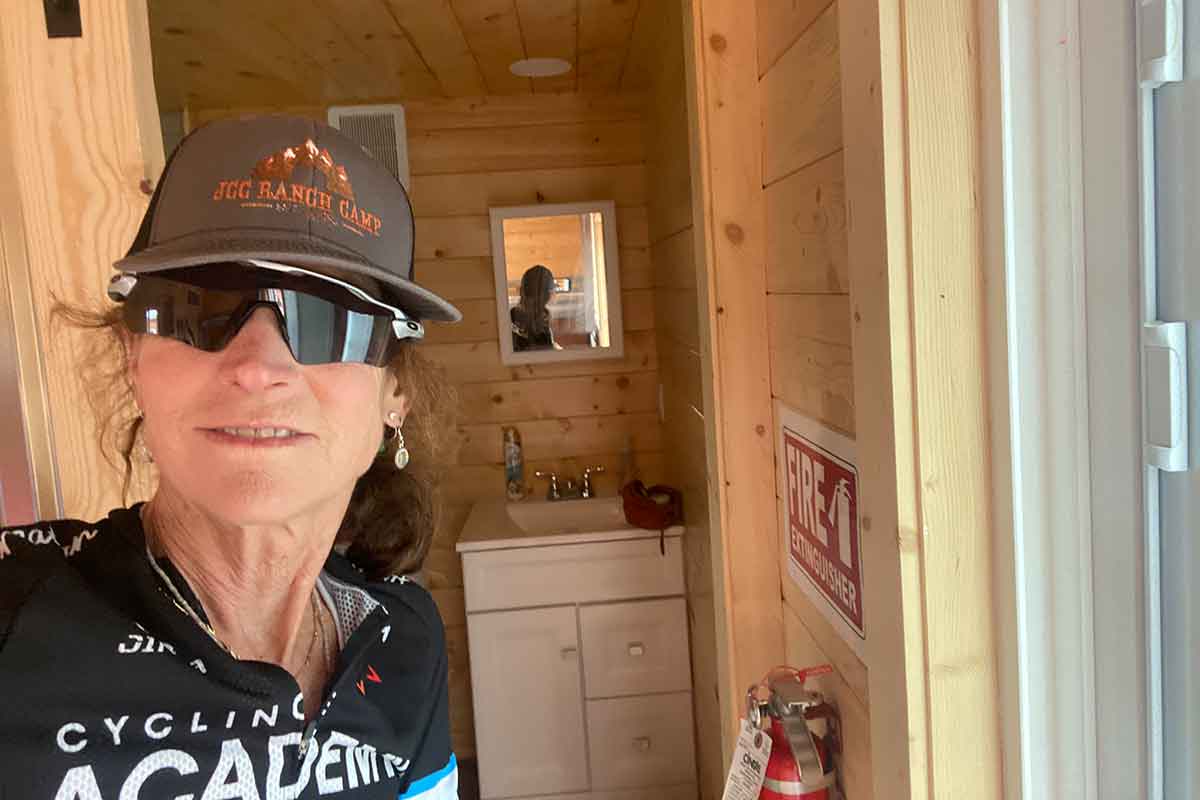
Melinda Goldrich with Ranch Camp completed project
As a philanthropist, she started by offering scholarships to camp for young people in the Roaring Fork Valley, where she lives. She also funds capital improvement projects for both the JCC Ranch Camp and Ramah in the Rockies. She started, she says, by funding an “unsexy” but necessary project—a camp sewer system—and she has moved on to bigger projects, including a dining hall, new cabins, new bath house, new swimming pool, a ropes course, and water features.
She visits the camps she supports and interviews the kids about their experiences there. As an advocate, she talks to her peers about the advantages of going to camp.
“I have peers who do not practice Judaism consistently in their own home lives, and then they wonder why their children are not more connected to their Judaism,” she says with a hint of exasperation. “I say to them, ‘Do you think they will be Jewish by osmosis? It does not work like that!’”
And then Goldrich gives her friends child-rearing advice from her own lived experience: “Send them to camp!”
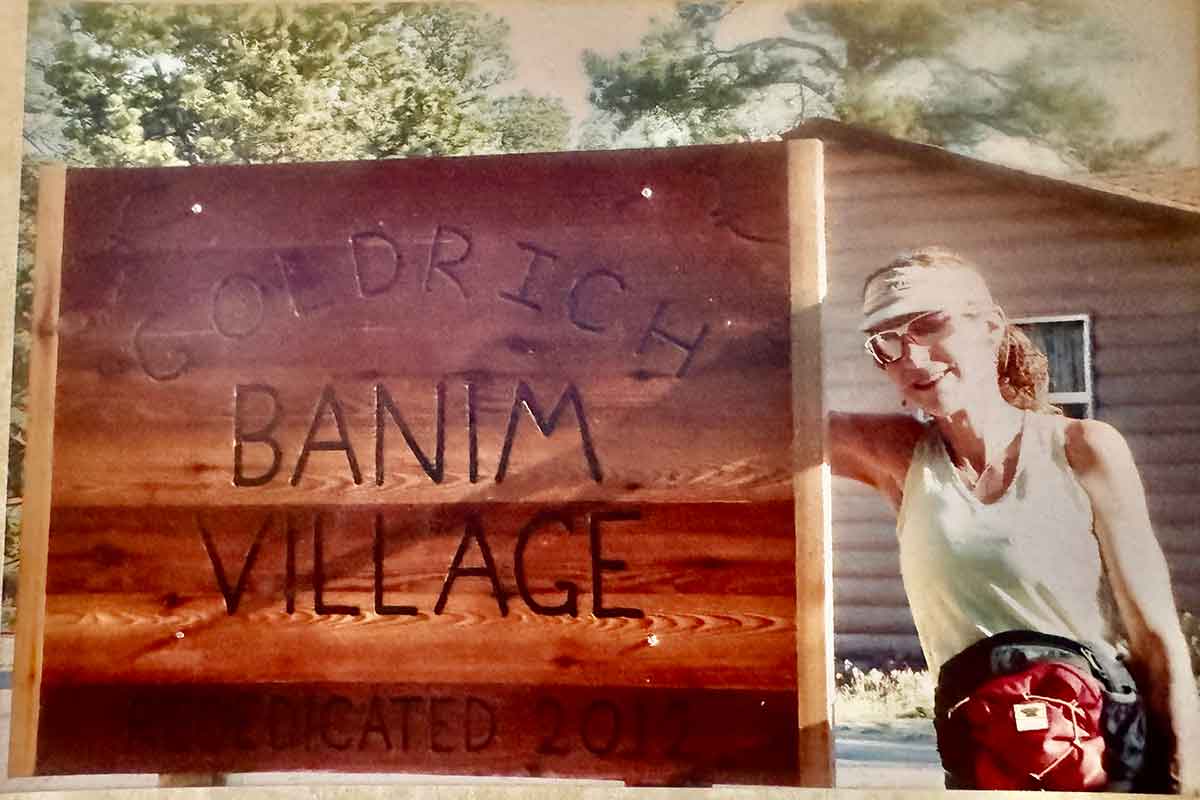
Melinda Goldrich at Ranch Camp in 2012
The Harmon Family
Eliana Harmon went to JCC Ranch Camp before she was even born.
Eliana, who is 12 years old, and her sister Edina, who is 15, are second generation campers at JCC Ranch Camp, following in the footsteps of their mother, Annie, who also went to Ranch Camp for many years.
Edina started at camp when she was very young—around age four. The Harmon family has also gone to family camp, and Annie was pregnant with Eliana on one of those family camp trips. That’s how Eliana made it to camp before making it into the world.
In sending her daughters to Ranch Camp, Annie has hoped they would have the same camp experience that she did—and they have.
“I felt free to be Jewish at camp,” she says. “It’s a safe way to have independence, making your own choices, and it felt similar to a home environment in a way that was familiar and comfortable. I loved it, and my kids love it.”
Annie remembers learning music at camp, music that became a big part of her connection to Judaism. There were not a lot of Jewish students in her elementary and middle school, so camp became a place “where you do not have to explain yourself.”
“You didn’t feel different from everyone,” she says. “In terms of different types of Judaism, I felt like I belonged. It didn’t feel like I wasn’t ‘Jewish enough.’”
Annie says that Edina loves being outside in nature and in the technology-free environment at camp.
“She loves that no one is using technology,” she says. “It is such a relief to her and gives her a sense of freedom. She is in such a great place physically and emotionally when she comes home.”
For Eliana, camp is about having fun. Outside of camp, she does not have exposure to many Jewish friends, so going to camp means she can lose the feeling of being “different.”
“For both my daughters, finding a place of belonging in the Jewish community is not always easy,” Annie says. “Camp is a free and welcoming place to be Jewish and to be who you are.”
The Harmon girls come home from camp eager to continue traditions they have learned at camp—including the celebration of Havdalah. They also come home with lots of questions about kosher meals.
“I have to say, for both of them, they have one favorite thing to do after camp—and that is to get cheeseburgers,” says Annie with a laugh.
Annie also praises JCC Ranch Camp for introducing her children to Israelis and staff from other countries. The payoff from camp does not stop when camp ends, she says. It continues long after her girls come home.
“Meeting Jewish kids at camp spills over to life outside of camp because they might potentially meet again in the larger community,” Annie says. “We trust camp to be a safe place based on tradition, and that is truly meaningful to our family.”