


At the end of November, a group of JEWISHcolorado lay leaders, including Diana Zeff Anderson, Neil and Barbara Oberfeld, Michelle Osterman, Mark Raphaely, and Julie and Steve Schlafer, traveled together to Israel on an Impact Mission. They were accompanied by JEWISHcolorado staff, including President & CEO Renée Rockford, Chief Development Officer Willie Recht, and Shlicha Nelly Ben Tal. After they returned, we talked with Jco Vice-Chair Neil Oberfeld, Mark Raphaely, a new member of the Israel & Overseas Committee, and Julie Schlafer, who serves on the Jewish Federations of North America (JFNA) National Women’s Philanthropy Board about their experiences visiting Israel as the country recovers from war.
What motivated you to travel to Israel on this trip and at this time?
Neil: After October 7th, Jewish Federations of North America asked JEWISHcolorado to raise $3.1 million as our fair share of funds for Israel. We have raised more than $11 million, so we wanted to learn more about the impact our investments have made in Israel and in our sister region of Ramat HaNegev.
It was really amazing to see in person what is happening in Israel. We heard about how our funds have been used, spoke to the people doing good work with our support, listened to their needs, and now we can report back to donors. Taking this trip was our commitment to best practices in grant-making. We were fulfilling our responsibilities to our donors and their philanthropy. All the Israelis that we spent time with were so grateful for our partnership and our support. And for me personally, I believe our Mission to Israel has better prepared me to serve as the incoming JEWISHcolorado Board Chair.
Julie: Originally, I was supposed to go to Israel at the end of January with a JFNA Ruby Lion of Judah Mission, but that trip was scheduled at the same time as CHOICES, which my daughter-in-law Carly Schlafer is co-chairing. I didn’t want to miss CHOICES, and I couldn’t have my tuchas in two places at one time, so the JEWISHcolorado trip worked for my schedule and fulfilled my need to get to Israel.
We have so many people from Florida, California, Texas, Chicago, the East Coast, and the Midwest who come to Aspen and the Roaring Fork Valley, and in my role on the National Women’s Philanthropy Board, I have become the face of JEWISHcolorado in this area. I am the person who explains to residents—and also to owners of second homes and visitors—why they need to support JEWISHcolorado. It was vitally important to me that, on this trip to Israel, I see our partnership region of Ramat HaNegev first-hand, so I could relay to our donors how much our support impacts Israelis who were directly in the line of fire on October 7th and who are now rebuilding their lives.
Mark: Israel has always been an important part of my life. My first trip there was with my family when I was eight years old, before the First Intifada. Israel was at the core of my education in South Africa from a very young age. My parents are both buried in Israel. As a new member of the JEWISHcolorado Board, I was encouraged to join a committee. The Israel & Overseas Committee was a natural fit.
This Mission was on my agenda in large part because of my experience meeting representatives of Ramat HaNegev when they visited Colorado. Even though I have been to Israel many times, I had never visited our partnership region. I thought that joining this Mission would be beneficial to me personally and as part of the committee to better understand the relationship between JEWISHcolorado and Ramat HaNegev.
Could you share some experiences that will stay with you long after the trip ended?
Julie: We met with three October 7th survivors at Kibbutz Holit. On the face of one woman, you could still see the guilt she carries because she had been away from the kibbutz on October 7th visiting her daughter. Her home was right on the edge of the kibbutz, so it would have been the first to be attacked and she would have never survived. Now she has survivor’s guilt, but she pushes aside her own pain, trying to be a grandmother figure who is strong and a source of comfort for others.
Another woman we met is still visibly shaking two years after the attack. She survived by hiding in an attic safe room with her sons. After two years, she still cannot stop her body from shaking. When I said good-bye, I held her very tightly, and she was so grateful. We also met a man who would normally have a very tough exterior, but he had to fight to keep his emotions in check while talking to us. It’s heartbreaking because you realize the stress he is still under. For us, it’s been more than two years since October 7th, but for these Israelis, it feels like only two moments.
Mark: We were standing at the grave of David Ben-Gurion talking with Eran Doron, the mayor of Ramat HaNegev, when I noticed that Michelle Osterman, one of the members of our group, had walked away and was hugging someone. It turned out to be Dovie Roll, who has lived in Ramat HaNegev for more than 25 years, and Michelle has known him for all that time. Michelle was like a mother greeting a long-lost child. Here in plain sight was a tangible manifestation of the relationships that exist in this partnership. Seeing the deep respect between these two people made me realize that JEWISHcolorado’s connection to the region runs much deeper than just providing funds for projects.
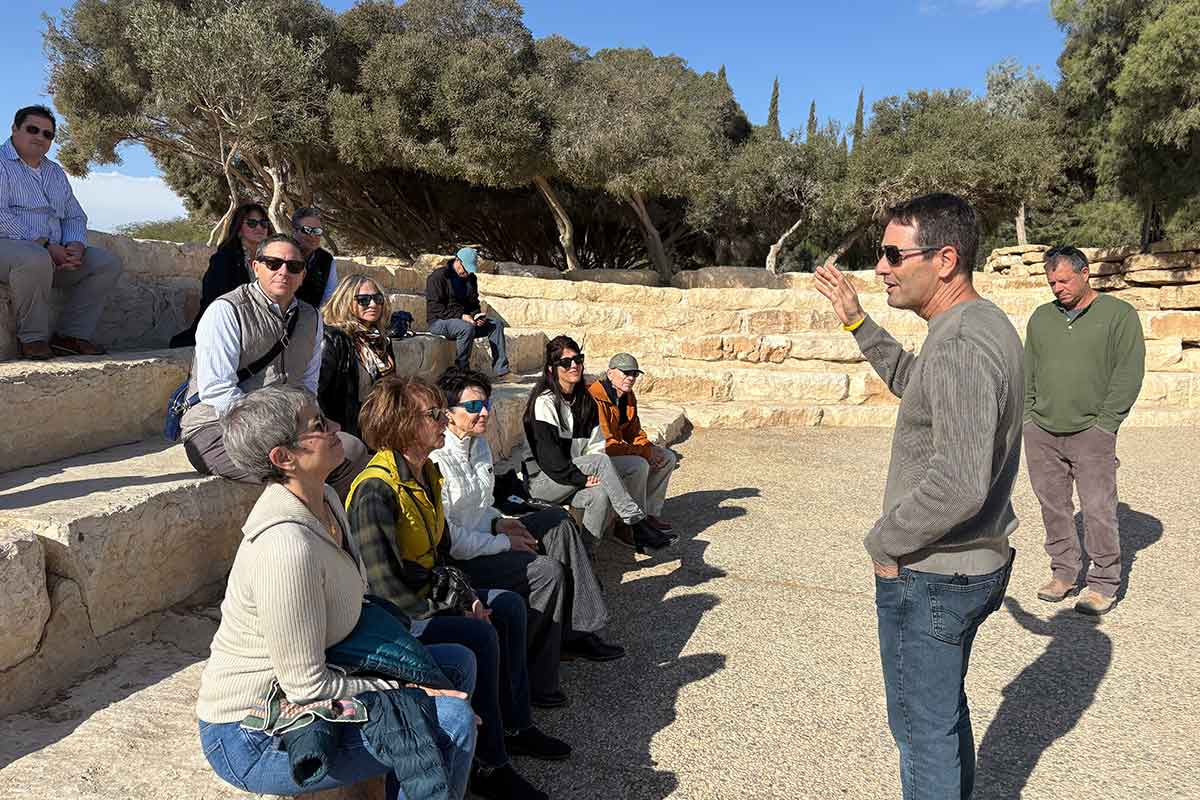
Dovie is an incredibly humble man. After October 7th, he led the effort to locate hundreds of missing people, often with very few clues to locate and identify the remains of victims, but he downplayed the importance of his work. I took him aside and thanked him for the closure and comfort he had provided to families who had experienced the worst kind of loss. It was easy to see why Michelle and her husband Michael had this incredible relationship with him, and it inspired me to develop the same kind of connections.
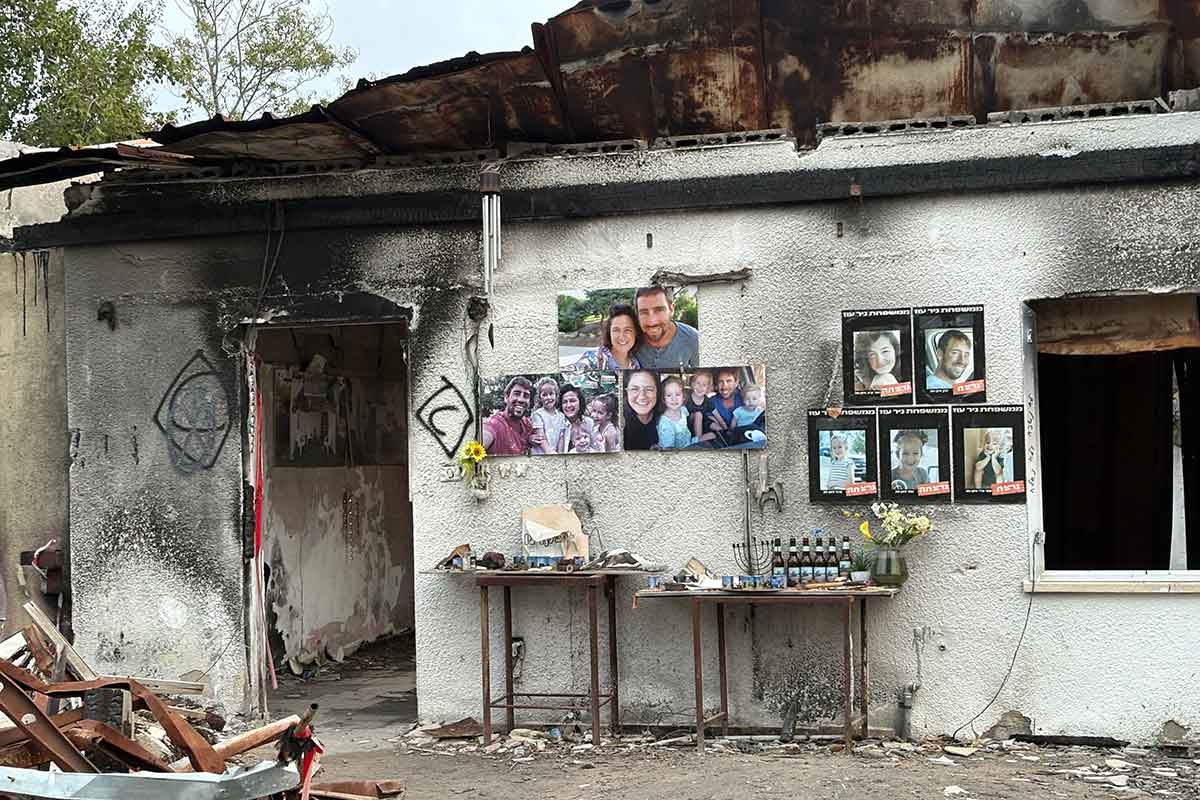
Neil: Traveling to the Gaza Envelope was remarkable. At Kibbutz Nir Oz, I met Gadi Mozes. He is 81 years old. He was kidnapped on October 7th, held in 10 different places, and released from captivity after being held hostage for 482 days. His partner, Efrat Katz, was killed by friendly fire as an Israeli Air Force helicopter fired during the attempt by Hamas terrorists to kidnap her. Gadi is my hero. He and I walked through the kibbutz, and he showed me burned homes and places where people were killed or taken hostage. He also showed me a tree that was 70 years old, and he still remembers the day it was planted.
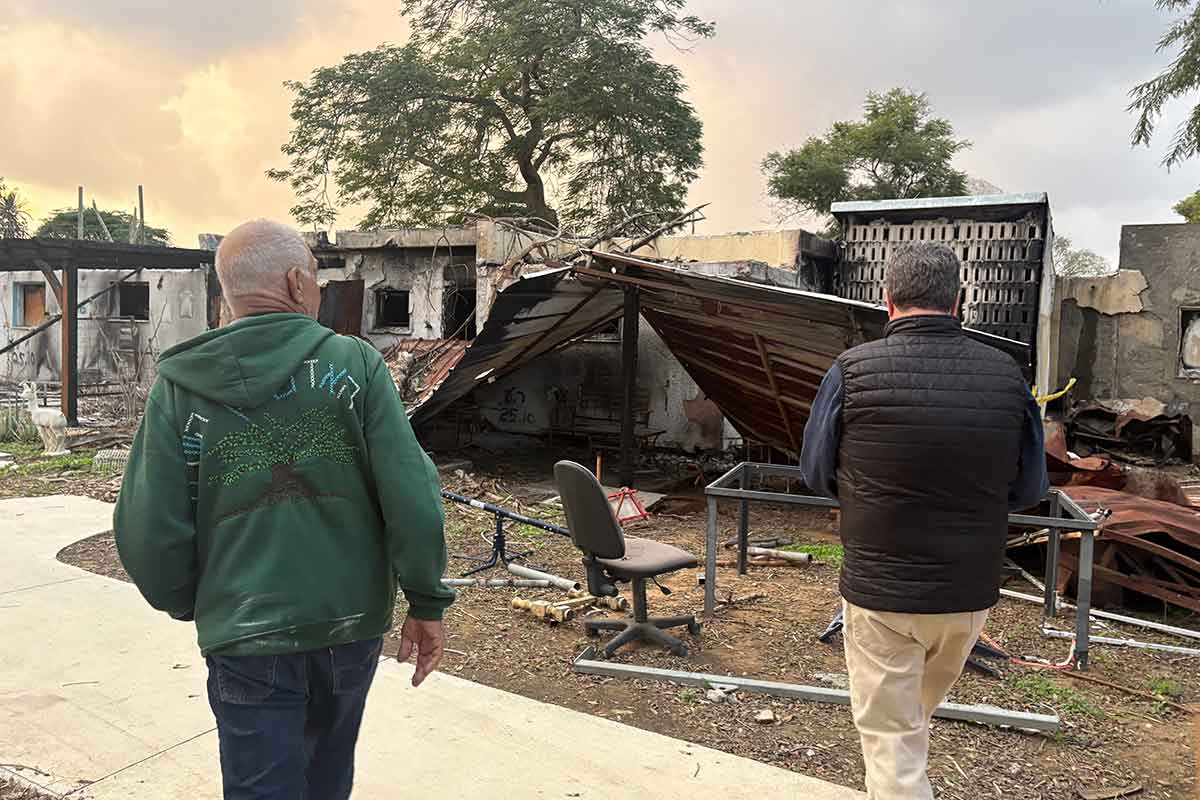
Gadi Mozes walks with Neil Oberfeld Kibbutz Nir Oz
We sat in his house, and we could hear bombs in the distance. But the kibbutz is rebuilding. He has resolved to bring it back. He says it is the last thing he wants to do in his life. After we left the kibbutz, he sent a text to Nelly thanking us for coming because meeting us had such an impact on him. That really surprised me, because he was the one who had impact on us with an outlook that was so uplifting and inspiring.
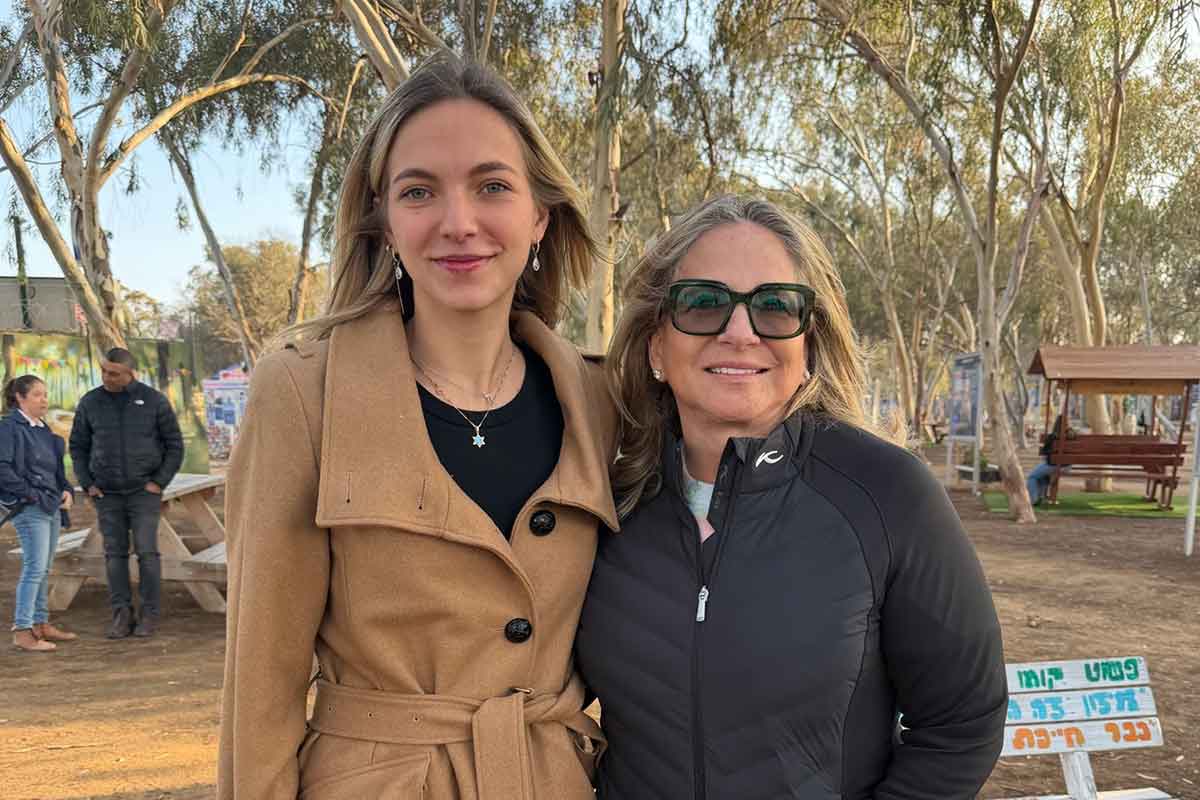
Julie: At the Nova Festival Victims Memorial, we met a beautiful young woman in her mid-twenties. When Hamas attacked the Festival, she ran to a bomb shelter with her significant other, where they hid packed together with about 30 other people. The terrorists threw grenades into the shelter and then came in and shot at everyone. When the IDF arrived to remove the bodies, they found this woman injured but still alive. Her boyfriend had died. I could relate to this young, bohemian concertgoer because that could have been me in the 1970s and ’80s. She has now become religious, and she speaks to people at the Nova memorial because telling the story also helps her heal.
Mark: If you are at all pessimistic about the state of affairs in Israel, spend a day at the educational community Nitzana. We had a chance to reconnect with former Colorado Shaliach Itai Divinsky and Nitzana Director Avi Cohen, and that was a wonderful reunion. Together we walked to a gathering area that overlooked the Negev. There, 15 residents and educators of Nitzana—including Ukrainian olim and members of the Bedouin community—spoke to us about how meaningful their life was, and for the first time, I really understood the work that Nitzana does in community building. From the educators, we heard how much pride they take in shaping young Israelis—both Jewish and Bedouin. These people are dedicating their lives to the integration of Israelis from all backgrounds, and that gave me hope for the future of a stronger Israeli society.
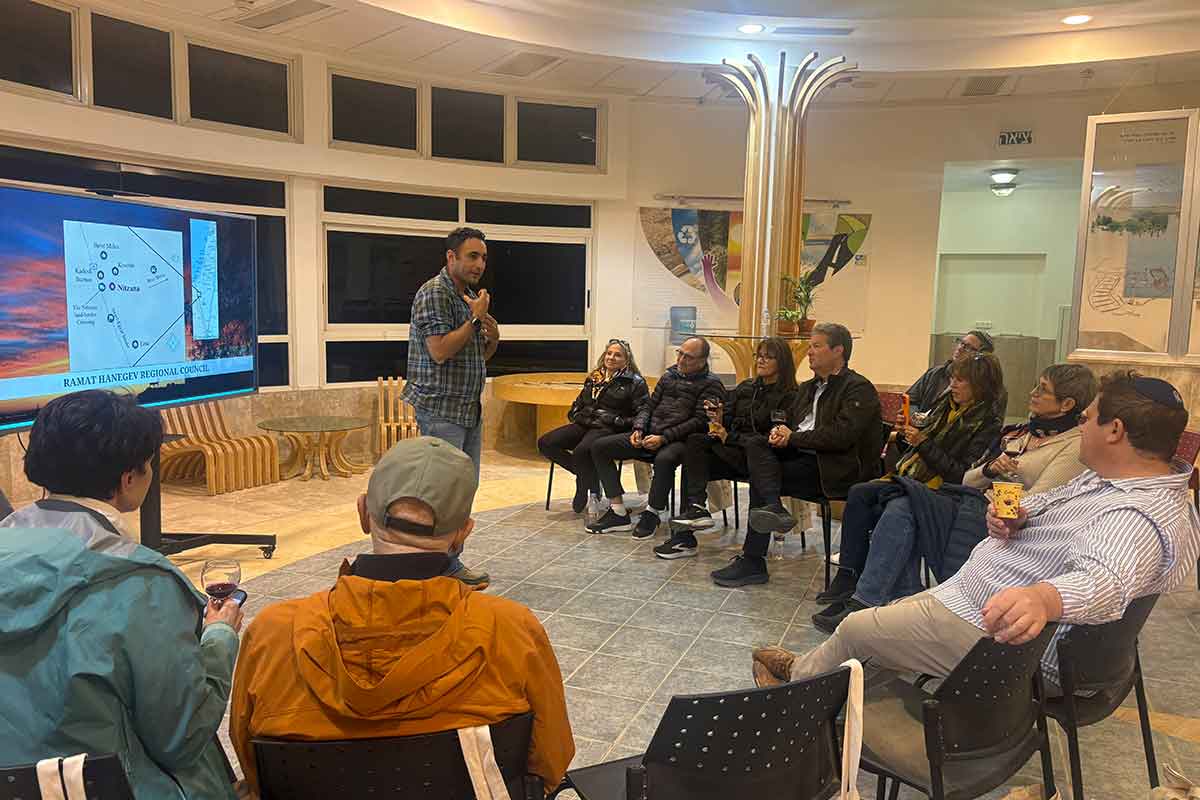
Avi Cohen speaks to Impact Mission group in Nitzana
Neil: We met three people at Kibbutz Holit, all of them survivors of the October 7th attack. They told us stories of how their homes were looted and burned, their neighbors killed, their orchards destroyed, their animals killed. Yet they were such a resilient people. They are rebuilding the kibbutz because they want to stay. There are new homes going up and children playing in view of the construction sites. There are even new members joining the kibbutz. They had a bris scheduled for the day we visited! To me, they were amazing and a real inspiration.
Julie: Nothing you have seen in photographs or videos can compare to standing in Kibbutz Nir Oz in person and seeing the destruction. To walk the kibbutz with Gadi Mozes was incredibly difficult. A member of our group asked him how he sleeps, and he said, “The same as you. I take a pill, I fall asleep, I dream of nothing.” My mother was a Holocaust survivor who lived through typhoid fever, three death camps, a death march, and the Warsaw Ghetto. Gadi reminded me of my mother—very strong and matter-of-fact. He is bound and determined to make Nir Oz viable. “This is not the end of us,” he said. “We will persevere.”
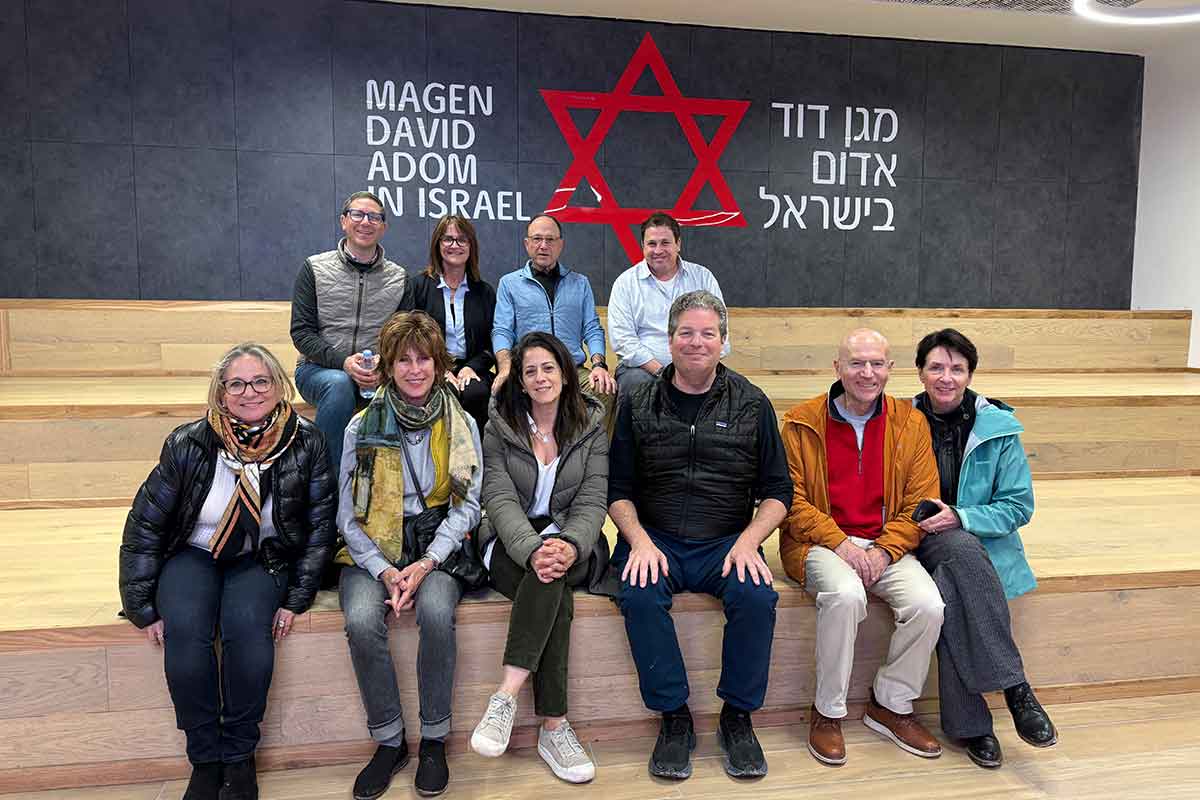
Mark: The tour of the headquarters of the Jewish Agency in Jerusalem was incredible. It was clear that the conversations and meetings that took place in that building more than 80 years ago are bearing fruit in Israel today. As we were sitting in the boardroom, we got the very early reports of the attack at Bondi Beach in Australia. Just as we were hearing this news, I got a text message from my brother in Sydney saying they were okay. Hearing about a modern-day tragedy while we were sitting in the offices of the Jewish Agency made me realize that, despite the incredible progress we have made since those early days, the challenges of the Jewish people are still immense.
Neil: At the Jewish Agency, we met in the same boardroom where Chaim Weizmann and David Ben-Gurion once sat and worked to create an organization that would unite Jews around the world in their support of Israel. It was amazing having fellow trip participant Diana Anderson with us because of her deep experience and strong connections with the Jewish Agency. Talking to the leaders of the Jewish Agency gave me an even better understanding of how all the pieces of the puzzle fit—how JEWISHcolorado helps fund the work of the Jewish Agency and how the Jewish Agency uses those funds in Colorado and in Israel.
Was there anything that happened on the trip that you had not fully anticipated?
Mark: I am constantly amazed by the resilience of the Israeli people. They don’t get to pause their resilience—ever. Every time I experience this, I am inspired.
During this trip, there was so much mutual appreciation and immense gratitude between the Israeli leaders of organizations and initiatives supported by JEWISHcolorado and the delegates from JEWISHcolorado. They would thank us, and we would thank them. The work that they do could not be done as effectively without us. Giving the money is the easy part. Doing the work is the hard part. It was humbling to see how invested all these organizations are in uplifting the fabric of Israel.
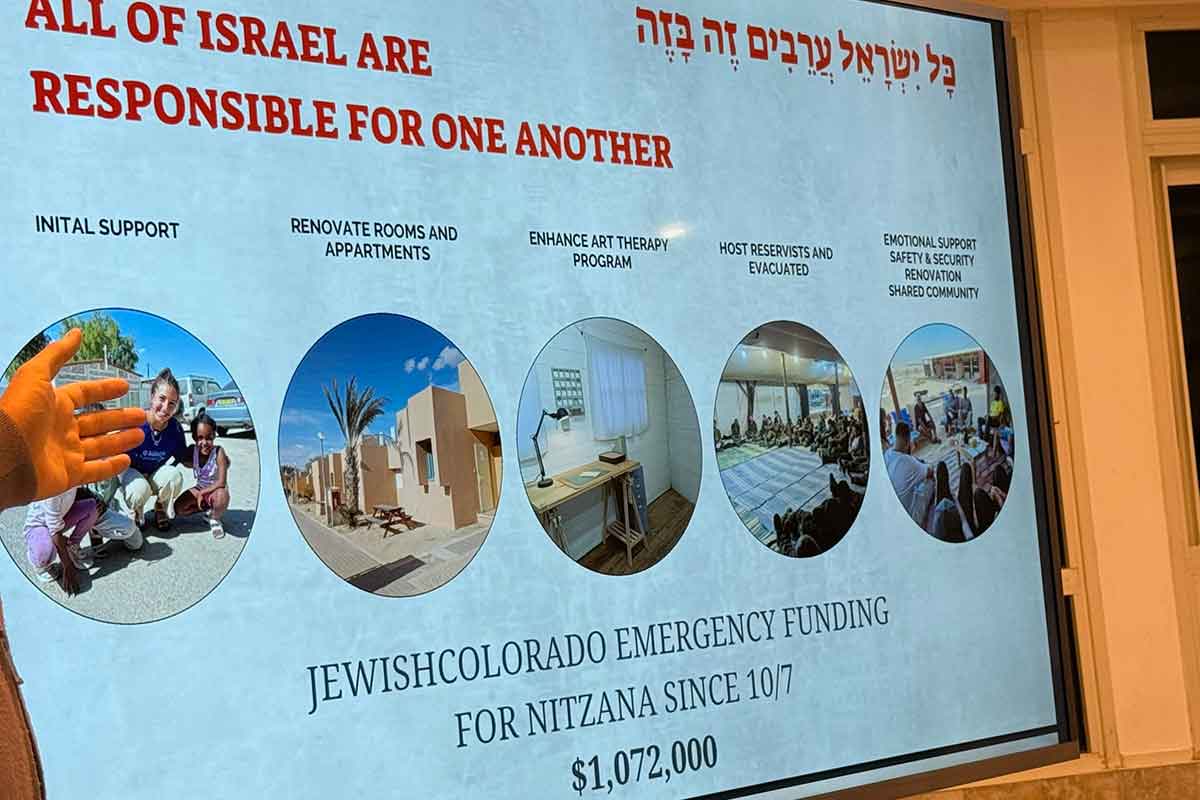
Neil: I expected our trip to be a series of visits to historical sites. But the experience in Ramat HaNegev and the Negev Desert was much more about the people who live there. They are remarkable. They live on the frontier, and they have turned the desert into beautiful, productive land. They are so dedicated to their mission, living Judaism by creating a new community and turning desert into fertile land.
While we were there, we spent time with Ramat HaNegev Mayor Eran Doron. We saw a school bus that had been donated by JEWISHcolorado, and we saw a library at an elementary school that we helped build through donations. Students as young as second grade shared what this new learning space means to them. The good work that we have already done in Ramat HaNegev was clear to all of us. It renewed my determination to continue this important partnership. Jco and its donors’ funds are being well-invested and deployed in such a way to make an incredible difference.
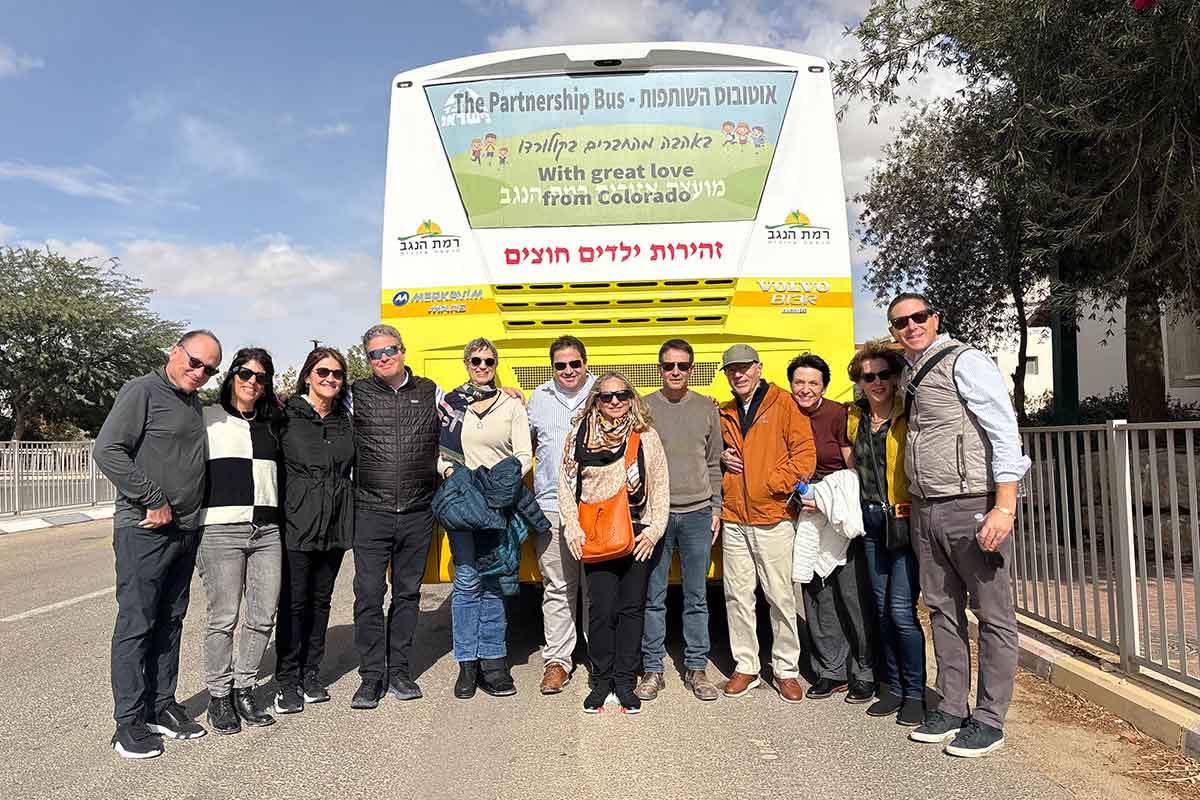
Julie: I did not anticipate the intimacy of the conversations we had about October 7th, and also, two years post-trauma, I did not anticipate the depth of my reaction. Knowing what my mother went through, I always thought of her as a “super survivor,” and I felt that there was nothing to compare to her experience. The people I met who endured the October 7th attack are super survivors. If you know me, you know that I have a tough exterior, but this experience penetrated deep into my soul. I will never forget it, and that has only strengthened my resolve to do what I can to help.
What is the greatest need in Israel that you saw on this trip?
Mark: I think financial investment is critical. A lot of the work that needs to be done cannot be done without it. What they need more than anything else is the feeling of being loved and supported by Diaspora Jews. That manifests itself in the giving of means. If you don’t have means to give, roll up your sleeves and volunteer. In whatever way we can show the people of Israel that we see them, and we value them has an immense impact and provides them with a sense of koach—strength and a sense of revitalization.
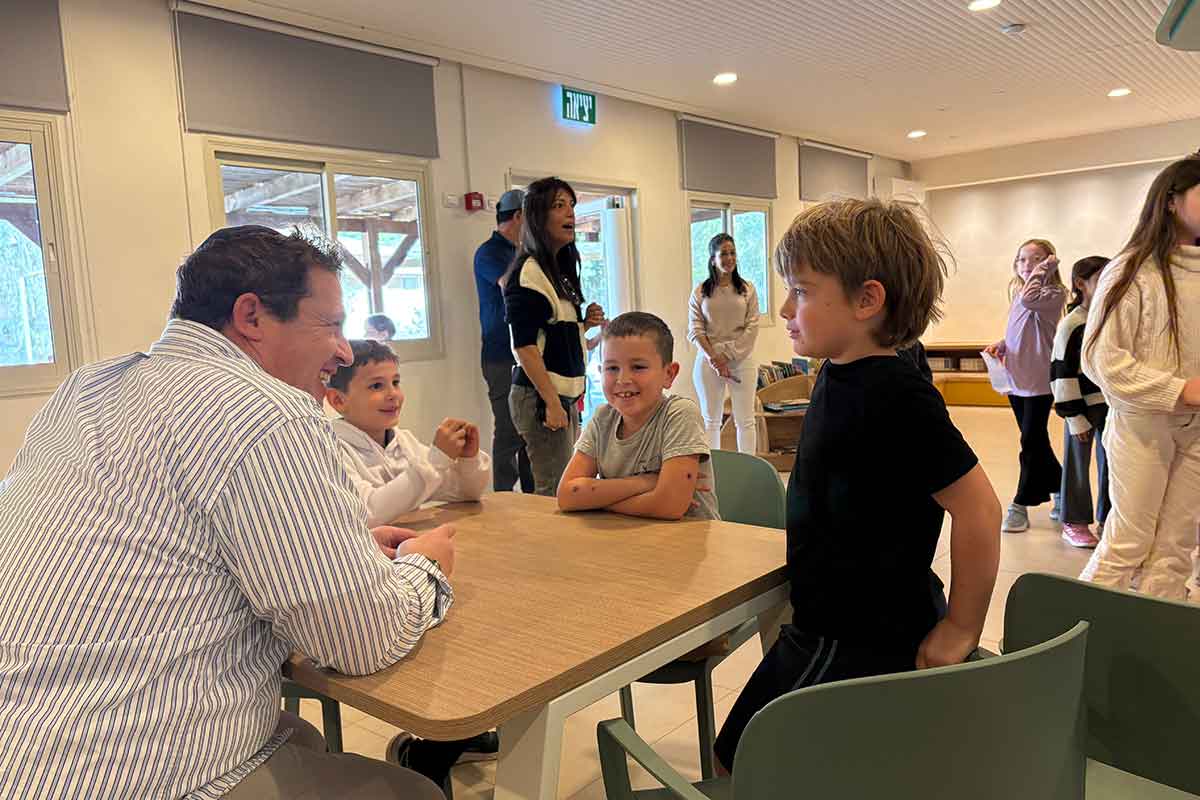
Julie: They need people to come and visit. When I asked what I should tell people back in the U.S., they said, “Tell them to come and visit. We need the tourism. We also need people to hug us and to hear our stories and to support us in whatever way they can.”
Neil: Now is a perfect time for the Denver Jewish community to go to Israel. At Masada, we heard one tour guide say, “Gosh, it has not been this crowded for two years!” But it wasn’t at all crowded! Israelis have suffered such hardships in the past two years, and they need us to come there both for the economic boost and for their mental well-being. They need to be embraced by their brothers and sisters, so they don’t feel isolated and alone as they emerge from this nightmare.
How is going on a JEWISHcolorado trip different from taking a regular tour?
Julie: The Israelis we talked with felt free to have intimate conversations because they were not speaking to a group of 30 or 40. They spoke one-on-one to our small group. And I think they let their guard down because of the friendships they already had—Dovie with Michelle, Mayor Eran Doron with Renée. You could see these relationships really mattered. They felt safe when they spoke to us.
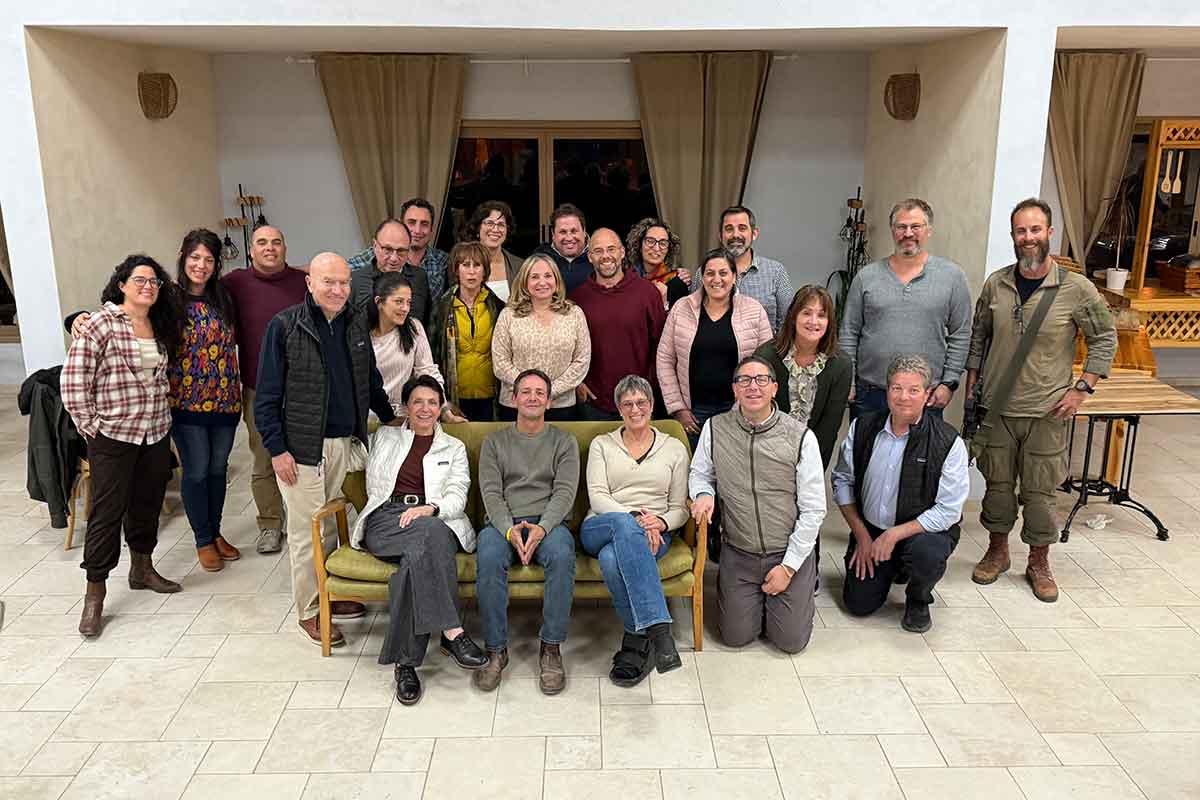
Neil: We were with friends, and we made new friends. We were provided access to people that we could have never arranged on our own. It was very special to be there with Nelly because everyone seemed to know her. She opened doors and made the trip more personal by introducing us to her friends and family. I really look forward to doing more missions with JEWISHcolorado because of the high-quality experience, ease of travel, great security, subject matter experts, and the opportunity to make terrific new friends. This was so much more than just a trip to Israel.
Mark: Before I went, I thought that seeing and touching the initiatives and causes JEWISHcolorado supports would be the most impactful experience. But what really had impact were the relationships you develop on a mission like this. You are reunited with old friends. You develop new friendships. You have the chance to foster relationships that I hope will last for many years into the future.
What is your message for the broader community after this trip?
Mark: If you have the opportunity, you should visit Israel because you cannot fully understand the state of Israel through someone else’s eyes. Being there, getting to walk the land, and feeling the embrace of the people—those are the things that will give anyone who has not been to Israel before an appreciation of the intangible.
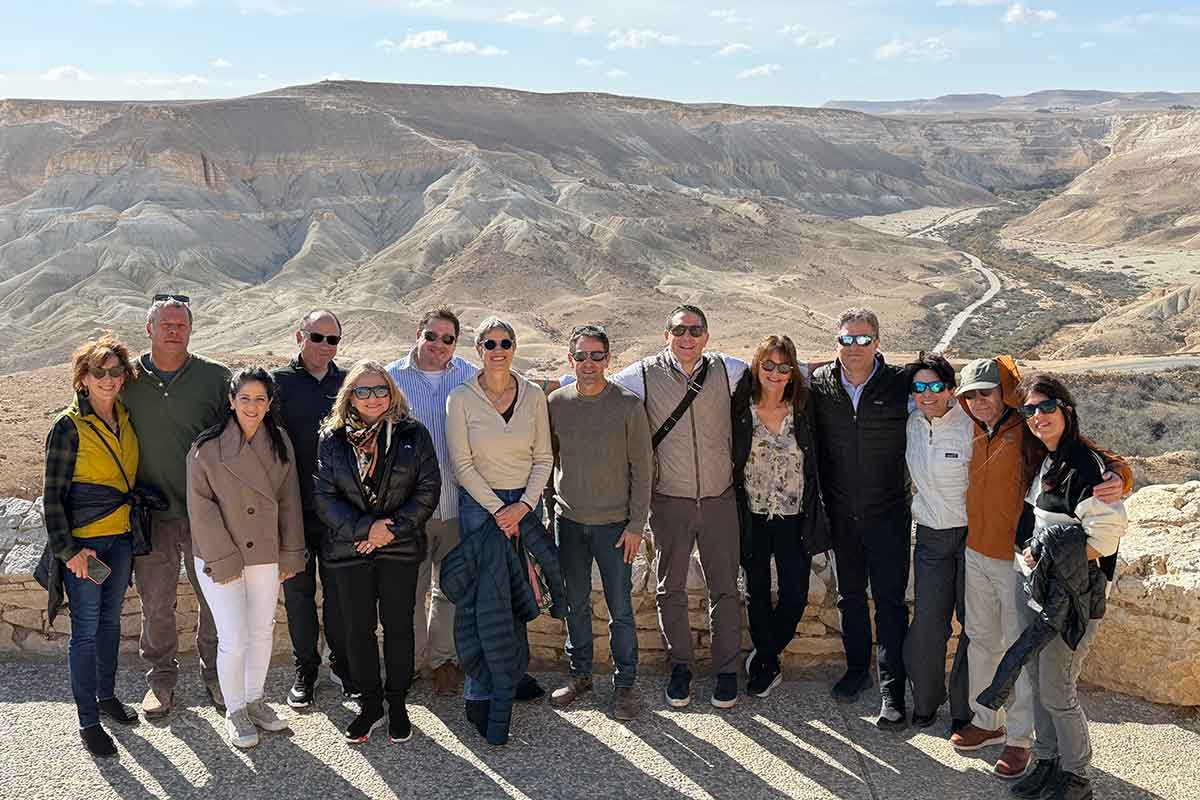
Julie: We Americans have a short attention span, but the emergency in Israel is not over. The Israelis are still in the throes of this trauma. People need to go to Israel to see for themselves. It is important to support with our dollars, but our physical presence is also needed. They called our trip an “Impact Mission.” It could not have a better name. We saw the impact of October 7th, and we saw the impact of where our dollars have gone and where future dollars need to go.
Neil: October 7th was more than just one day for the people of Israel. They have been dealing with it for years. It changed all their lives. Now, they are looking forward to some normalcy. They want people to come visit and see the incredible rebuilding and reconstruction that is going on. The needs of the Israeli people are so much greater than I realized before this trip. It is a great time to go to Israel, see the resiliency of the people for yourself, and help just by being there.