




If you struggle with finding after-school care for your children, you should keep reading—especially if you live in Boulder Valley and are also interested in raising your children with Jewish values.
Sababa Boulder Valley, Congregation Har HaShem’s new after-school enrichment program, now offers a solution for busy working parents who are seeking care for children from Kindergarten through sixth grade.
Sababa provides homework help, arts and crafts, sports and snacks with an emphasis on Jewish activities and values. It is a cultural community that likes to say it’s “an after-school program that feels like home.” It offers after-school pick-up services to certain schools and will be expanding its reach to different schools as it grows. The program is already catching on with families just weeks after it opened because of its “All are Welcome! An Open Tent for All!” approach to Jewish learning.
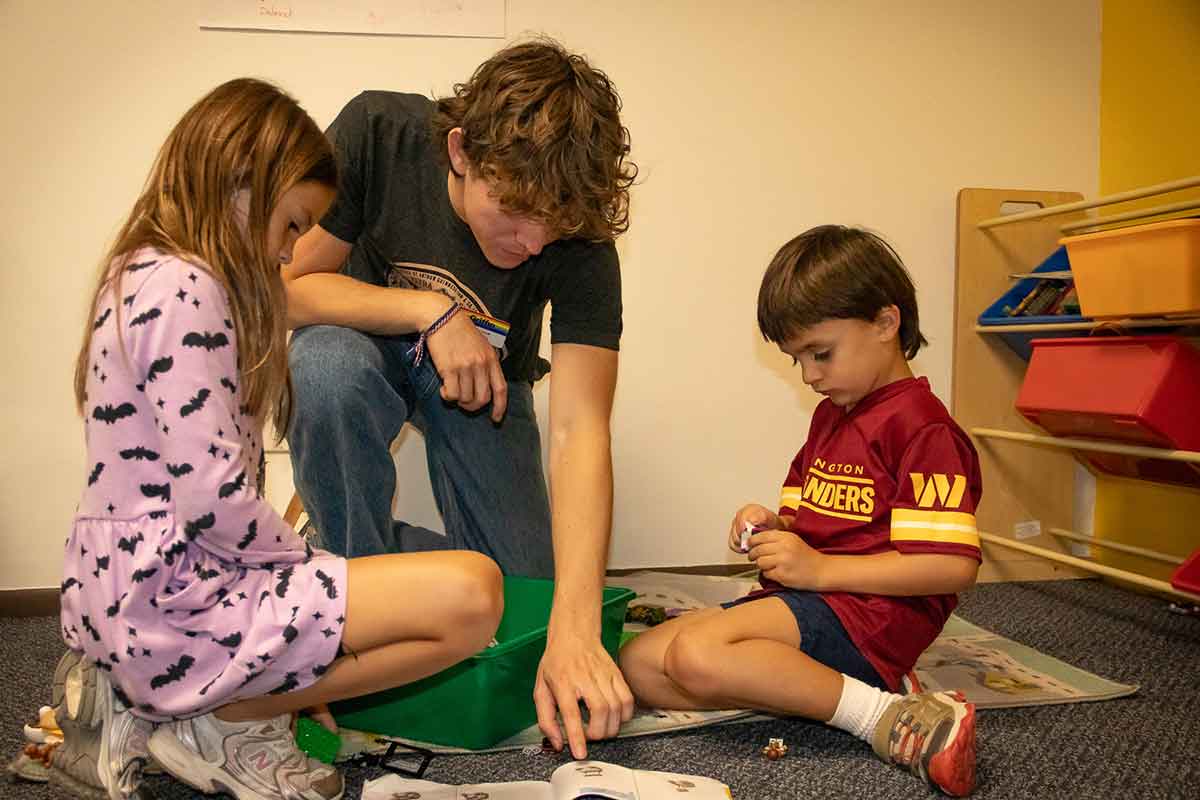
“Religion in America is changing in the 21st century,” says Rabbi Fred Greene of Har HaShem. “People are not necessarily joining brick-and-mortar congregations. Sababa is about choice, empowering families that might not want to join a synagogue but do want to have Jewish education filled with joy and love for their children.”
Translated, Sababa means “great,” “cool,” or “no problem,” and that is exactly what this program has meant to the first families to enroll.
Sababa origins
Sababa came to life in Boulder about a year ago, inspired by the program “Jewish Kids Groups” (JKG) in Atlanta. JKG offers after-school care where children can build meaningful friendships, feel proud to be Jewish, and explore Jewish values, culture, and holidays.
JKG was so successful that it grew into a national initiative called Jewish After Schools Accelerator (JASA). JASA helps organizations—synagogues, JCCs, and day schools—start their own after-school program by providing tools, guidance, mentoring, curriculum, web assistance, and matching funds.
Sababa is part of the third cohort of JASA locations, joining new afterschool programs in cities like Philadelphia, Los Angeles, and Northbrook, Illinois.
The idea appealed to Rabbi Greene and Har HaShem leadership for a variety of reasons. It afforded a practical solution to an age-old problem working parents face. Also, Rabbi Greene points to a 2019 Rose Community Foundation study that showed that only 15 percent of Jewish school-age children in Boulder County are in any kind of Jewish learning environment.

“There are not a lot of options in Boulder, but we have a lot of people who identify as Jews,” says Rabbi Greene. “Sababa is a place where we can teach Jewish wisdom and maintain Jewish identity and make a connection with people who want to participate in Jewish communal life.”
To launch Sababa, JASA offered a matching grant of $100,000 over three years. In its first months, Congregation Har HaShem and Sababa have raised $70,000 of their three-year match obligation.
“There are a lot of people who might have baggage about religious school, whatever religion they grew up with,” says Rabbi Greene. “We are creating a community of belonging—not just membership—and I think people are excited to see our synagogue respond to real needs and help people where they are at instead of telling them where they should go.”
Sababa leadership
Erica Tarantiles, the Afterschool Enrichment Coordinator at Sababa, was not even looking for a new job when she saw the position posted on Facebook. Turns out she was the right person in the right place at the right time.
“It was everything I had been doing and was utterly passionate about, and I knew I had to apply,” she says. “I could tell from my first interview that I would be part of a wonderful community here.”
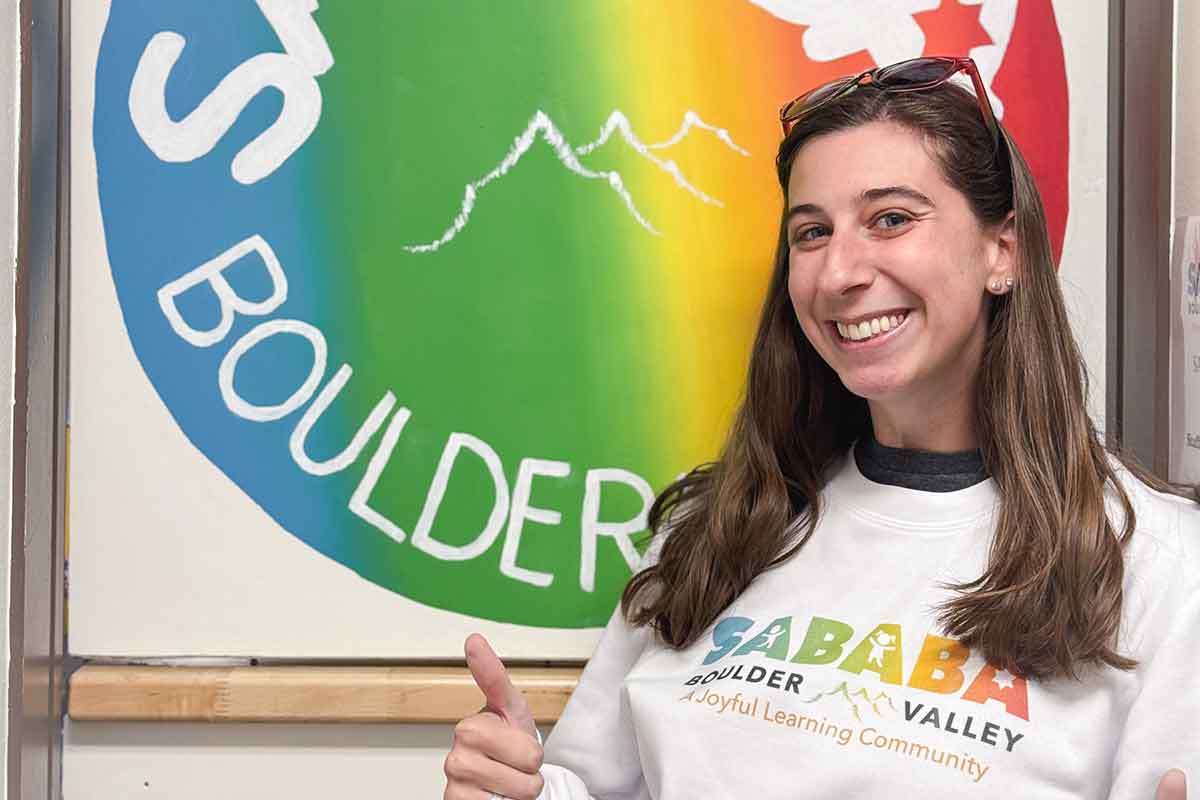
Erica Tarantiles
Tarantiles was raised in a multi-faith family. Her parents enrolled her in weekly Hebrew School and 10 years of summer camp, but she initiated her involvement in the National Federation of Temple Youth and a semester abroad in Israel in high school.
She has worked as a therapist with children who have autism. She also served as assistant director of a JCC in Fairfax County, Virginia, supporting a Jewish after-school program and summer camp for 200 children. She was working at a local community center camp when she saw the ad for Sababa.
“I saw how wonderful the Jewish community was growing up,” she says. “After going to college, I knew that I was happiest working in the Jewish community.”
Sababa kids
Stop by Sababa in the days leading up to the High Holidays, and you will hear children learning songs for Havdalah, studying the meaning of the holidays, or making Shabbat candles. The program is open to non-Jewish children because, Rabbi Greene says, “we are mentoring allies.” The children in the program who are not Jewish “are learning what it means to be part of a joyful and inclusive community,” Tarantiles adds.
“I come from an inclusive background,” she adds. “I believe in meeting kids where they are at and supporting them with whatever they need.”
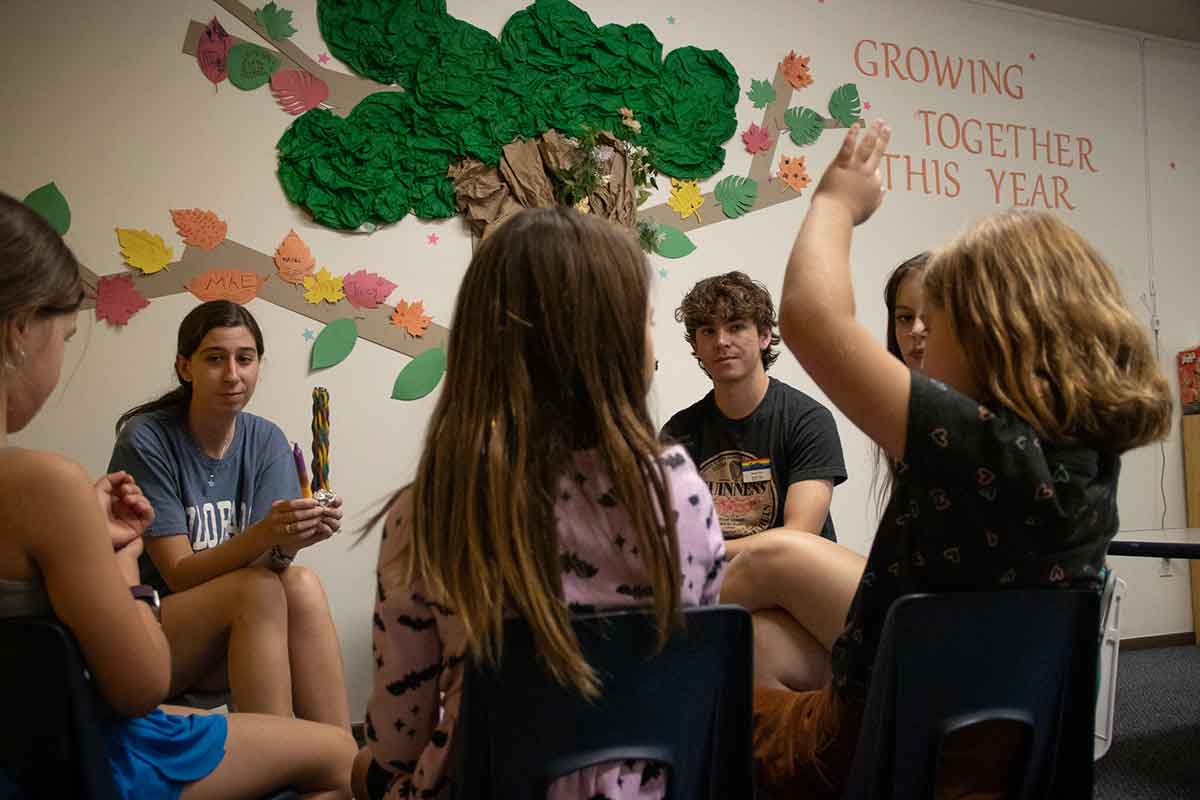
Sababa, which has its provisional childcare license, is open for enrollment. There are already 13 children enrolled, although not every child attends every day. The program hopes to have 50 children enrolled, supervised by Tarantiles and two staff members.
For families, Sababa is a solution with heart. For Rabbi Greene, Sababa is the right program for the world today.
“There are all these demographic studies showing that people are leaving Judaism, but I don’t think they understand the nuances of how Jews identify as Jews today,” he says. “Just because people don’t go to synagogue or aren’t members doesn’t mean they have given up on their Judaism. A program like this shows that we care about them and their families.”