





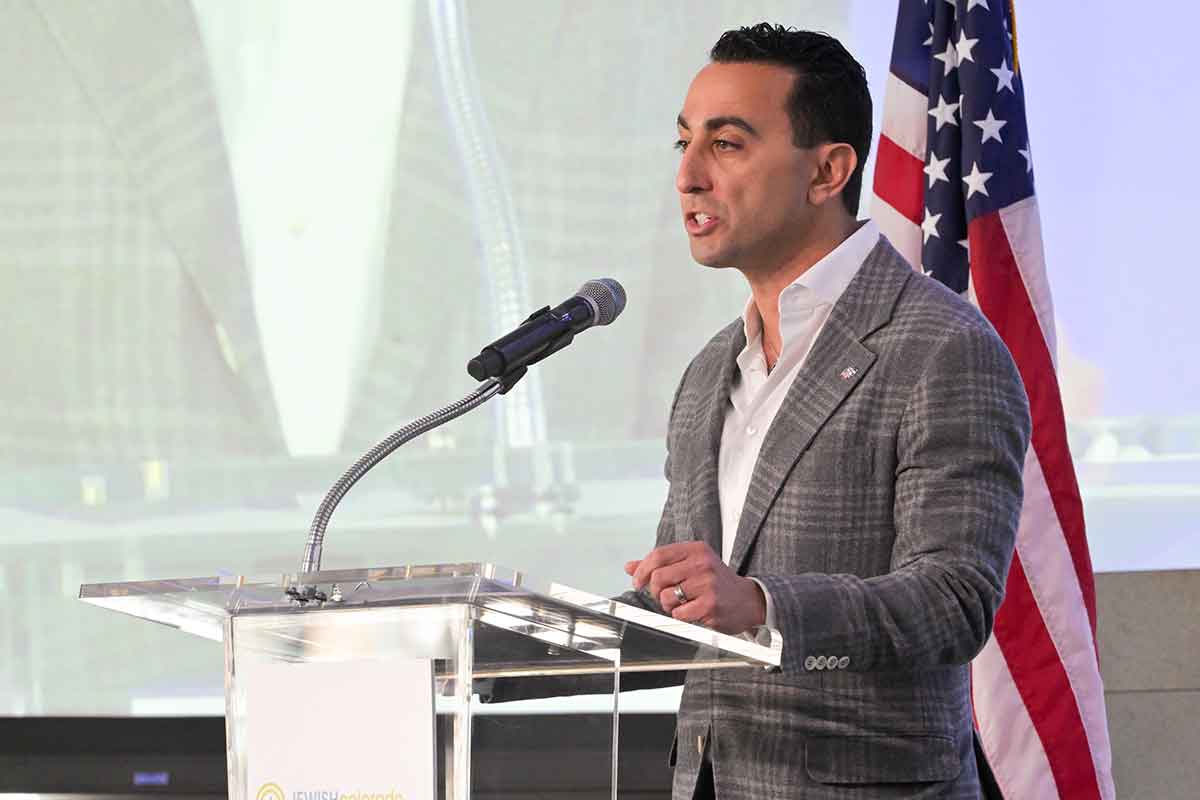
The following remarks were delivered by David Jacques Farahi, the 2026 JCRC Community Leadership Award recipient, at the JEWISHcolorado Jewish Community Relations Council (JCRC) Luncheon.
In January of 2024, I published an op-ed in the Reno Gazette Journal. It was about resilience — about communities that endure real hardship and still refuse to be defined by victimhood. As part of that research, I studied the story of the Hindu community displaced from what would become Pakistan in 1948. I felt proud of it. And like most of us do when we’re proud of something, I shared it widely.
One of the groups I shared it with was my cohort at Harvard Business School — a globally diverse group of executives.
Almost immediately, a message came back from a classmate named Riaz, who lives in Dubai. He wrote — directly — that he disagreed with much of what I had written. And that I had omitted important parts of the story.
My first reaction wasn’t calm or enlightened.
My first reaction was defensive. I felt angry and called out in front of peers I respected.
But we were going to be on campus together the following week. So I replied simply: I look forward to continuing this conversation in person.
That Saturday night — our first night on campus — I found Riaz at the opening gathering and asked if he’d be willing to talk. He agreed.
He began with something that stopped me cold: “You told part of the story. But my family has a migration story too.”
His Muslim family had also been forced to flee from India — ending up on the other side of the same historical upheaval I had written about. Same event. Mirror-image agony.
And then we talked about Gaza. About the images. The narratives. The moral weight each of us was carrying.
Neither of us switched sides.
But something else happened. We found shared values. We walked away not with agreement — but with respect.
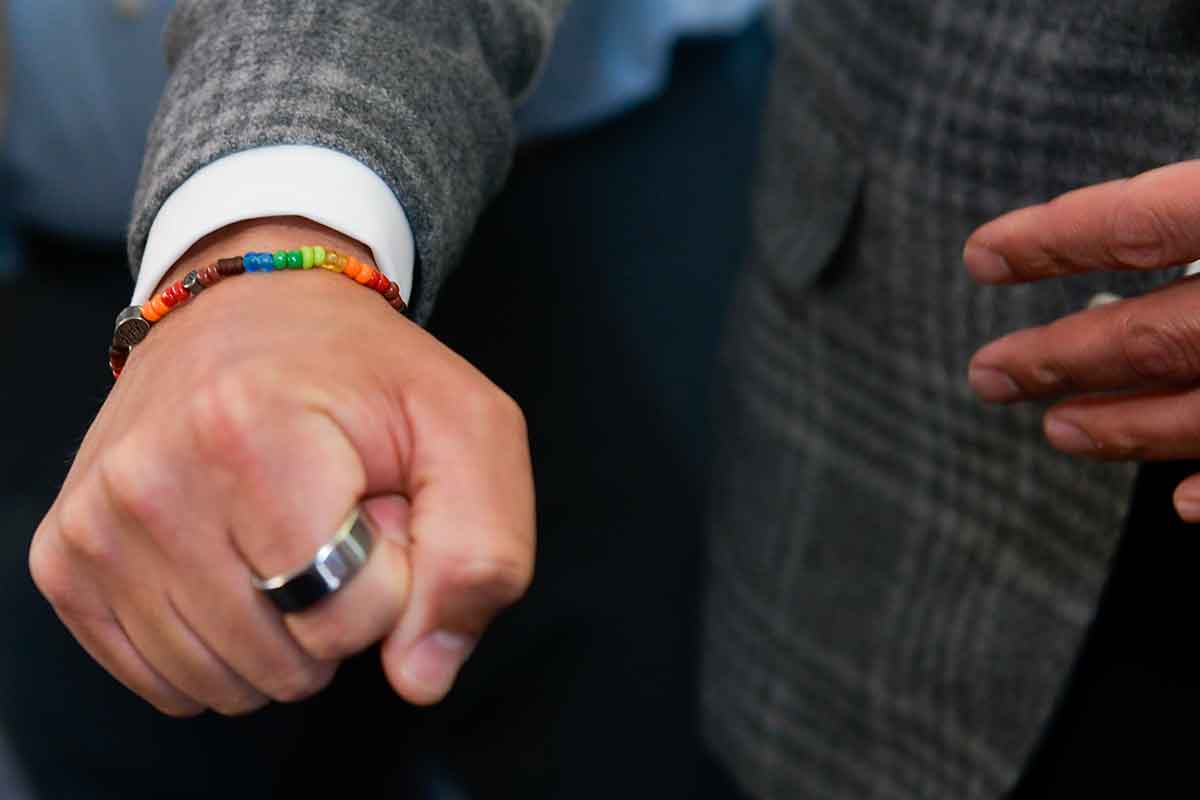
The next morning, our program introduced a new tradition. Each of us was given three African ubuntu bracelets to give to classmates who had positively impacted us.
Before our first class on Monday, Riaz walked over to me — and he gave me one.
That bracelet became more than a token. It became a reminder — one I wear today — that respectful engagement isn’t weakness. Its strength.
Riaz and I have built a real friendship. So much so that when I later co-wrote another piece entitled: an open letter to our cousins of the Ummah for the Times of Israel, Riaz edited it. And strengthened it for me.
All of that — because I didn’t dismiss him. Because he didn’t dismiss me. Because we both decided to stay in the room.
What I took from that night wasn’t a philosophy. It was three disciplines — ones I’m still working on, and will be for a while:
To listen with curiosity.
To listen with humility.
And to listen first—before trying to be understood.
So what does that actually look like?
First: State the other side’s view first — so fairly, so completely, that they would say, “Yes. That’s exactly what I mean.” Only then have you earned the right to disagree.
Second: Find shared values before you argue about tactics or conclusions. People who agree on what matters can still fight about how to get there — and that’s a conversation worth having. But it only happens if we lower the cost for honesty. It takes far too much courage today to say, thoughtfully, “Here’s what I believe,” without fear of being shouted down. We should make that easier, not harder.
Third: Diversify your information diet. If everything you read confirms what you already believe, you’re not informed. You’re a casualty of confirmation bias.
None of this is new. It’s embedded in one of the most beautiful frameworks Jewish tradition has given us.
The Talmud records the great debates between Beit Hillel and Beit Shammai. After years of dispute, a heavenly voice declared: “Elu v’elu divrei Elohim Chayim” — “These and those are the words of the living God.”
And then it asks: why does the law follow Beit Hillel?
Not because Hillel was always right. But because Hillel’s school was humble. They would teach Shammai’s view alongside their own — and they would state the other side first.
Hillel earned the privilege of being followed because he showed the discipline of truly hearing.
That is a framework for civic life. For marriage. For parenting. For community. For leadership.
And it is exactly what the JCRC does — showing up in rooms where we may not be understood at first, doing the hard work of being both principled and constructive. Right here in Denver, that meant showing up to City Council — month after month — to make sure Denver didn’t go on record against Israel. It means standing with freedom-loving people everywhere, including, today, the people of Iran who yearn to be free of their theocratic rulers.
My ancestors lived in Iran for hundreds of years. My grandfather was born in Tehran and is buried in Jerusalem. The Iranian people are not their regime — they never have been. And when the JCRC speaks up for their dignity and their freedom, it is doing something ancient and Jewish: refusing to let geography or politics determine whose humanity counts.
That work is hard. It is necessary. And I am proud to be part of it.
I’m honored by this award. But more than that, I’m grateful to be part of a community that believes this work is worth doing — and invests in it.
To my wife Jessica — thank you for being my partner in this, and in everything. To my parents, here today — thank you for teaching me, early on, that service isn’t optional. It’s part of what makes a life meaningful.
I want to close with a poem by the Israeli poet Yehuda Amichai — The Place Where We Are Right:
From the place where we are right, flowers will never grow in the spring.
The place where we are right is hard and trampled like a yard.
But doubts and loves dig up the world like a mole, a plow.
And a whisper will be heard in the place where the ruined house once stood.
Thank you.