


When the 2026 Maccabiah—often called “the Jewish Olympics”—returns to Israel next summer, 1,000 athletes in the American Jewish delegation will be thrilled to compete on more than 100 different teams representing 32 sports.
But it will be no less of a thrill for 18 young aspiring sports media professionals who travel with the American delegation, learn how to produce professional media coverage of the games, and perhaps open the door to a life-changing career.
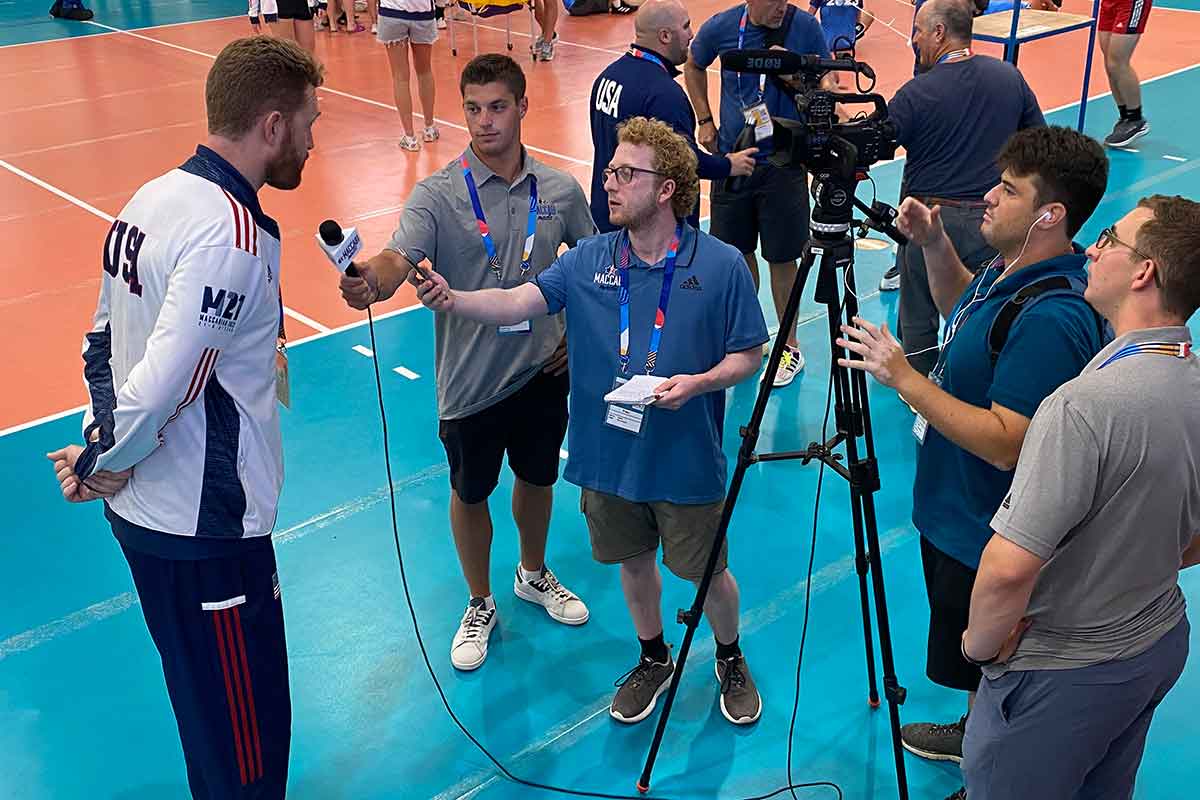
The opportunity to produce sports coverage in Israel and be included in all the American delegation experiences and honors comes from Maccabi Media, a career-development program developed by a well-known Jewish veteran of professional broadcasting.
In preparation for last summer’s 2025 Maccabiah, a cohort of young sports journalists trained for six months preparing for their trip to Israel. But when the games were postponed for a year because of the ongoing war, some Maccabi Media participants had to drop out, and new openings emerged for 2026.
The time to apply for Maccabi Media is now. The professional payoff could last a lifetime.
“I wish this opportunity had existed for me when I was a student,” says Neal Slotkin, Maccabi USA Digital Media Director. “I would have loved to travel to Israel and develop my skills in a real-world atmosphere. You can blend your Judaism with your love for sports and broadcasting—and there is nowhere else you can combine those.”
‘The only difference is that they don’t compete’
The man behind Maccabi Media is the man who, for years, was the voice of the Philadelphia 76ers—Marc Zumoff. Now retired after 44 years in sports broadcasting, Zumoff covered the 76ers for 39 years and served as the television voice of the team for 27 seasons. His credits also include coverage of the Rio Olympic Games in 2016 and other NBC Sports assignments.
When Zumoff watched media coverage of the Maccabiah, he found it to be disheartening. The athletes played at a very high level, but the coverage was limited and poor in quality.
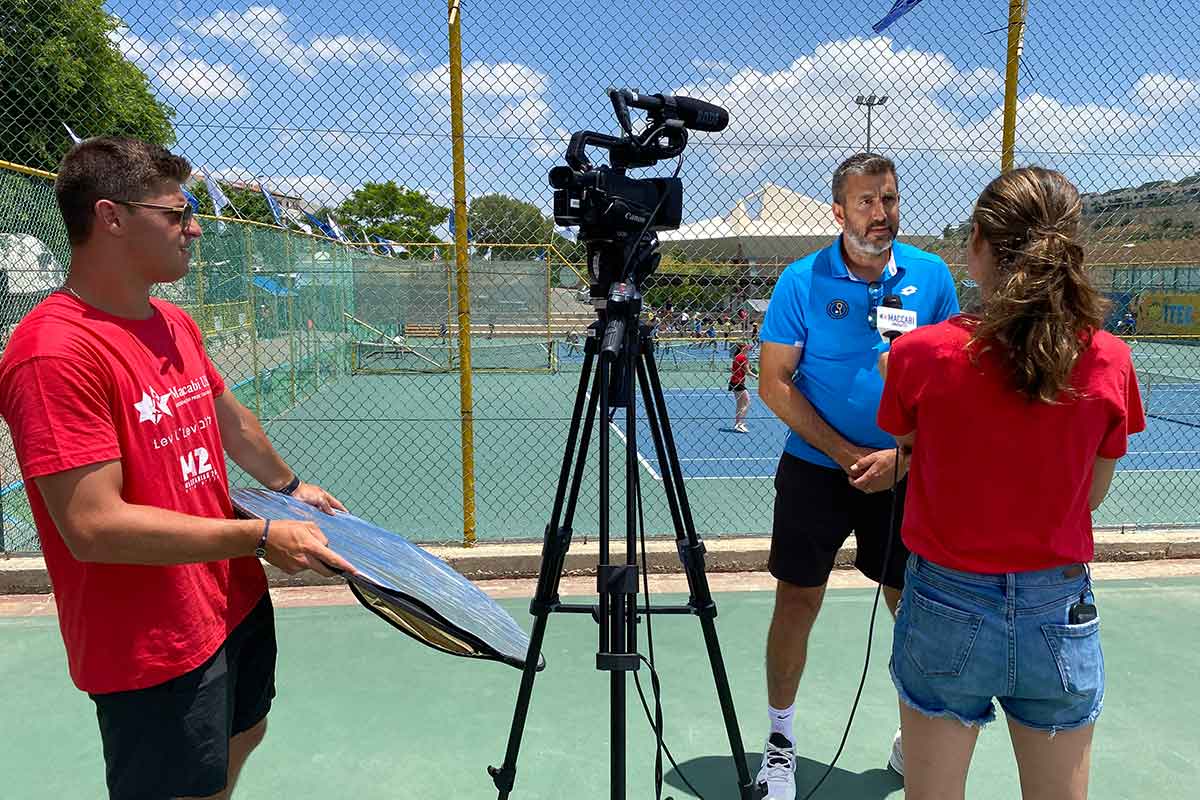
“Marc really felt the athletes who participated deserved better,” says Slotkin. “If the athletes could have this great experience competing, why not create an opportunity for aspiring media students to cover the competition just as you would cover the Olympics if you were working for NBC or ESPN?”
Maccabi Media sent its first cohort of 14 students to the Maccabiah in Israel in 2022. In 2023, a media team traveled to Argentina for the Pan American Maccabi Games, and in 2024, they traveled to London for the European Maccabi Youth Games. Now, applicants have the opportunity to return to Israel as part of the American delegation this summer. They will be treated like any other team member, marching with the delegation and experiencing the 2026 Maccabiah just as the athletes do.
“The only difference is that they don’t compete,” says Slotkin. “They are on the sidelines covering the competition.”
‘We build this program like it’s a family’
Maccabi Media is open to college undergraduates or recent graduates who are Jewish and at least 18 years old. They must be enrolled in or already graduated from a university-level communications-related program such as sports media, communications, TV/radio/film production, journalism, or digital media.
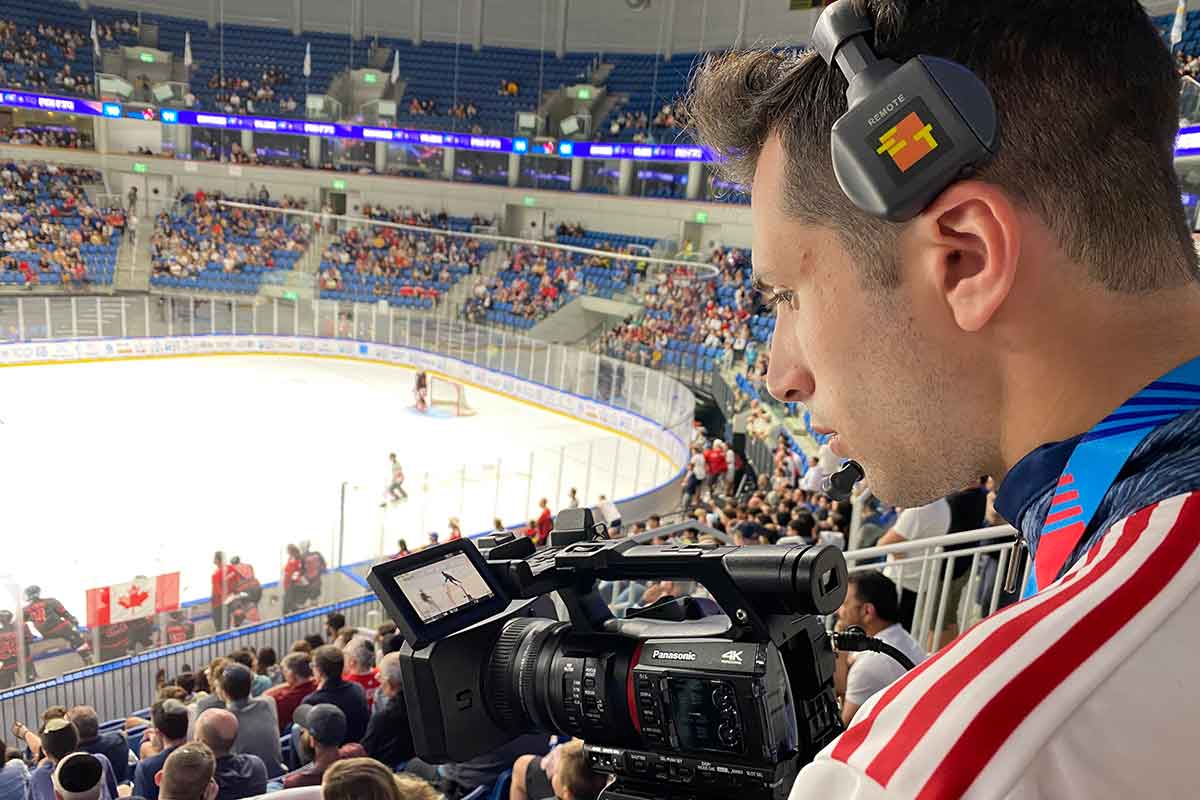
Ideally, they have some previous experience in the roles they will be asked to perform: play-by-play, color analysis, sideline reporting, live event production/streaming, videography and editing daily features and packages, interviewing and writing articles, social media content creation, sports photography, and graphic design.
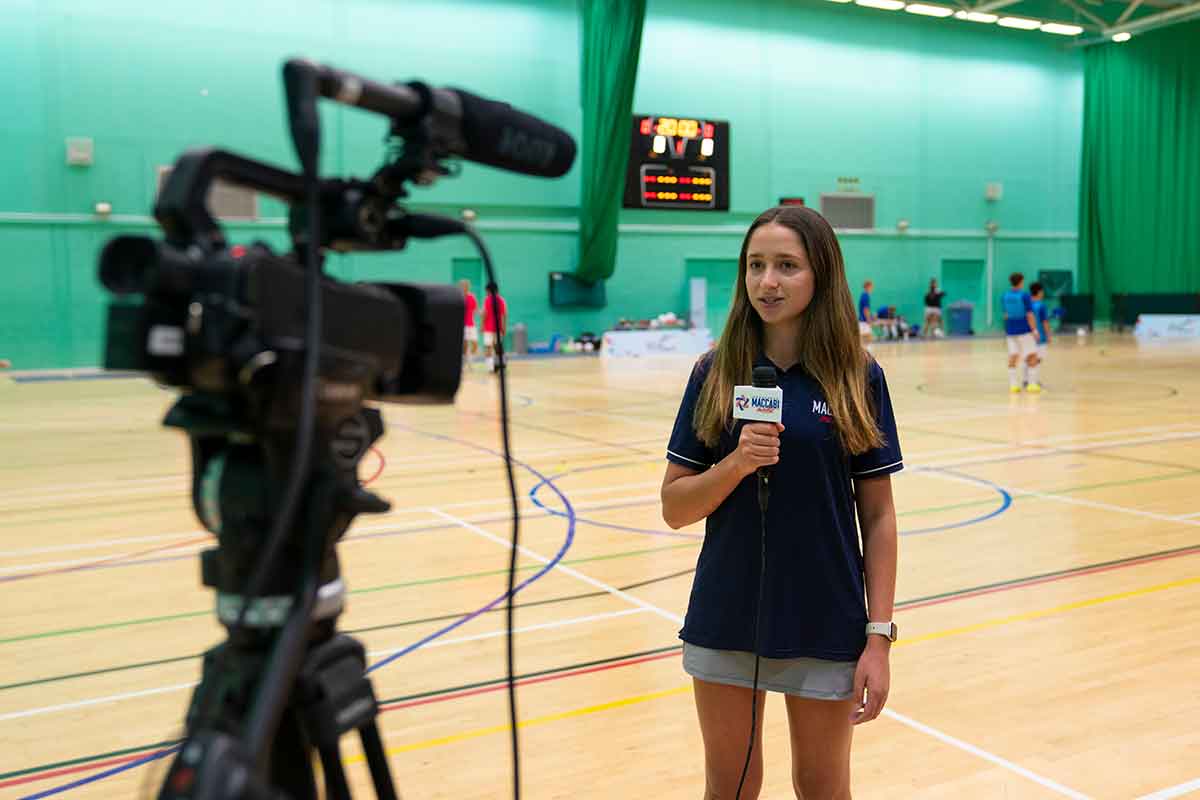
In addition to covering two weeks of competition, Maccabi Media participants and Maccabiah athletes spend a week in a program that connects them to Israel through educational and cultural programming and trips throughout the country to historical and holy sites.
It costs $11,000 to send each member of the Maccabi Media team to Israel. With subsidies, the cost to applicants is $5,400. But the benefits of that investment last long after the weeks in Israel. Maccabi Media recognizes that the sports industry can be difficult to break into and promises to help their team members network in the industry by offering career development opportunities with Jewish media standouts from around the country.
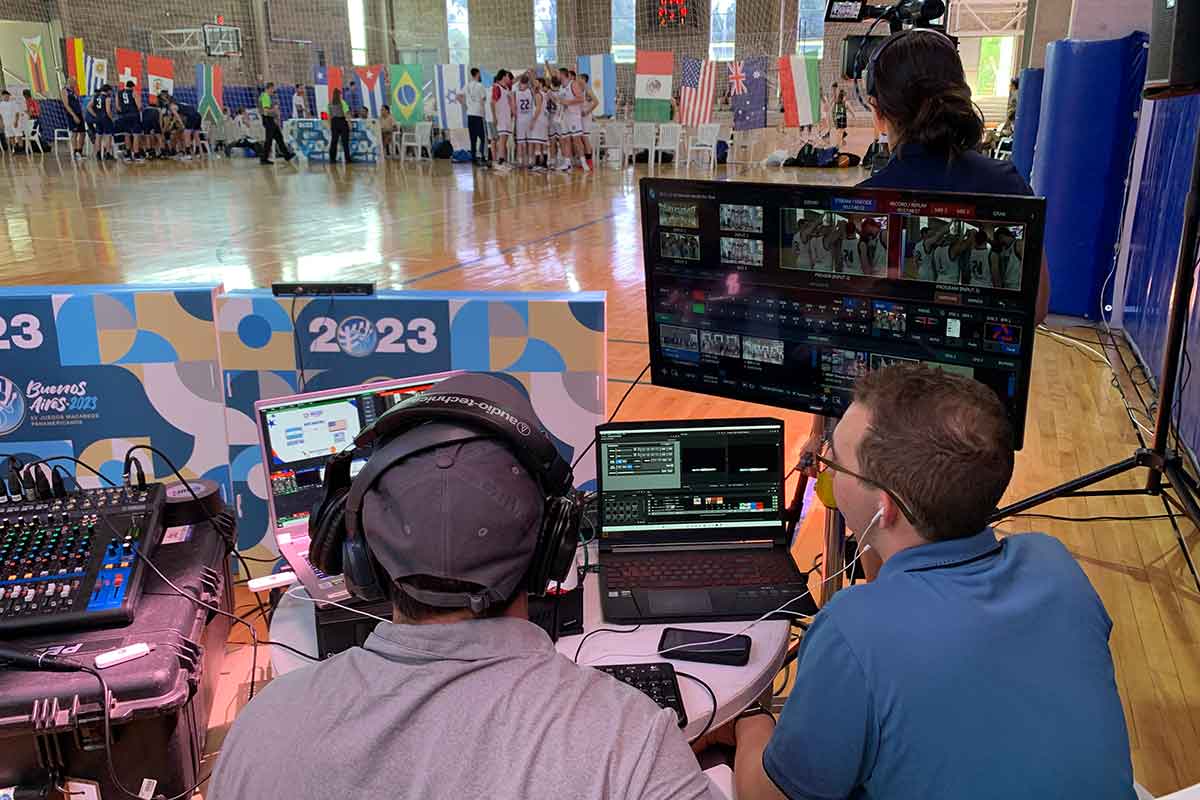
Slotkin likes to relate Maccabi Media success stories. One student went straight from Northwestern University to CNN. Another student used his Maccabi Media network to go straight from Penn State to working for the Arizona Cardinals, an opportunity he never would have had with a randomly submitted application.
“We can’t promise jobs,” Slotkin says. “But we have had a lot of success with our 45 alumni because we are there for them after we return from the Maccabiah. We build this program like it’s a family.”