



By: Willie Recht
Chief Development Officer
Earlier this month, I was fortunate to accompany a small group of JEWISHcolorado donors and leadership to Israel. Together, we toured the south and witnessed firsthand the impact our community has made through the more than $12 million raised for the Israel Emergency Fund.
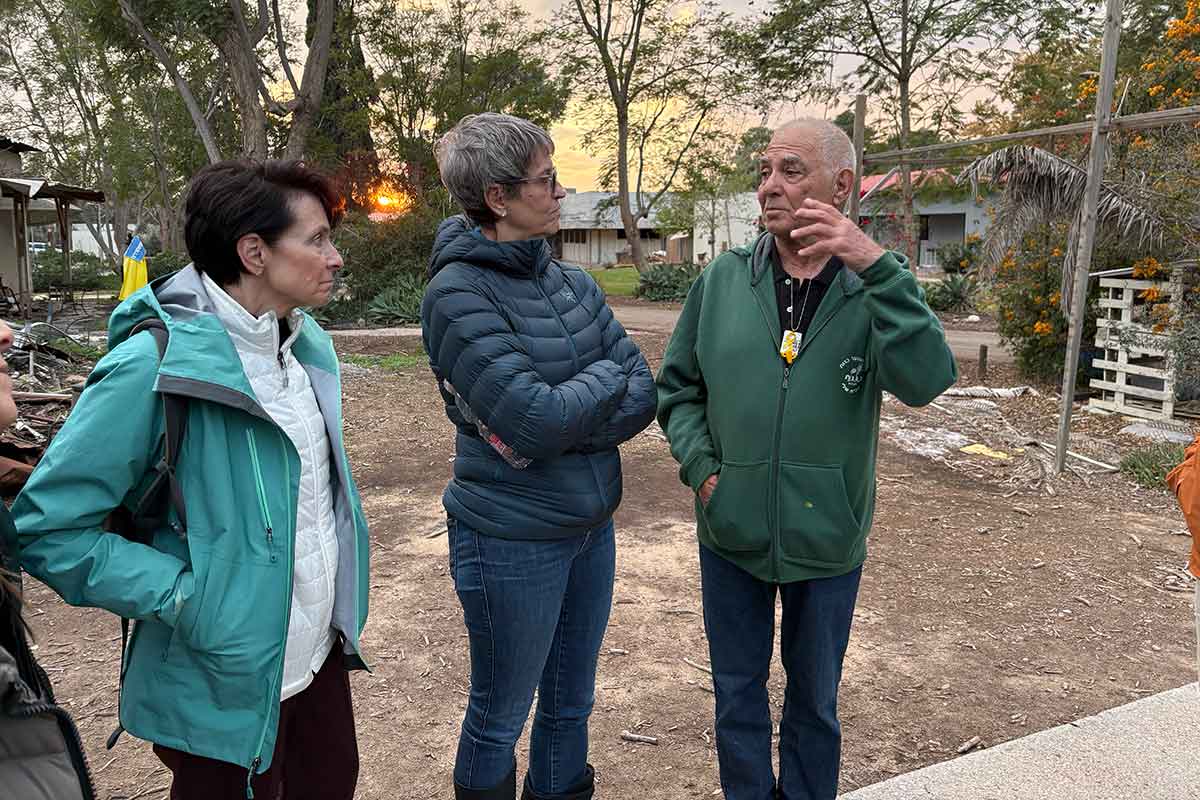
From left: Renée Rockford, Diana Zeff Anderson, Gadi Moses
Part of our tour included a visit to Kibbutz Nir Oz and a discussion with former hostage Gadi Moses. Even as a Jewish communal professional—someone who, like many of you, has felt suffocated and consumed by the trauma of October 7, who has read countless accounts, watched endless news coverage, and seen video after video—I was not prepared for what I encountered. Nothing I had read or seen could prepare me for standing in the very place where these horrific attacks occurred: homes reduced to rubble, safe room doors riddled with bullet holes, children’s bikes and toys charred and abandoned. It took my breath away.
And then we spoke with Gadi Moses, a (now) 80-year-old resident of the kibbutz who spent 482 days as a hostage in Gaza. His partner, Ephrat, was murdered by Hamas terrorists. Gadi had, to all our disbelief, returned just two weeks earlier to Kibbutz Nir Oz to resume his life. It was remarkable. He spoke of the need to be back and walked us through the kibbutz. On one side of the path were dark, burned-out homes, and on the other, we saw life through a light-filled dining room with a young family eating dinner. The juxtaposition was mind-blowing. And inspiring. It was hard for me to fathom.
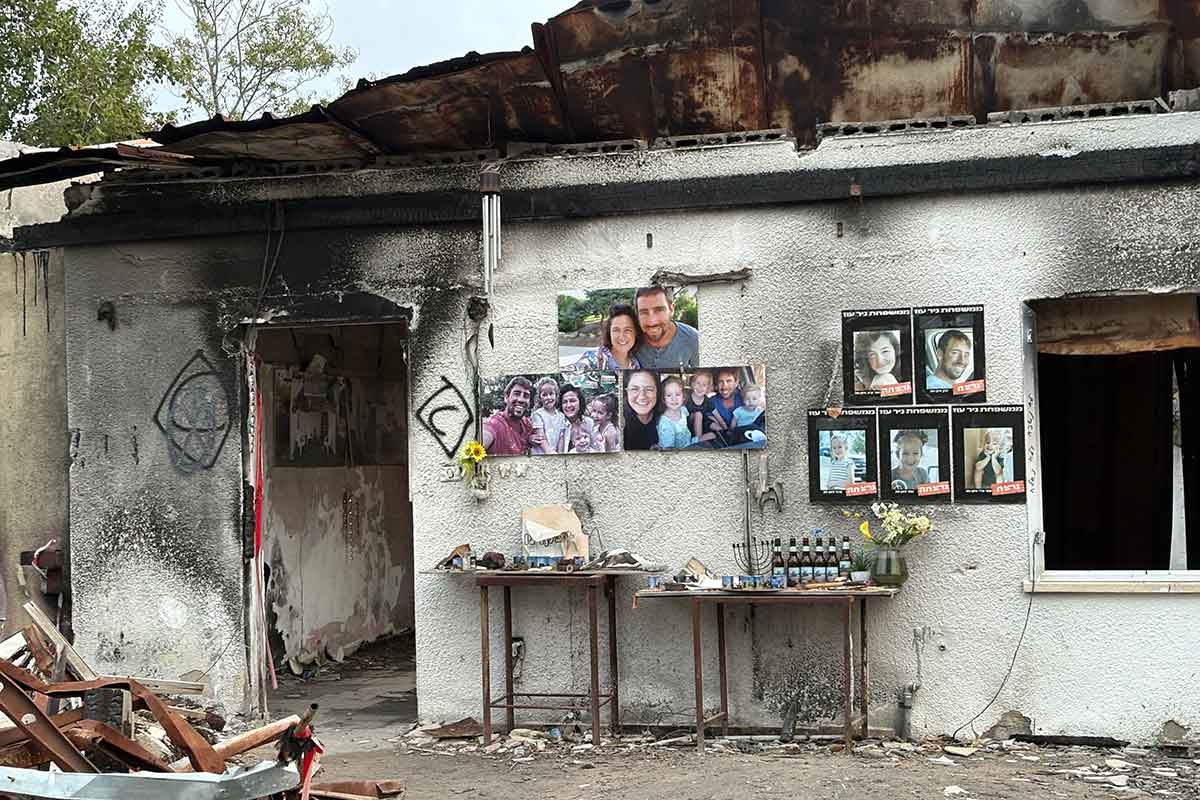
I have tried to process what I saw and experienced since I returned home, and it has been difficult to do. However, and I feel guilty admitting this, the visit to the kibbutz—to the site of so much trauma—provided a sense of closure. It was something I hoped I would never see, yet it was something I needed to see so badly. Not just the destruction, but the life that has resumed. And then I was tasked with writing this week’s Shabbat message on the parsha Vayechi, which, in many ways, deals with trauma and the response(s) to it.
We learn about Yosef, a survivor of many traumatic events, who took a detour to revisit the scene of his original trauma—the infamous pit where his brothers left him to die. We further learn from Rabbi Dr. Mordechai Schiffamn about a group of midrashim that suggest that on the way back from burying his brother Yaakov, Yosef stands over that same pit, confronting his trauma and recites the following blessing: “Blessed is God (‘HaMakom’) Who performed a miracle for me in this place (‘bamakom hazeh’).
Far be it from me to compare my experience to Yosef’s or the victims and communities devastated by the October 7 attack. I most certainly have not endured what they have. But I have grieved and struggled over the past two years, and the lingering effects of that day are still very much present in my life. But I also cannot help but feel that my experience, standing in Kibbutz Nir Oz—in that collective “pit” we as world Jewry fell to on that day—was indeed therapeutic. And as we approach a new calendar year, it leaves me with renewed hope in the strength and resilience of the Jewish people, and our collective ability and responsibility to move forward—trauma and all.
Please email Willie Recht at wrecht@jewishcolorado.org with questions or comments.