




What happens when the Board Chairs of two of Colorado’s major Jewish organizations are related to each other? And what would they do differently if they could trade places?
That’s what we wondered when we sat down to talk with Barry Curtiss-Lusher and his son Ben Lusher.
Barry became the Chair of the Board of Trustees of the Rose Community Foundation (RCF) on January 1, 2026. In 1995, as a then-member of the Board of Trustees of Rose Medical Center (RMC), Barry was involved in the formation of RCF with the proceeds of the sale of RMC. He has been actively involved with the Anti-Defamation League since 1982 and served as the ADL National Chair from 2012 to 2015. He has also served as the Chair of the Board of Colorado Public Radio and Chair of the Board of Directors of Rose Medical Center.
Ben is the current Chair of the Board of JEWISHcolorado and the immediate past National Chair of Moishe House. He is a former Board Chair of JEWISHcolorado’s Jewish Community Relations Council (JCRC). He has also served as an Advisory Board member at HCA Rose Hospital in Denver, Colorado.
Barry is the Chair of the Board, former CEO, and Co-Founder of Nexus BSP LLC, an energy development company. Ben joined Nexus Energy Partners in 2014 and is currently the CEO of Nexus.
Serving on a Board demands time and energy, but leading a Board takes the responsibility of Board membership to an entirely different level. For the two of you, is this something that is just all in the family?
Barry: I remember my parents were both volunteers and volunteer leaders. My mom was the leader of the women’s Auxiliary of the Jewish-affiliated hospital where I was born in Cleveland. My dad was involved in the Federation there. The other influence for me was social justice. Growing up in the 1960s and 70s, I was an activist during college, joining demonstrations. That’s always been part of who I was.
Very early on, your mother and I looked for ways to be involved. The Anti-Defamation League drew us in, and then with me, the Federation, and the JCC for your mom. These organizations were always a part of our lives. I didn’t want to wake up when I was at my age now and discover that I had not done anything to fulfill my ambitions to be involved in public and community service.
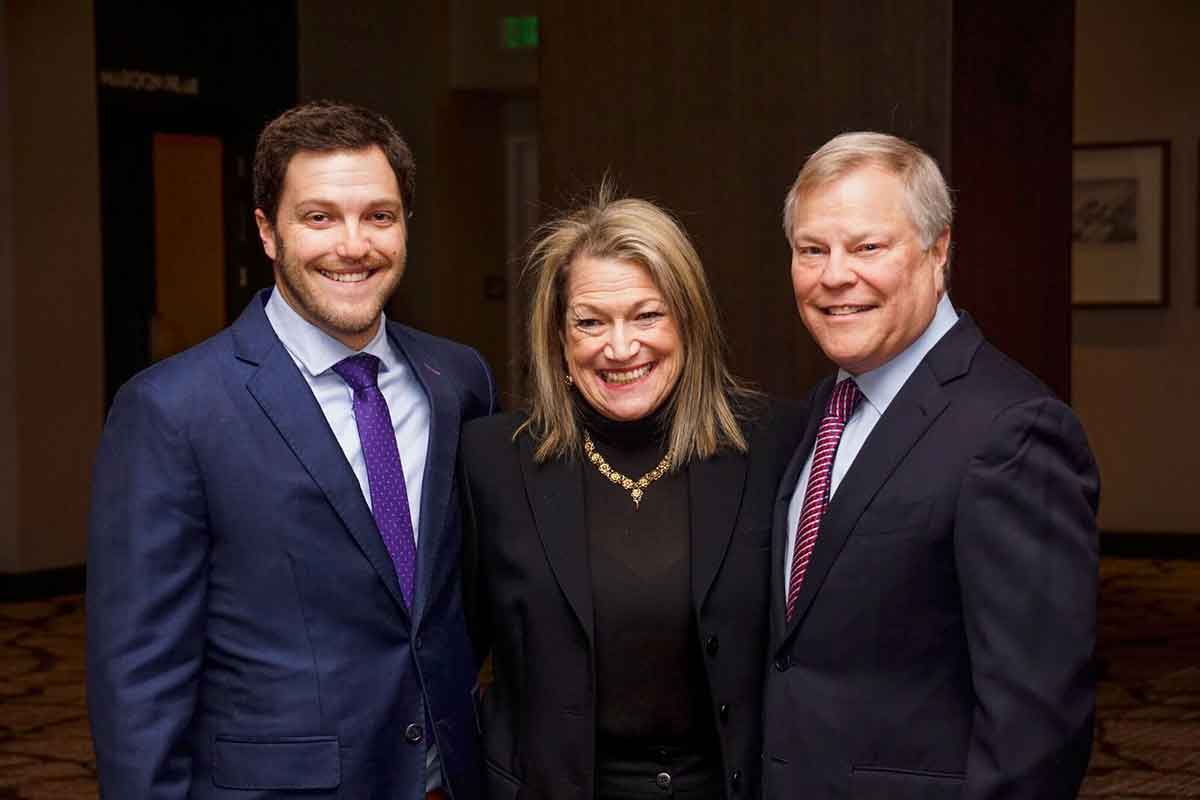
Ben: It’s interesting hearing you say that because, for me, I think of it like professional athletes whose kids also become professional athletes. Our family sport was always philanthropy and volunteering. I didn’t really know there was any other way, because it wasn’t just you who was always involved. Mom was also always involved. She was on the Board of the JCC, she was president of the Parent Teacher Association at Graland, and she used to wake up early every morning when we were kids and go to Graland because she started the practice of opening car doors for students—which is something they still do!
Like both you and Mom, I find the deepest meaning in my family life. Beyond that, running the business gives me a strong sense of purpose—but it’s the Board work that brings a distinct sense of impact and fulfillment. It’s where I feel I’m contributing to something larger than myself.
Barry: Something that has lasting value
Ben: I hope so. I will say that leading a Board is very different from being on a Board. Leading takes a whole new level of time and commitment.
Barry: You’re right. There is a significant difference between joining and leading. For me, from very early in my involvement, people would ask me to lead and I took it on. That’s part of what is fulfilling—that sense of ownership.
Do the two of you ever talk shop over dinner?
Ben: That is something that my wife and my mother always give me guff about because we can’t really help ourselves when we’re together. We don’t talk specifics about the organizations, but I might say, “Have you handled a situation like this?” It’s me leaning on your experience, Dad.
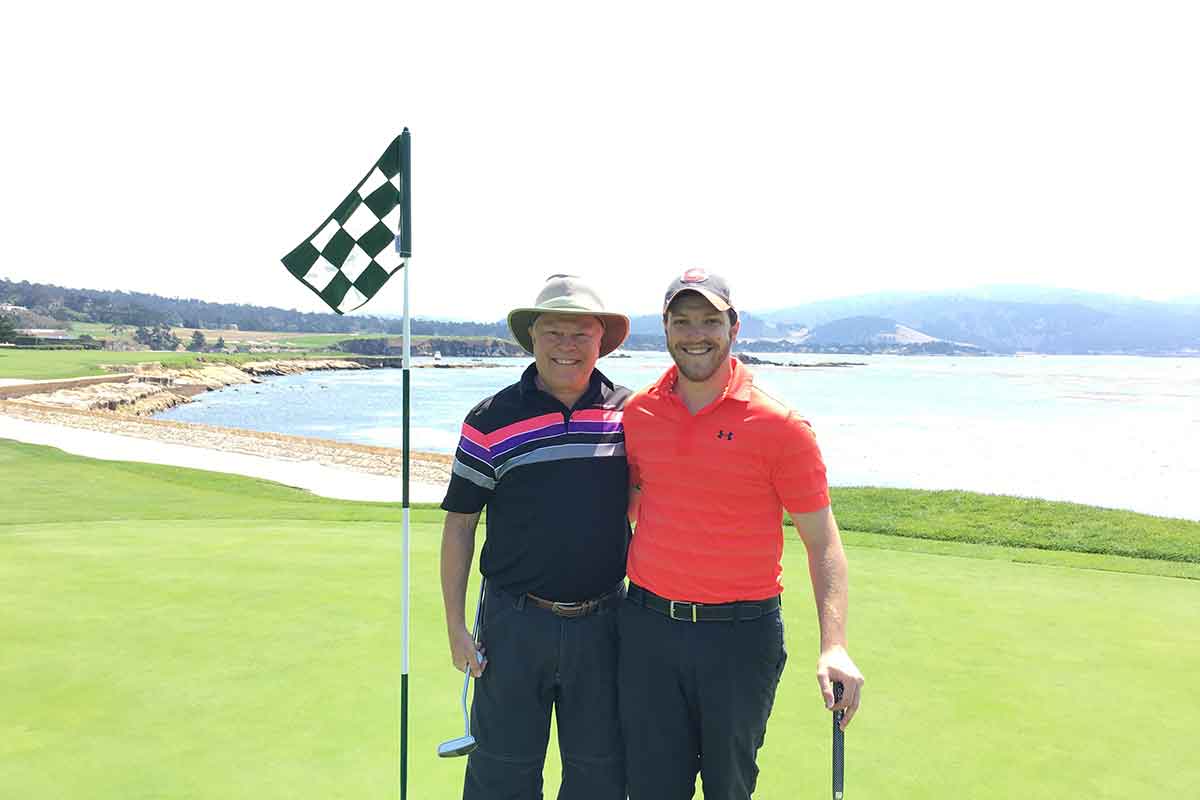
This is the first time that we are both simultaneously leading local Boards. Just recently, I found myself giving you advice about some of the local politics and communities, because to your credit, you have been working at a national and international level for the past 15 years, and now you are really coming back to the local level. You have such a wealth of experience that I can tap into. I’m lucky to have a kind of mentor that is so easy to get ahold of.
Barry: When you look to me for advice from my experience, you don’t just sit quietly. You will probe and ask questions, and sometimes we’ll get into a pretty animated discussion of different perspectives about how one might do things. And I think that’s healthy. I think we learn from each other. There are some things that I may have more experience in, but there are some things you have more talent in. You have a particular talent for thinking strategically.
What other qualities do you see in each other that make you good at leading a Board?
Ben: Dad, you run a great meeting, which is something I have worked hard to try to emulate, because it’s not always easy, is it? When you’re facilitating and leading a meeting, you can’t always say, “Well, I think this, so let’s do this.” It means involving everybody and allowing the discussion to really take place. I got to watch you do that in business as well as in the nonprofit world.
You also do a good job of all the behind-the-scenes pieces. Watching you, I have learned that you never want to show up for a vote at a Board meeting without an idea of how that vote is going to land. There are a lot of conversations that need to happen before that moment. You probably learned that the hard way. I know there have been a few times when I learned it the hard way.
Barry: Thank you. You’re right, I have learned some of it the hard way. Even when you think you’re well-prepared, things can happen during the meeting that change people’s minds, and suddenly you need to be aware of what’s happening in the room. That’s something I’ve seen with you. You’re really good at reading a room. You’re a good listener and then you think strategically before you speak. You’re a great consensus builder. I heard somebody talk about being at a meeting where you had people from all over the Jewish community, and they said to me, “Can you imagine Ben had 12 Jewish organizations in the room, and he actually got them to a consensus view!”
In some ways, I think you have learned to have patience and to listen at a much younger age than I did. I think it took me longer, and much of what I learned about listening was from your mother.
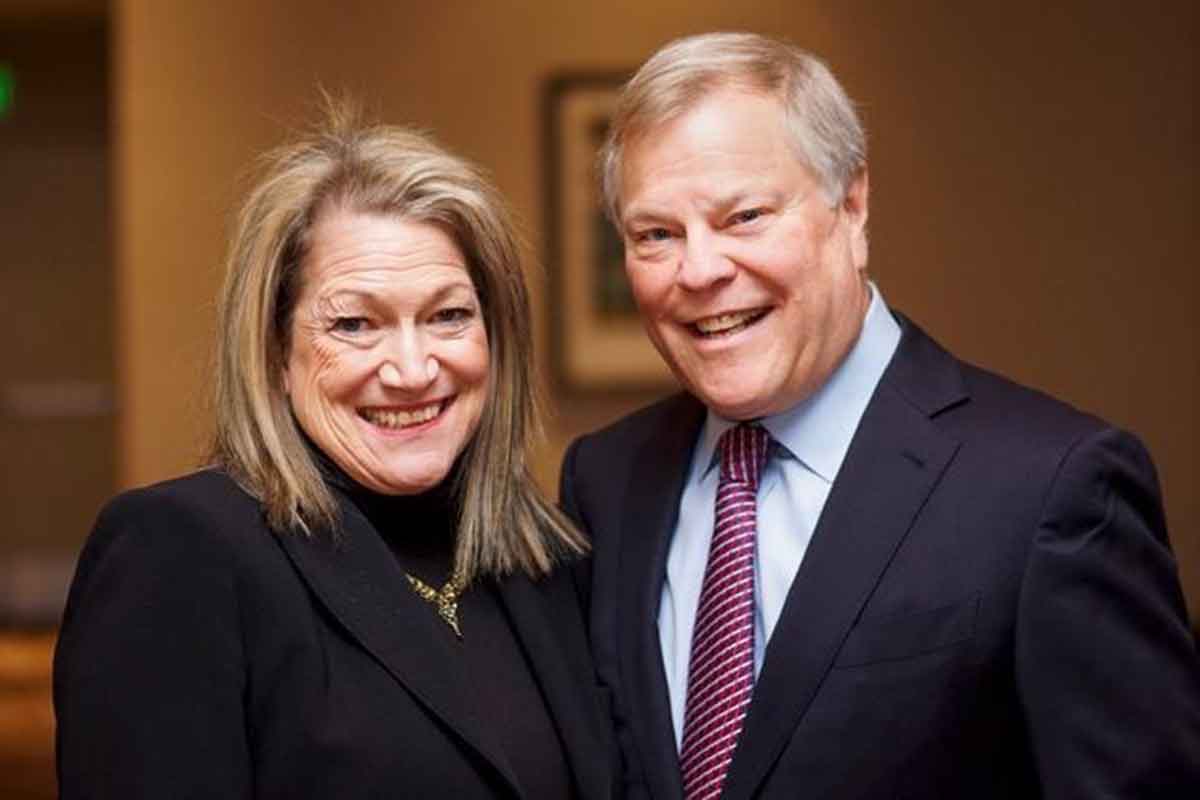
Ben: I think the advantage I had that you didn’t was that I grew up with Gay as my mom. I’ve always said that I’m so fortunate to have gotten my strategic mind from my father and my empathy from my mother.
Both of you have talked about Board leadership as a process of learning and gaining experience. I’m wondering what differentiates the person who can do that—learn from experience—versus the person who does not?
Ben: Humility is a huge piece of this.
Barry: Agreed.
Ben: Running a business, you sometimes must make split-second decisions, and then you move in a very specific direction. When you’re with a Board, not only can you not make decisions unilaterally, but also there are some decisions that aren’t up to you. In the best-case scenario, you have a great professional team who are living and breathing the organization. These are the people who are doing all the hard work, and my role isn’t to come in and tell them what to do, Governance and the strategic planning are important pieces, but you have to have humility to say, “Hey, they’re doing great, where can I support them, and how can I make sure the Board and the professional team are aligned?”
Barry: Humility is really important. I think I would add perspective to that, the perspective you gain from dealing with parents and children and friends, from experiencing social situations, and from running a business. You learn from watching others, some who do things differently, some who do things less successfully.
As Chair of the Rose Community Foundation, I know that having a good Board is important. You need different perspectives. Some of those perspectives come from people earlier in their careers and more recent in their involvement with the organization. Others come from people who are more senior and have long experience and a perspective that comes with knowing the history of the organization. I think the Chair needs to meld all that. Leading means guiding and always keeping the perspective that you want to keep moving forward, not backward.
If you could trade places as Board chairs, let’s say for a week or a month, what would your primary focus be? Barry that means you would be Chair at JEWISHcolorado, and Ben, that means you would be Chair at Rose Community Foundation.
Ben: The Rose Community Foundation does amazing work, and they have great communal relationships that are not Jewish. I know that Rose is already working on this, but if I had a month there, I would focus on building even more allyship with other non-Jewish communities as quickly as we can. Especially with where we are in the world right now, we need to be working with as many minority communities as we possibly can, as well as the broader community, and I think Rose has a unique way to do that. If I had a month at Rose, I would probably double down on the efforts that I know Lindy (Eichenbaum Lent, President and CEO of the Rose Community Foundation) and the great team at Rose are already doing to build allyship quickly.
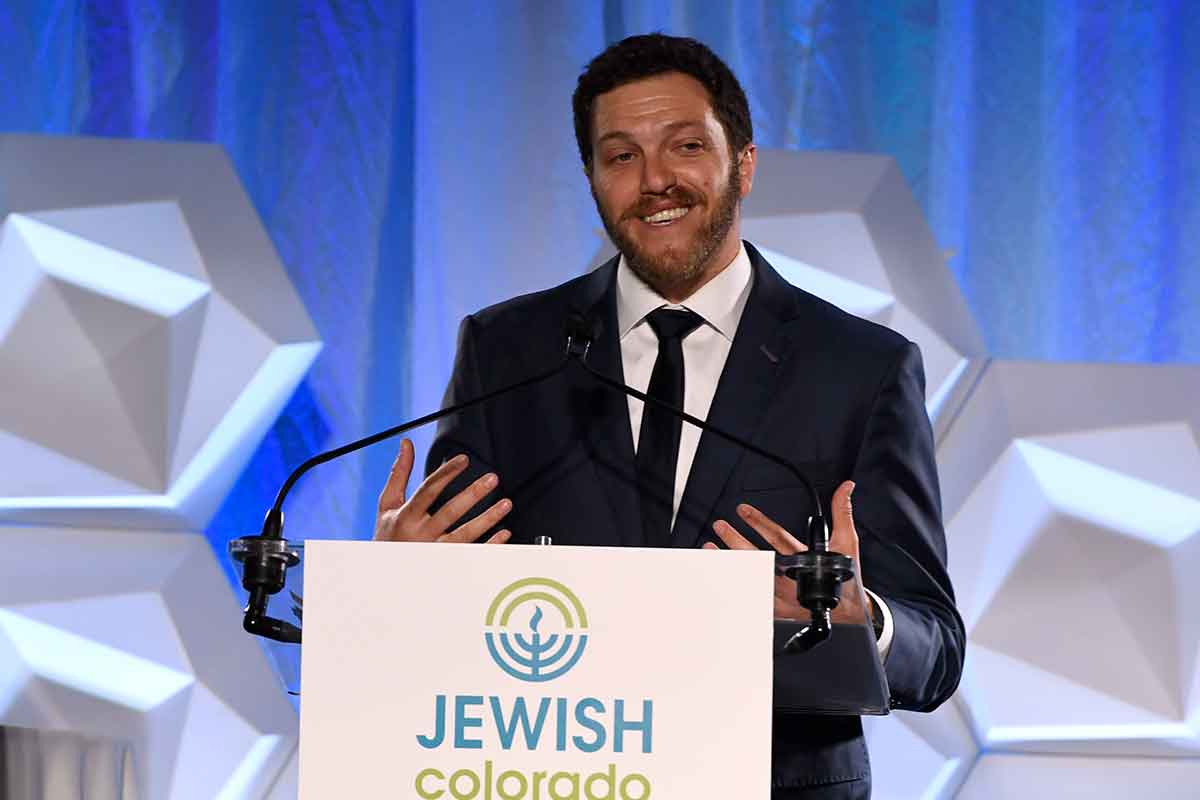
Barry: I think the Jewish community is facing fracturing right now, fracturing with our Israeli kin, fracturing young and old, fracturing right and left. There’s a lot of dynamics that are pulling it apart, and I think it’s critical for our future health to not allow that to happen. We need to have a big tent and have people within it. We have to think about how we build commonality. If I were Chair at JEWISHcolorado, accomplishing that in a month is a whole different matter, but I think that would be my focus, which is interesting.
Ben: Yes, it’s interesting, because it’s the inverse of what I would do at Rose. This is such a great example of why we need both of these organizations. Your answer was, “I see internal struggle within the Jewish community, and JEWISHcolorado is right at the center.” And my answer was, “I see external struggle that we need to get our arms around, and Rose is right at the center.”
I will also say, for the record, Rose Community Foundation and JEWISHcolorado have come a long way over the past five years. These organizations are now working together in a really wonderful way, and that didn’t happen by accident. Renée (Rockford, President & CEO of JEWISHcolorado) and Lindy each deserve a lot of credit.
We know how much of yourself you invest in being a Board leader. What do you get out of that investment?
Barry: There is a feeling of accomplishment when I feel that I’ve done well working with the professionals in the organization and with my Board. We make progress, we resolve issues, and we do things to make the organization better going forward. It feels good to see success and to have a leadership role, although I know it’s not just my work by any means. I also like the continued learning, the knowledge, and the personal growth that come with serving as Board Chair.
Ben: I also like the feeling of accomplishment. Especially over the past decade, my Board experience has really been with Jewish organizations and that has given me a sense of both fulfillment and obligation to be a part of that communal chain that continues to strengthen the Jewish community. Knowing that my grandparents were involved in Federation, and my parents were involved in Federation, and I’m involved in Federation, and each time we’re here doing something that’s meaningful to the Jewish community, that gives me a sense of purpose. For all of us in the Curtiss-Lusher family, I think we’ve practiced our Judaism through our nonprofit work. Volunteering absolutely has been, and it is still now, how I feel connected to the Jewish community.
Barry: It is really wonderful for me to hear you say that, because for forever, your mom and I have talked about how proud we are of you and what you do as a leader in the community, as well as what you’re doing in the business world and how you are a wonderful father and husband. To think about this as our legacy—not just you, but also our grandchildren—that’s what one hopes for when you’re 75 years old.