



In recent years, Northern Colorado and Southern Wyoming have seen steady growth in Jewish population and engagement, and now three congregations are celebrating the arrival of new rabbis in recent months. Dr. Julie Lieber, Chief Jewish Life and Engagement Officer at JEWISHcolorado, has held regular convenings with leadership at these congregations to support their efforts to grow and sustain a safe and thriving Jewish community outside of a large urban area.
Rabbi M. Robert Delcau, “Rabbi D,” has joined Mt. Sinai Congregation in Cheyenne, Wyoming. Rabbi Julia Spiegel, “Rabbi Julia,” has joined Har Shalom Center for Jewish Living in Fort Collins. Rabbi Natalie Fields, “Rabbi Natalie,” a long-time lay leader and cantorial soloist at Temple Or Hadash in Fort Collins, is now an ordained rabbi. These rabbis come from decidedly different backgrounds, but they share a passionate commitment to their Jewish communities.
Recently, JEWISHcolorado talked with the three rabbis about their backgrounds and hopes for their new Jewish homes.
Welcome! You are still relatively new in your roles—some of you newer than others—but what observations have you already made about your spiritual homes?
Rabbi D: I have discovered a rich history of the Jewish community in Cheyenne. This was a vibrant congregation in the 1950s and 1960s. Then, it started to drop off, and by the 1990s the congregation was much smaller, but a core group of people kept things going. There is tremendous leadership at this synagogue. We have a kosher kitchen here. We have a mikvah in the building. They have now brought me in as the new rabbi and permitted me to do creative programming and collaborations that will show meaningful Judaism throughout the community.
Rabbi Julia: The people here are warm and involved and committed to Har Shalom and to the Fort Collins community. I love that about this community—the intense engagement. There is a close-knit feeling here—a “we have to do it ourselves” ethos. We are not living in a densely Jewish area, so we cannot take anything for granted. There are not 30 sukkahs in the neighborhood, so we need to build it! There is a lot of pride at Har Shalom and determination to find the joy in Jewish life.
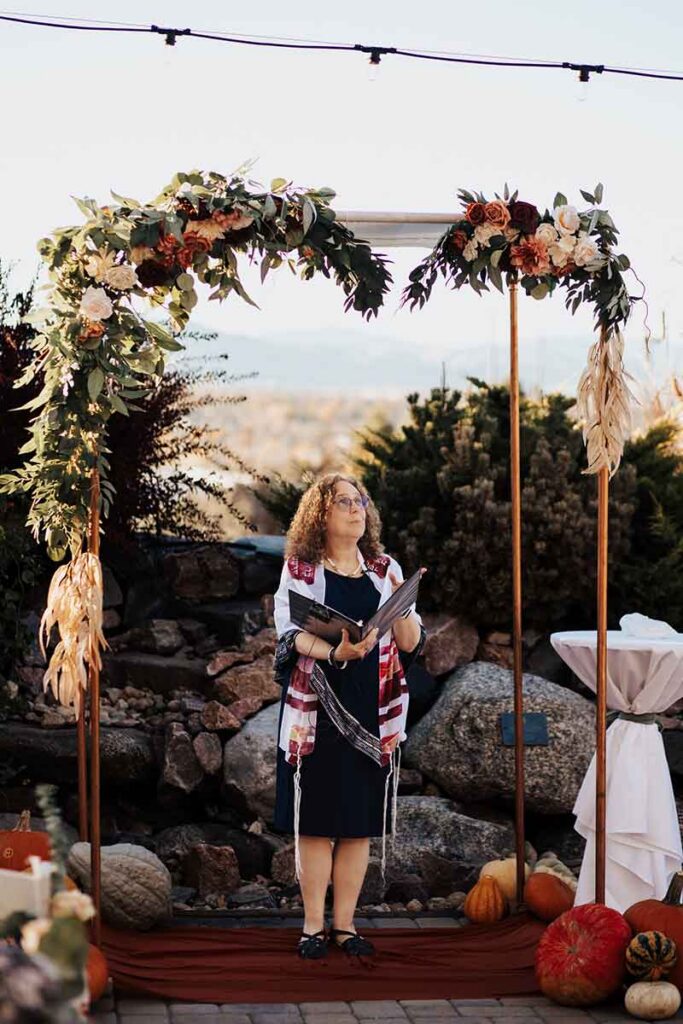
Rabbi Natalie
Rabbi Natalie: Ours is such a welcoming congregation! Lately, we are really working to foster congregant leadership. Members are planning some Shabbat services. We have a member who started a Shabbat Kids Club, a service for children with storytelling and games. We have a Torah study every Shabbat morning. The participants are really well-educated people, and I find that I am stimulated by the conversation and the ideas people bring. We have people who do not have deep Jewish education leading Torah study, because we believe that the rabbi is not the only person who can teach us.
Did you have a connection to Colorado before you took on this new role?
Rabbi Julia: My connection to Colorado started when I was a young professional and before I became a rabbi. I moved from Chicago to Boulder to work at the Boulder Valley Women’s Health Center. It was a chance to do meaningful work, but I found myself building Jewish community on the side, hosting Shabbat dinners and bringing people together in a casual way. I like living in college towns like Boulder and Fort Collins because people are interested in lifelong learning and intellectual engagement.
Rabbi Natalie: I have lived in Colorado for more than two decades. When my family moved here in 2002, I called myself “bi-temple” because I belonged to both Har Shalom and Or Hadash. My children went to Hebrew School at Har Shalom and became a bar and bat mitzvah there, but I worked as a lay leader at Or Hadash. I was married to a rabbi at the time, so it was no surprise when I became more involved at Or Hadash because I have been doing leadership in Judaism since I was a teenager.
Rabbi D: I grew up in Tennessee, but I chose Colorado State University for graduate school in hydraulic engineering because I was already working for the Army Corps of Engineers and everyone who knew what they were doing there had gone to CSU. When I eventually became a rabbi, my first assignment was at Temple Emanuel. I was Rabbi Steven Foster’s last assistant and associate before he retired. It was actually the confirmands at Temple Emanuel who gave me the nickname “Rabbi D.”
For many, the path to the rabbinate is long and winding with stops along the way. For you, were there key moments on that journey?
Rabbi Natalie: Through the years at Or Hadash, I became more and more involved—teaching classes in Hebrew, doing pre-marital marriage counseling, handling more services. But I could not officiate at weddings because I was not an ordained rabbi. In 2018, my son graduated from high school, and I asked myself, “What is my next goal?” Some people suggested to me that I should become ordained, and I said, “No way! Right now, everyone just appreciates me, but if you are the rabbi, everyone thinks that they are your boss!” But over time, the idea of becoming a rabbi would not leave my mind. I was not looking to move and get a pulpit anywhere else. I wanted to gain the knowledge from studying to serve my community better.
Rabbi D: When I was at CSU, I became involved in Hillel of Colorado, and we worked hard to revive the Hillel House and bring it back to life near the campus. We launched a Holocaust Awareness Week, and through that work, I met my first wife. When she was accepted to an education program at Hebrew Union College, we moved to Israel. Before that, I had never thought about becoming a rabbi—I was actually working on my PhD. But in Israel, I studied and prayed and one day, I was talking to G-d, and I asked, “Who is going to teach the next generation of Reform Jews everything that I have been learning about history and prayer?” And that day, G-d said to me, “You are going to do it.” It took a few years, but I could never shake that calling.
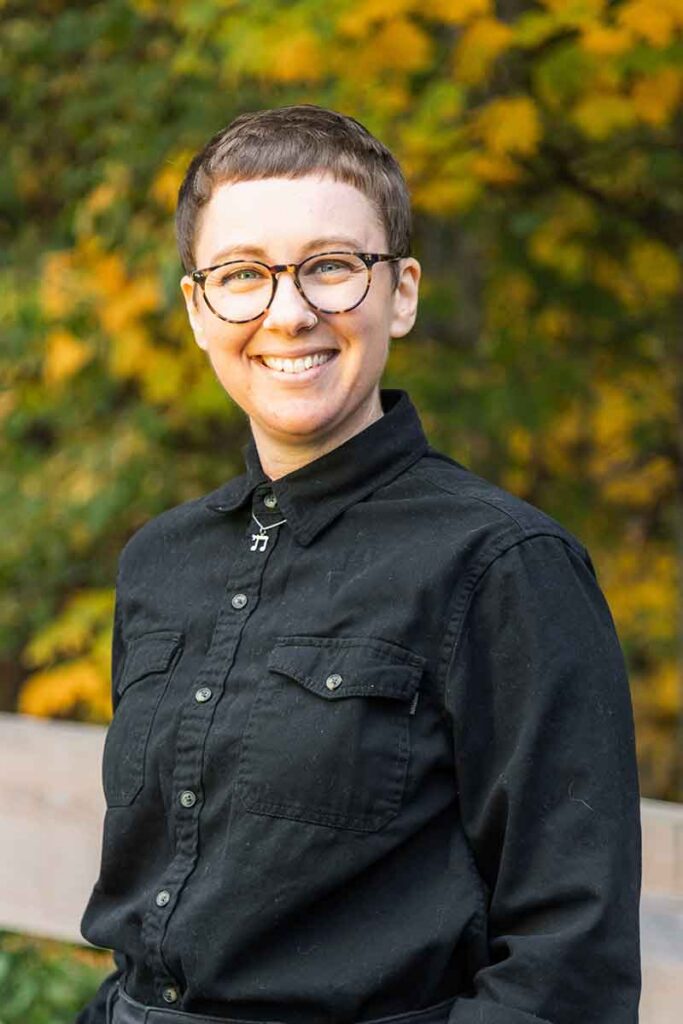
Rabbi Julia
Rabbi Julia: On the one hand, my parents and grandparents were committed to Jewish identity, culture, history, and peoplehood, but on the other hand, they had stepped away from religious practices and religion in general. My first semester at Indiana University I happened to go to an Introduction to Jewish Studies evening presentation, and I became interested in taking classes toward a Jewish Studies major. After I graduated, I took a Talmud for Beginners class at SVARA, a queer Yeshiva in Chicago. I discovered I loved Jewish learning, and I had a knack for it. The teacher saw that I had potential and, as a queer rabbi, she was a model for me. I remember saying to my father, “I think that this is what I want to do.”
Israel is front and center on people’s minds in the world we live in. What is your personal history with Israel?
Rabbi D: I have lived in Israel twice and I call myself a Zionist. I believe the Jewish people must have a national home, a place for our people. I have been very involved in AIPAC and did a lot of lobbying on Capitol Hill as a rabbi. In 2014, I was part of the first AIPAC Rabbinical Advocacy mission to travel to Israel.
Rabbi Julia: I moved to Israel for a year in 2018, and I also spent much of 2024 living there. I have a deep love for Israel. I believe the Jewish people have a right to safety and autonomy. I want everyone who lives in Israel to have safety, autonomy, and equal rights.
Rabbi Natalie: I went to Israel in 1976 when I was 17 years old. It was one of the most significant experiences in my life because it helped me grow and mature. To this day, I believe that unless you go to Israel, you cannot fully understand its deep, long history. It’s fascinating to see that history in person, and it brings Judaism to life.
How did you happen to land in the role that you now hold?
Rabbi Julia: It was very clear from my first interview that the congregation and I were a good fit for each other. It’s something of a cliché, but I see the role of a rabbi as “comforting the afflicted and afflicting the comfortable.” As a new rabbi, that is my goal—to love my people fiercely but to also challenge them to grow. I am very excited and grateful to be here because I feel like I have come home. And I love living in Colorado—there’s just something about the air and the light!
Rabbi Natalie: When I first came to Or Hadash, it was a fledgling community, very small, with perhaps only 10 to 15 people at services. They wanted someone to lead services, but it was difficult to find a full-time rabbi for such a small congregation. I felt comfortable leading services giving D’var Torahs, so gradually I started filling in. When they hired a rabbi, they didn’t want me to leave, so I stayed on as the cantorial soloist. In 2023, I was ordained as a rabbi, and now that I have the official title, I am looking forward to retiring from my full-time professional position to serve more fully as a rabbi.
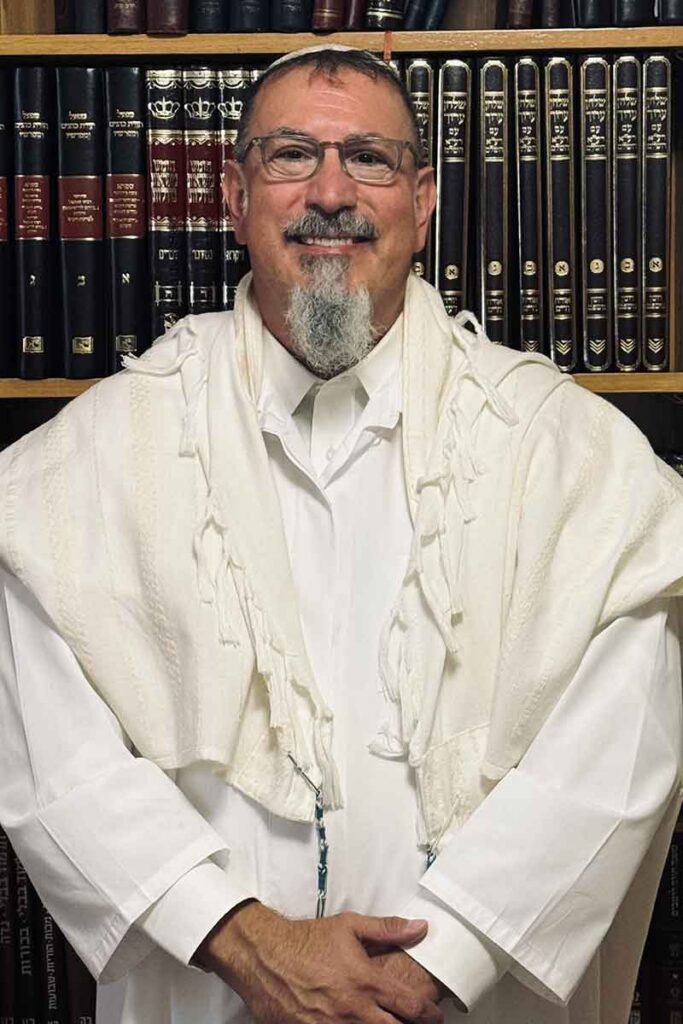
Rabbi D
Rabbi D: I was looking for a place for the next chapter of my life, and Colorado feels like my second home after Tennessee, so I was already thinking about returning to Colorado. I saw it as an opportunity to do what I promised my parents I would do—finish my PhD dissertation at CSU. Then one of my colleagues from rabbinical school called me and said, “The congregation in Cheyenne needs a good rabbi. Can you help them?” It really felt like what I call a “G-d moment,” where things just came together.
As you look to the future, what do you see?
Rabbi D: I believe Cheyenne can become the next great Jewish community along the Front Range. My vision is to create meaningful Judaism that sustains itself throughout Southern Wyoming while welcoming families seeking a warm and loving community. My wife Kelly, our Rebbetzin, and our daughter Lili are an important part of that vision. Together, we hope to build relationships, celebrate Jewish life, and create a sense of belonging across generations. Some congregants have shared with me, “Just by being here, you have reinvigorated us.” Those words are deeply meaningful to me. I want to reciprocate by helping Mt. Sinai Congregation grow, thrive, and build a vibrant Jewish future for generations to come.
Rabbi Julia: There has been a huge amount of growth at Har Shalom even before I arrived, so it is an exciting time to be here because there is so much potential. Congregational leadership and the staff here are amazing. They are both warm and deeply professional—they get things done! I also work with a very committed and responsible board. I hope to see collaboration with other congregations, building relationships across the differences that exist within the Jewish world. Good relationships are important in general—both within our Jewish world and with our neighbors in the larger community.
Rabbi Natalie: From that small congregation that only wanted a simple service, Or Hadash has now grown! We now have 30 to 40 people regularly at services, and they love to include music and singing in their lives. I think the growth is partly a reaction to the advent of social media and the internet. Even before COVID, we had grown more isolated from each other, but especially during COVID restrictions, people began to realize how much they missed being in person with each other. After COVID, we didn’t take our in-person gatherings for granted. With high holidays, with life events like sickness or the anniversary of a loved one’s death, people now realize how important community is.