
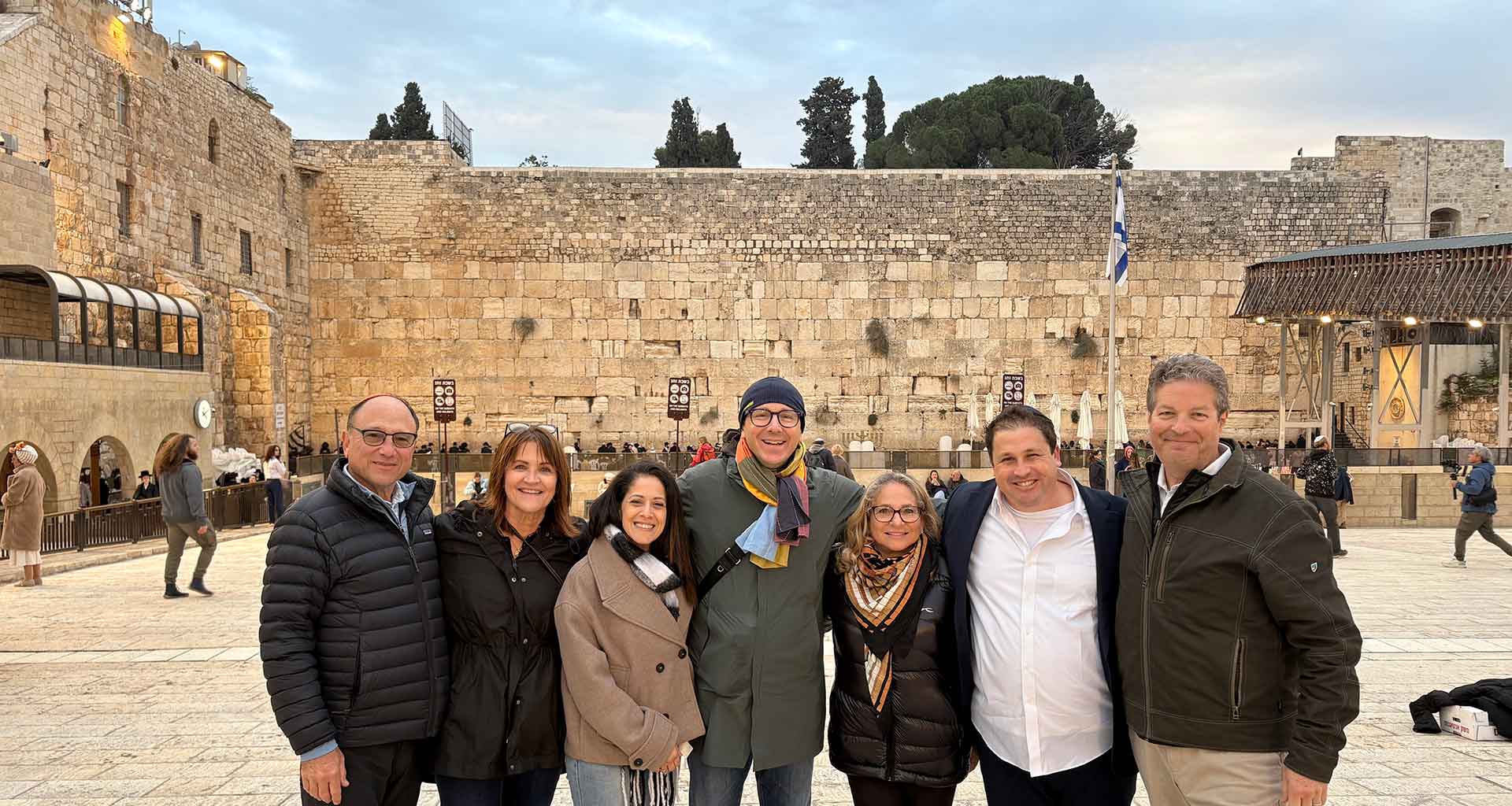





JEWISHcolorado’s 2025 Joyce Zeff Israel Study Tour (IST) with 55 teens left Denver in early June with plans to spend the first week in Poland and then travel to Israel for an additional 4 weeks. On June 13, two days before they planned to leave Poland for Israel, the group awoke to news that Israel had launched a series of strikes against Iranian military and nuclear facilities. Iran retaliated with strikes on Israel. Ben Gurion International Airport stopped all flights, and Secure Community Network (SCN) advised JEWISHcolorado that, in the interest of safety, the trip should return to the U.S.
Understandably, there was disappointment, but in their own words, two participants talk about how their trip to Poland and IST experience took on new meaning even though they were not able to travel to Israel.
Risa Nutt
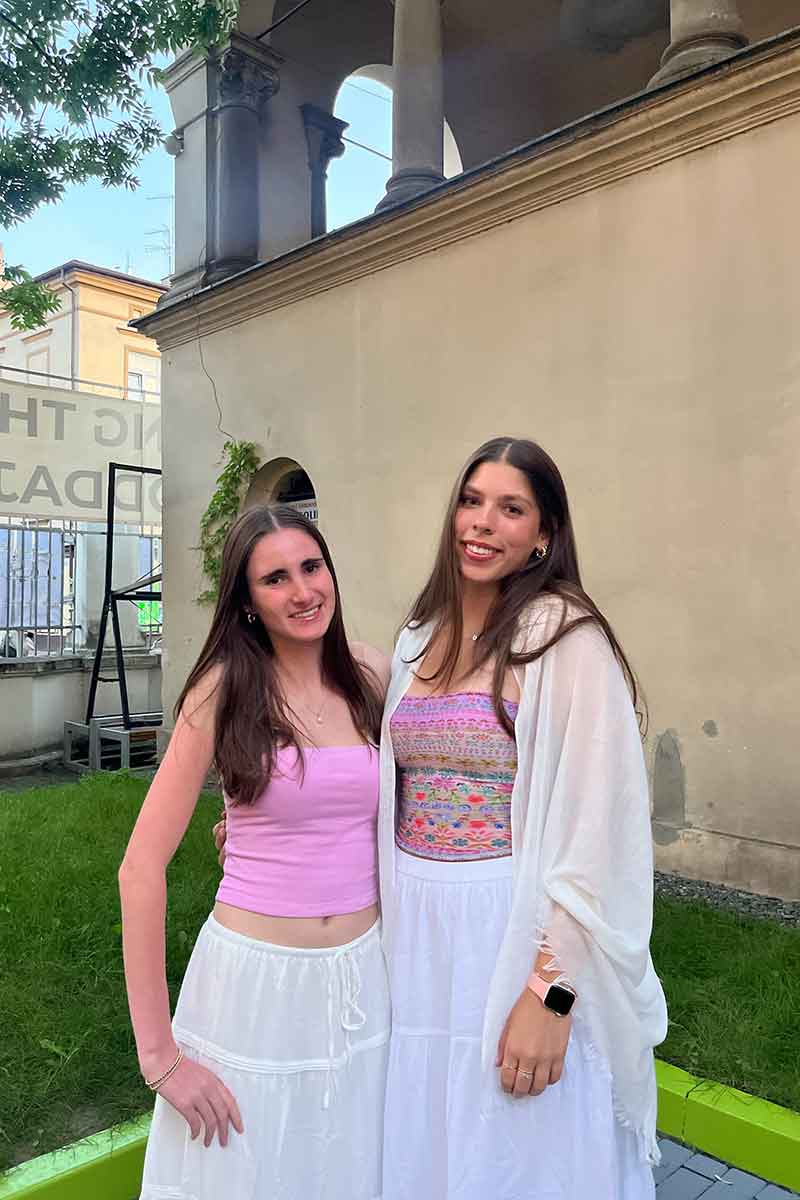
Risa Nutt (right)
I anticipated the Poland part of our trip to be the serious part, a time of learning and experiencing what life was like before the war. I arrived wanting to take time to appreciate what Jews had gone through because I thought that would make our trip to Israel even more meaningful.
The most impactful part of our time in Poland was the opportunity to visit concentration camps. My great-grandmother left Europe right before the war broke out and came to South America and then to America. Had she not done that, I would not be here. Seeing Majdanek and Auschwitz-Birkenau, I realized what she had fled from.
To me, every concentration camp left a different impression.
Auschwitz almost felt like a museum, where every building and room was a gallery designed for tourists.
When you walk into Birkenau, you look to the right and you look to the left, and you cannot see the end of the buildings in either direction. You realize the scope of the effort to dehumanize Jews.
The day we went to Majdanek was raining with a gloomy sky. I had a heavy feeling and a lump in my throat throughout the whole experience. You go in knowing it is going to be difficult, but nothing can prepare you for physically being there and seeing it.
Walking through the gas chambers hit me hard. I realized that every person who went there was not seen as human. Such mass extermination is unimaginable and there it was—right in front of me. One of our Israeli counselors led us in speaking the Oseh Shalom in front of the gas chambers while we were holding the Israeli and the Colorado flags. It was our way of saying that even in the darkest times, Jews are still able to rise as one and find light in a dark situation.
The Friday morning we went to Auschwitz-Birkenau, we got up early. I saw some reports on social media about conflict in Israel, but I thought to myself, “Israel is always fighting for the right to be a state.” I assumed it was just another normal day of self-defense. My mom texted me, “You may not be going to Israel.” I texted back, “I am going no matter what!” But later in the day, we heard the airport had shut down, so we knew we were not going.
I think I went through the five stages of grief, including anger and sadness, after hearing the news. Processing that has taken some time.
I do believe that everything happens for a reason. I think I may have found more meaning from the experience in not going to Israel than if I did go. I learned this very important lesson. Israel was created to be a safe place for Jews. We couldn’t go there because it wasn’t safe. That will always be a reminder to me how much we need Israel to be our safe place.
This wasn’t the trip I was hoping for, but it ended with many things to be grateful for.
Matt Sax
Throughout our trip in Poland, I wondered how I would have felt about the situations that people found themselves in during the war.
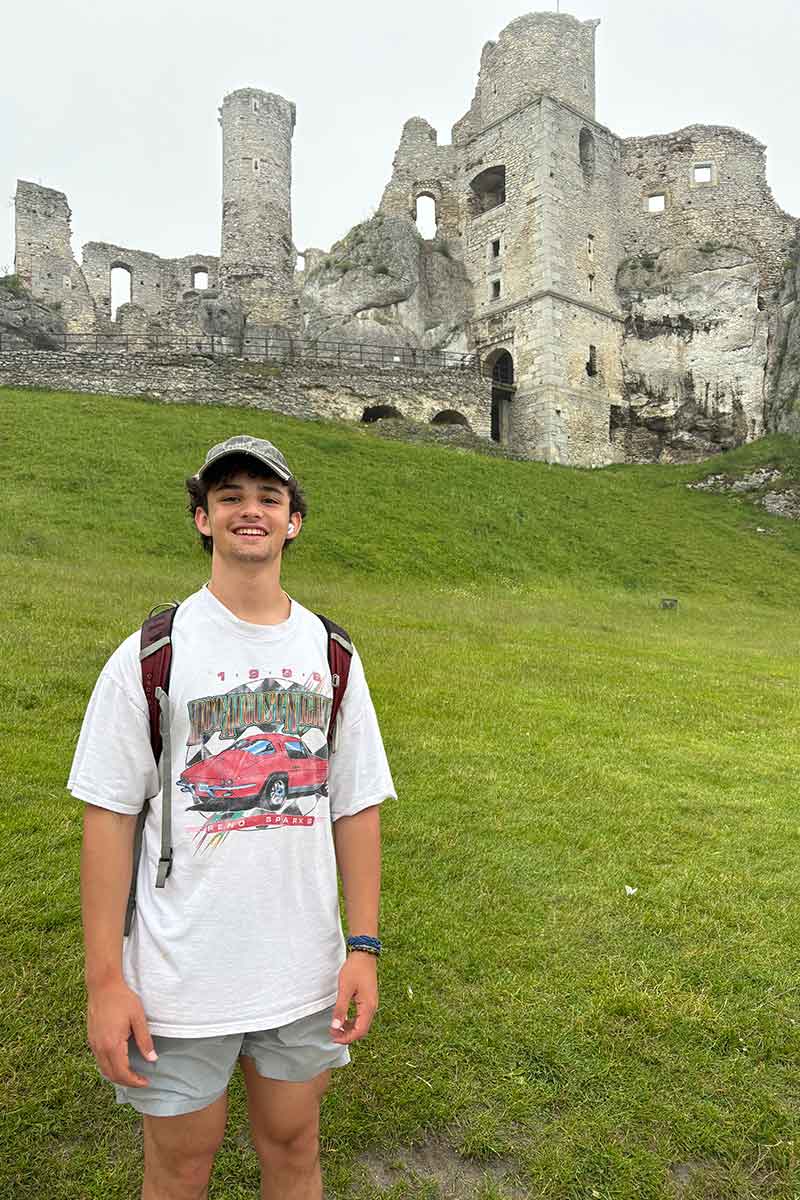 We had the opportunity to walk through the area where the ghetto was in Warsaw and learn about living conditions there. We could see how cramped it would have been. I wondered if people who were forced to live there might have thought they were safe and then slowly realized they had less and less safety. Conditions that seemed tolerable got worse and worse. People started dying. They had no idea what the future held. I could imagine their uncertainty about their fate and their fear of the unknown, and that really left an impression on me.
At Auschwitz, we saw a display of people’s personal belongings that were confiscated—their shoes and their eyeglasses. I realized that each of those people had their own lives and thoughts. They were like me. They had a fear of death, and then they died.
At Birkenau, the barracks felt even more frightening because of the enormous scale of the camp and its sole horrific purpose—to exterminate people.
At Majdanek, I read a story of a mother and daughter. They were forced to dig a ditch for bodies and then climb into the ditch. The mother put her hand over her daughter’s head and told her it would be okay. Then she felt the bullet go through her hand, killing her daughter. I am close with my mother, so that story felt personal, and I could imagine what a terrible feeling that was for the mother.
When we heard the news that we would not be going to Israel, I could understand why people in the group were very sad. I had been to Israel two years ago on another trip right before October 7th. I was looking forward to going back because I was curious about how things might have changed since the war started. My mother was also sad that we could not go because she wants me to love Israel, and she believes the best way to have that experience of loving it is to see it with your friends.
After we returned home, we got a chance to spend another weekend together at CSU Mountain Campus. It helped reinforce that the mission of IST is to create community—in this case among Jewish teens. On the trip, I made connections with people I didn’t know, and I made stronger connections with people I did know. We ended the trip with a greater sense of Jewish pride.
This experience taught me that you can’t necessarily count on everything in life, so you should make the most out of the experiences you do have. Traveling to Poland was a reminder of how valuable Israel is to the Jewish people because it’s a place where people can live without fear of families being torn apart.