






As we mark the anniversary of October 7, JEWISHcolorado is sharing the story of four Denver women who found a deeply personal way to honor the memory of Shiri Bibas and her young sons, Ariel and Kfir.
Shiri, Ariel and Kfir were abducted from their home in Kibbutz Nir Oz on October 7, 2023, they were murdered by Hamas. Their story resonated around the world, particularly with parents who saw in them an ordinary young family caught in unimaginable circumstances.
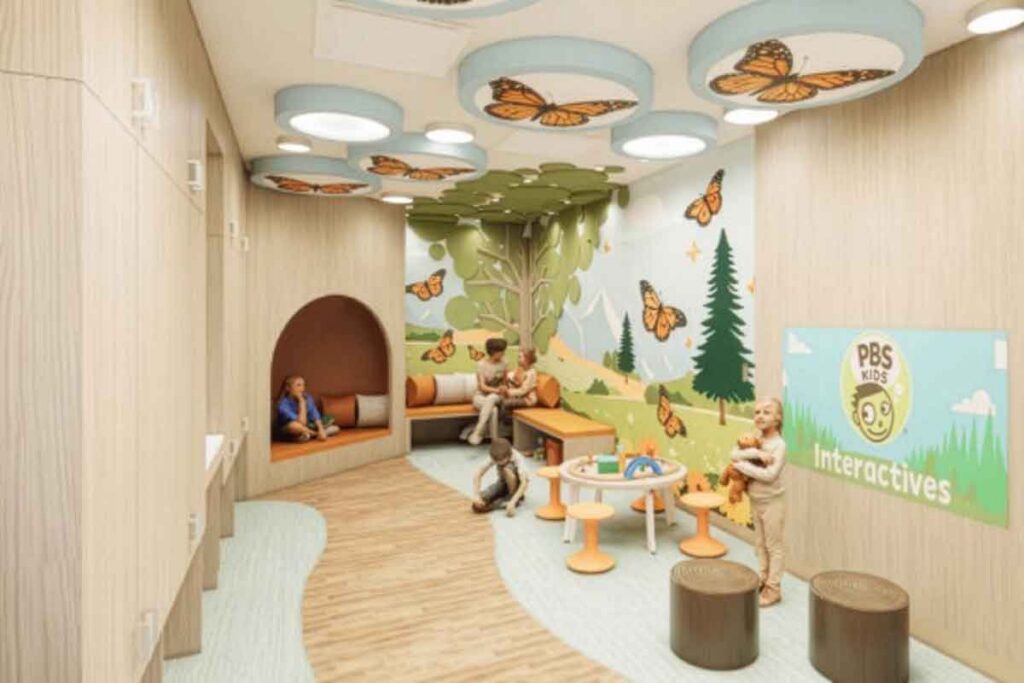
For Efrat Ben-Shitrit, Alyce Blum, Danit Damari, and Aliza Scheier, remembrance ultimately became action: an effort to transform the pediatric Child Life Playroom at Denver Health into a welcoming space where hospitalized children can play, create and simply experience being children.
The project has already inspired 206 gifts totaling nearly $69,000 toward the planned renovation. We spoke with the four women about how the idea began and what they hope this space will mean for children and families in Denver.
How did this project first come together, and how did each of you become involved?
For Efrat, the idea began with her own experience as a new mother. Her son Ray was just 10 months old on October 7, close in age to Kfir.
“There were moments when I could hardly look at Ray, because I would see Kfir in him and start to cry. Their story stayed with me constantly, even here in Denver, far from Israel.”
She began thinking about how that grief might be transformed into something that could help other children. Danit recalls Efrat approaching the group after learning about similar projects created in Israel in memory of the Bibas family.
For Danit, the idea immediately connected to her own family’s experience.
“I spent many years in hospitals with my younger son, so I know firsthand how important a functional, welcoming playroom can be for a child and their family during difficult times.”
They learned that Denver Health’s pediatric playroom had gone decades without a major renovation and began imagining what could take its place.
Aliza, a former child life specialist and mother of four, saw an immediate connection between her professional experience and the project.
“Hospitals, children, and helping kids cope during really difficult moments were a huge part of my life. When the idea of the playroom came together, it immediately felt like something I was meant to be part of.”
Alyce joined later, after a mutual friend connected her with the three women. Initially asked to help with marketing and outreach, she quickly became invested in the larger vision.
What struck her most was the decision to undertake the project at Denver Health, where the room would benefit children throughout the broader Denver community.
“Their vision was to take something deeply rooted in their Jewish values and create a space where any child, any family, any person walking through Denver Health could experience the benefit of that generosity.”
Why did creating a space for children feel like the right way to honor Shiri, Ariel and Kfir?
All four women came back to the same idea: childhood.
“Shiri was a mother, and Ariel and Kfir were children,” Efrat said. “I wanted their memory to be connected to childhood, imagination, and life.”
Aliza described wanting to create something associated not only with loss, but with the ordinary experiences that should define childhood.
“A playroom felt so fitting because it gives kids a chance to just be kids, even when they are going through something scary or difficult.”
For Alyce, the room represents an opportunity to respond to darkness by deliberately creating something filled with its opposite: “refuge, light, play, and joy.”
What does it mean to create this space here in Denver after everything that happened in Israel on October 7?
The physical distance between Colorado and Israel came up repeatedly in their responses.
“After October 7, I felt enormous pain even though I was far from Israel,” Efrat said. “Creating this room here gives me a way to do something with that pain in the community where I am raising my children.”
For Danit, who described October 7 as deeply affecting both Israel’s and Denver’s Jewish community, the project connects the two places.
“Creating this space in Denver is our way of connecting our community here with the people and families of Israel, while also doing something tangible and compassionate for children in Denver.”
Alyce, who was born and raised in Colorado and is now raising her own family here, described the room as “one small, tangible way of turning love, grief, and helplessness into something that can actually bring comfort to another child.”
When a child or family walks into the finished playroom, what do you hope they will feel?
“I hope the first thing a child feels is, ‘Oh, this is for me,’” Aliza said.
Having worked as a child life specialist, she has seen how play can restore a sense of normalcy and control during a frightening and uncertain experience.
Efrat imagines a child choosing a game, laughing or simply sitting with their parents without thinking about the next treatment. Danit hopes families encounter “warmth, happiness, comfort, and a sense of escape from the hospital environment.”
And Alyce hopes the room offers something very simple but powerful: “To laugh. To imagine. To connect. To breathe. To feel safe.”
Has anything about the response to this project surprised or especially moved you?
The women say the response has extended well beyond those who initially conceived the project.
More than 200 gifts have already been made, ranging in size but sharing the same desire to help bring the room to life.
“The story of the Bibas family is deeply personal and painful to me,” Efrat said. “Seeing others give their time and support to children they have never met gives me hope.”
For Aliza, seeing people donate, share the project and offer their expertise has demonstrated the power of community: “There has been so much sadness surrounding the reason this project exists, so seeing that sadness turn into generosity and community has been incredibly powerful.”
Alyce has been particularly moved that the response has reached beyond Denver’s Jewish community.
“This room is rooted in Jewish love, Jewish values, and Jewish remembrance. But the people who will benefit from it aren’t only Jewish. They are children and families from the entire community that Denver Health serves.”
As we mark the anniversary of October 7, what do you hope people will take away from this project and the way it remembers Shiri, Ariel and Kfir?
Again, the four women returned to a shared hope: that Shiri, Ariel and Kfir be remembered not only for what happened to them, but for the lives behind their names.
“I hope people remember Shiri, Ariel, and Kfir as people and as a family, not only as names in a terrible story,” Efrat said. “We cannot change what happened to them. We can choose what to do with their memory: care for children who are here today and bring a little light into their difficult days.”
Aliza hopes that someday their names will evoke not only heartbreak, but the sounds of children “laughing, playing, creating, and feeling safe.”
For Alyce, that is ultimately what the project has come to mean:
“Remembering doesn’t have to mean remaining in the pain. Sometimes, remembering can be an invitation to build something beautiful in their honor.”
Learn More
The Child Life Playroom will provide children receiving care at Denver Health with a welcoming space for play, creative activities and connection. The vision includes developmental play, gaming, music, art and other elements designed to give children a sense of normalcy during a hospital stay.
If you would like to learn more about the Child Life Playroom project or ways to support the effort, please contact Daphna Strelitz.