


During Winter Break, 20 CU Boulder student leaders, most of them non-Jewish, traveled to Israel with CU Boulder Hillel and The Jewish Agency Israel Fellow, Lachan, on the Maccabee Task Force: Perspectives Trip. Maccabee Task Force was created in 2015 to help combat antisemitism on college campuses. The trip took students across Israel and the West Bank to holy sites for Christian, Muslim, and Jewish people, where they heard personal stories from people living through ongoing conflicts and also engaged in wide-ranging conversations with Israeli cabinet members, journalists, Palestinian activists, and Druze communities. We talked to two sophomore participants, Daisy Hodsdon and Fred Zorgdrager, about their reaction to the trip when they returned to campus.
What prompted you to become interested in taking this trip to Israel?
Daisy: I have always been very interested in geopolitics, especially in the Middle East. I am fascinated by how so many people with very different backgrounds but with deep connection to Israel can co-exist in the country. I grew up Christian, but I have an open mind to the beliefs of other religions. A lot of people in my family have traveled to less common places, and I wanted to follow in their footsteps.
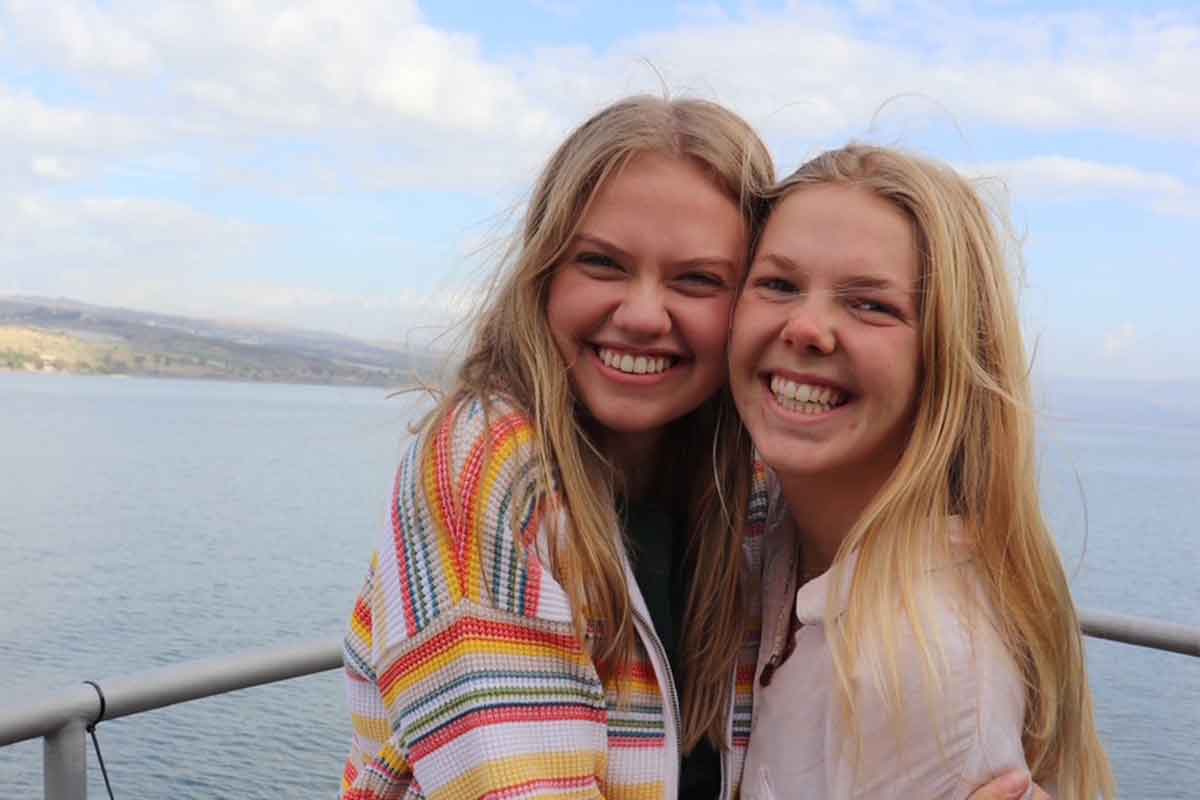
Daisy Hodsdon (left)
Fred: I heard about the trip through a past Perspectives Trip participant at Young Life, a Christian student ministry on the CU Boulder campus. I am always politically curious and interested in conflicts around the world, and I wanted to learn more about the geopolitics of Israel’s conflict with Gaza. I also wanted to see the different religious sites in Israel. Normally, my family doesn’t travel outside the U.S., so part of the appeal of this trip was to experience a part of the world I had never seen.
What experiences will stay with you long after you returned? This could be a person, or a place, or a moment from the trip.
Fred: Within the first day of our arrival, we took a Jeep tour with reserve IDF soldiers along the Syrian border. As I talked to our driver, I very quickly realized that I knew nothing about what was really going on in Israel and the Middle East. I tried to do research before I went, and I did know about Gaza and the West Bank, but I didn’t realize the geography—that they are completely separated from each other. There are many things you just can’t understand from an online search. Being there, I also realized that if you are getting politically charged information from the media, you are not learning facts—you are learning soundbites.
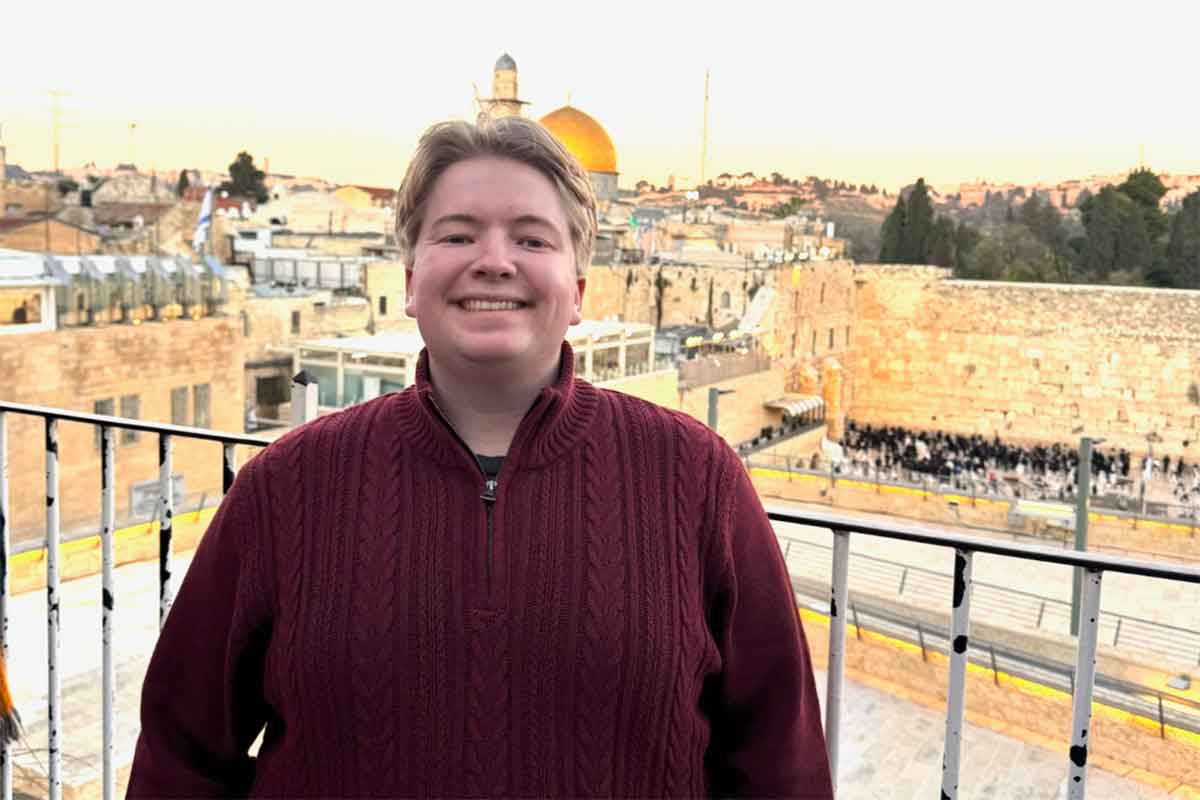
Fred Zordrager
Daisy: I was struck by how small Israel is. I can’t imagine anyone taking over the United States because it is so big. But Israel felt vulnerable because it is so small. We went to the site of the Nova festival and to Kibbutz Kfar Aza, and we talked about the Hamas terrorist attack. Much of what I learned was new to me. I had a general idea of what happened on October 7th, but what I knew was very limited compared to what I learned in Israel.
Fred: As we walked through the pictures of the victims at the Nova Festival Victims Memorial, I saw a family surrounding one picture. The mother was crying. That really brought this conflict home to me. Their grief taught me that the pain continues. I thought about my mother and how much she loves me and how devastating it would be to have her child murdered in a place that she thought was safe—and then to have to go back to that place. Seeing the videos that Hamas made on October 7th was tough, but they contradict what many people think, so they are important documentation of what really happened.
Daisy: Going to Temple Mount was very interesting to me. We learned that Jews would have to be accompanied by security and follow strict rules to go there because the area was under Muslim administration. It made me realize that I have never experienced restrictions on my religious practice. It seemed that most Americans would go there and say, ‘This is awful. I have never had to worry about the freedom to practice my religion.’ But I saw the rules governing the Temple Mount as a compromise. It seems that when you have fought over a place of significance so many times, sometimes you must compromise. It made me respect the Jews living in Israel because it seemed to me that they face so many complicated issues and sometimes they just pick their battles.
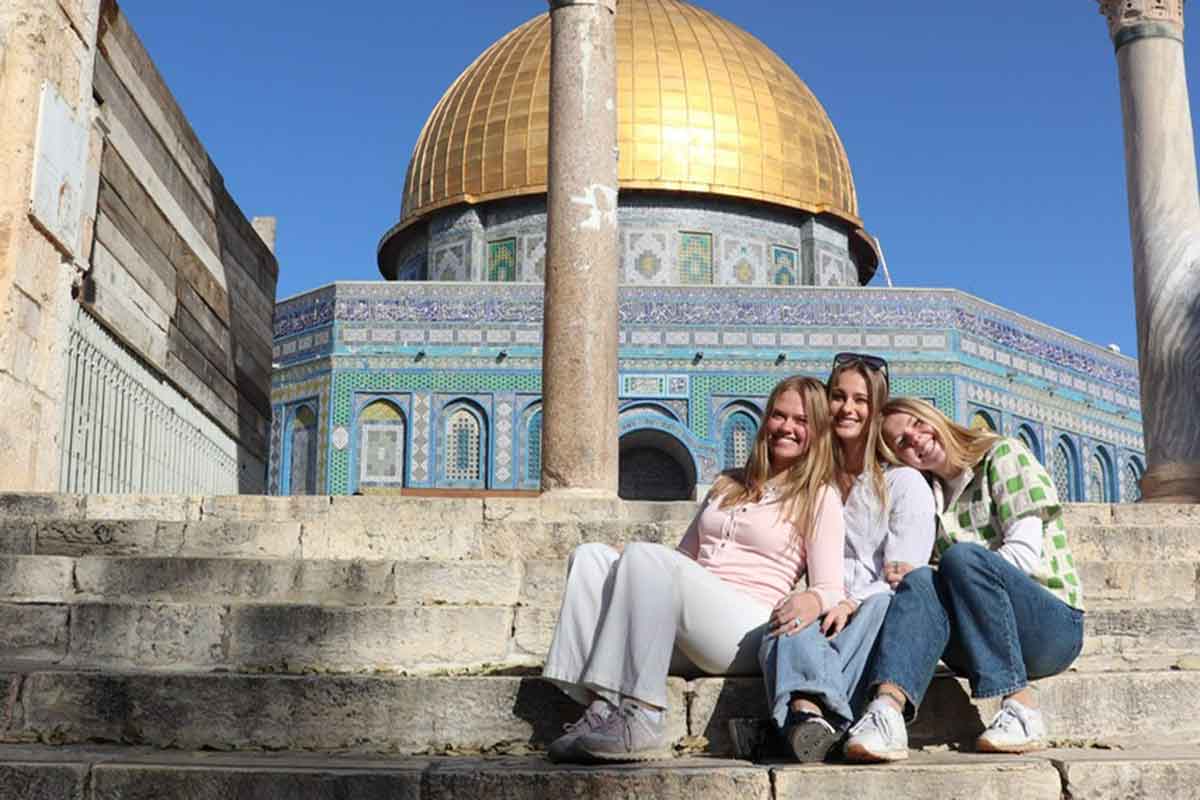
Daisy Hodsdon (left)
Fred: My biggest concern about this trip was that I would get all one-sided information, so I was prepared to parse facts from opinions when I listened to all the speakers. Very quickly, I realized the speakers may have opinions, but they were simply delivering facts. In fact, with many of them, I could not discern what their opinions were. When we went to the border dividing East and West Jerusalem, we had a Palestinian guide and that was a shock because I didn’t think we would hear from Palestinians—especially ones who had critiques of the West Bank, Gaza, and Israel. The list of speakers was curated so well, and they communicated information in such an unbiased way that we were able to trust what people told us.
Daisy: After October 7th, so many people in Israel were connected to at least one person who had been injured or died. The country felt very tight-knit to me, and it was clear that when something like October 7th happens, many people are impacted. Attacks keep happening, and yet people keep living their lives. That was mind-boggling to me. It’s almost like they are always living in limbo. The issues are so complicated and the changes that could make life better are so complex. I think people are always just hoping that someday it will get better.
What was your overall take-away from the trip?
Daisy: Before I went on this trip, I knew that life in Israel was complicated with so many sides of the conflict, but I almost stayed willfully ignorant, thinking that I didn’t have the right to say anything about what is happening. I confirmed my own suspicions by going on this trip. The situation is complicated, but I learned to think critically in a new way, so I do have an opinion now. There is danger in applying your experiences to events happening in another country. I believe that you can’t necessarily trust what you see and read in the media about Israel. I learned about the importance of educating yourself and examining conflicts from different perspectives. Unless you go there, I don’t think you can fathom what it is like in Israel.
Fred: It is hard for people in the West to understand the conflict in the Middle East because we are so fundamentally different. I think it is unreasonable to be on the outside of a conflict and say, “This is the solution.” You cannot push your morals onto a different society and assume they will accept them. The solution that might work where you come from would not work in another very different place. For Jews, whether they are secular or religious, and for Muslims, whether they are secular or religious, Israel is not just a country. It is who they are in their being.
Final thoughts now that you have returned.
Fred: I have become a Maccabee Task Force Fellow, which means I will recruit people to go on next year’s trip. I wanted to do this because the trip was so eye-opening, and I think the people who would find it most eye-opening are the people who are hesitant to go. I know people this year who didn’t apply because they thought the trip would be biased. Those are the people who will still be educated by soundbites, just like I was before I went. At the end of this trip, we were simply better educated. We had people on the trip with strong moral disagreements who were given the same information and drew very different conclusions. That is the beauty of the trip.
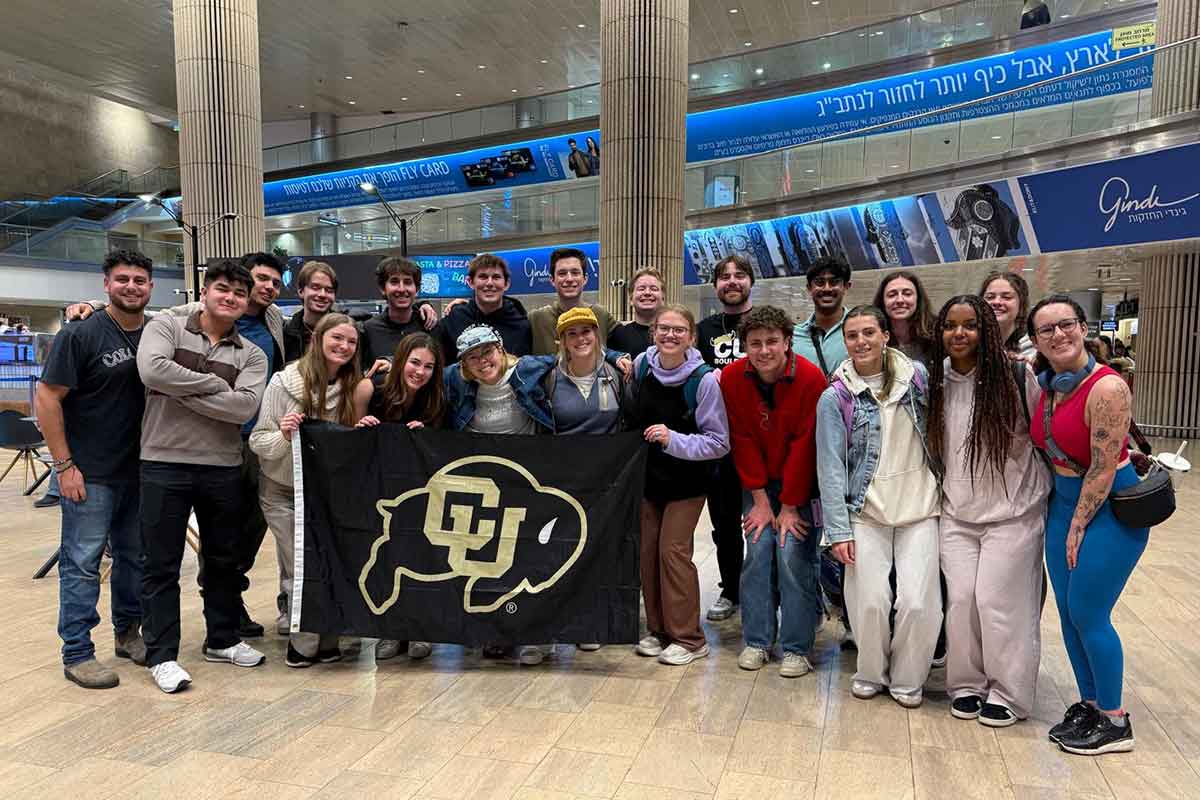
Daisy: I do owe a lot of my intellectual growth to the group that came with me. Everyone was open-minded to what others had to say. It was truly the ideal environment to have good dialogue. I felt so stimulated by other people’s opinions, and I had some of the most intelligent conversations I have had in my life in terms of examining different sides of a conflict. Now that I am back, I am better able to understand news reports from the region. The trip helped me understand how crucial it is to read not just two perspectives on an issue but 10 perspectives, but I know that on this trip, we just scratched the surface of what is happening in Israel.