




The Jewish Federations of North America (JFNA) National Young Leadership Cabinet is the premier leadership training program of the Jewish philanthropic community. Cabinet is known for international study missions, designed to provide first-hand experience with the humanitarian work done by Federation and its partners.
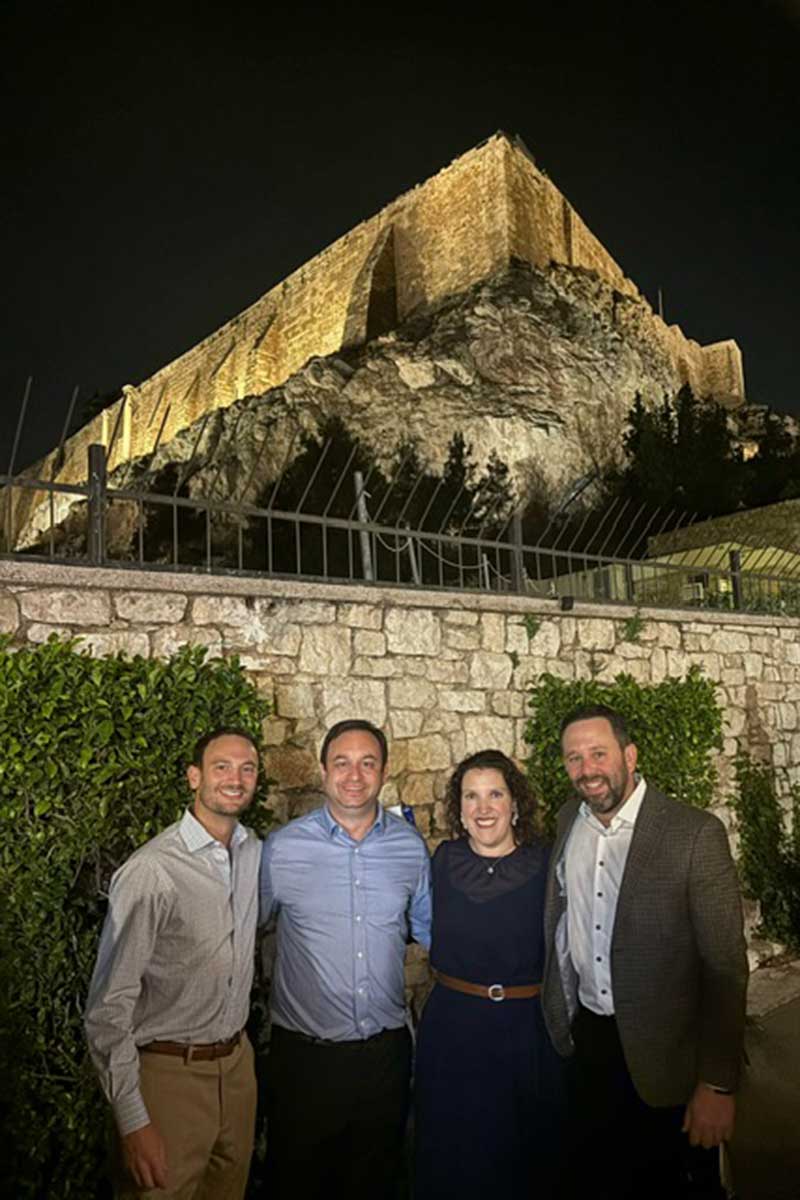
From left: Lou Engleberg, Steven Paletz, Rachel Silvestain, and Loren Knaster
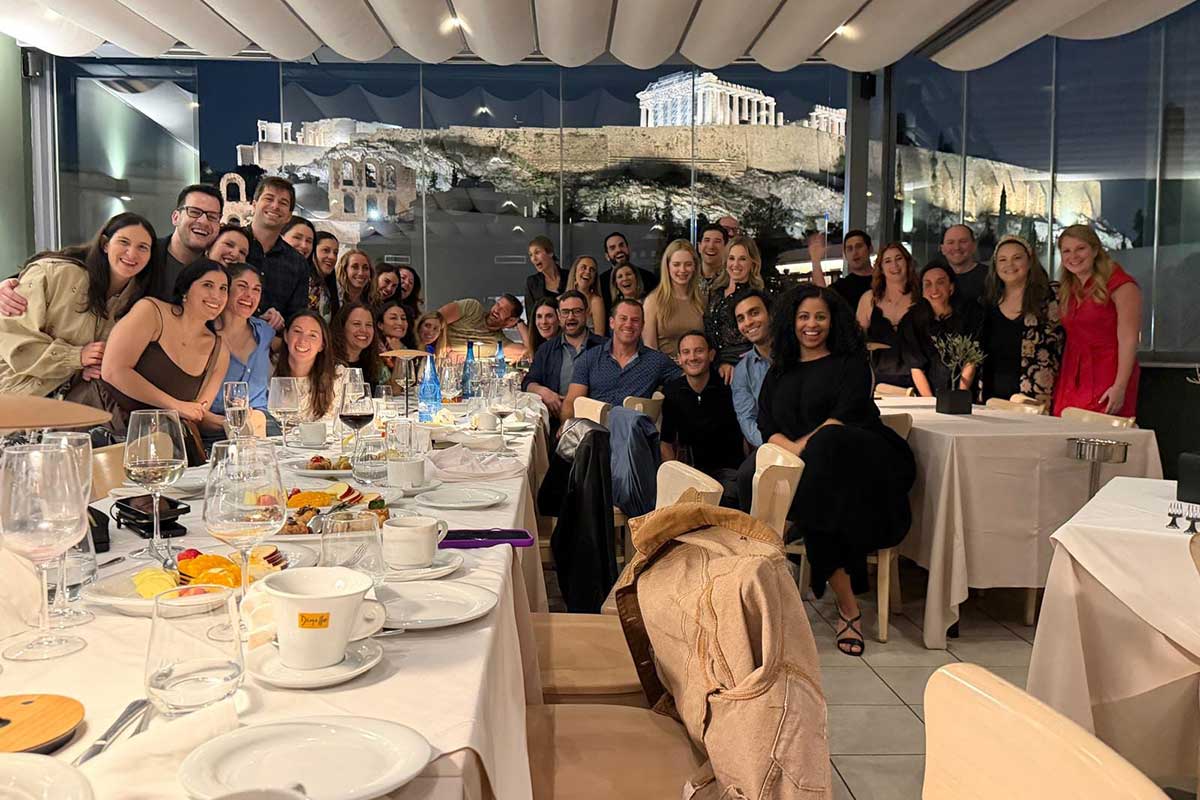
This year, participants traveled to Greece for a week in mid-April. Four members of Cabinet representing JEWISHcolorado—Lou Engleberg, Loren Knaster, Steven Paletz, and Rachel Silvestain—joined the trip. Engleberg is in his second year of Cabinet and was traveling on his second Cabinet trip.
Recently, JEWISHcolorado talked with him about what he learned in Greece and how the experience informed his vision of global Jewish history and philanthropy.
Lou, you joined Cabinet after you had been gone from Colorado for about 12 years and then returned to your home state. What prompted you to join?
I was trying to figure out how to get involved and bring value to my community when Whitney Chotin sat me down and suggested I participate. Whitney is very outgoing and straightforward, and she basically said, “You are going to do this!” She had been very involved in Cabinet, had done many missions and retreats, and had very detailed experience and perspective. She did a great job of describing Cabinet and helped get me to the point where I was as excited as she was. I also had close friends who were interested in joining Cabinet at the same time I was.
What excited you about joining?
This organization is full of young leaders similar to me. In the midst of full and busy lives, we are actively choosing and searching for ways to lean into our communities and Jewish identities. Cabinet checks all those boxes—everything I was searching for—and it includes amazing travel with like-minded folks.
And you have family history with Cabinet, correct?
Yes, my dad, David Engleberg, was in Cabinet 40-plus years ago. I didn’t even know that until I started talking about joining. When he told me about his experiences, I was surprised and even more excited. To me, after talking to him, joining Cabinet was a no-brainer.
Tell me about your most recent mission trip.
I traveled with 126 Cabinet members representing 37 different North American communities to Greece for six days in April. We flew into Thessaloniki where we started our trip.
Why Thessaloniki and not Athens?
That’s a great question and one we were asking ourselves. Thessaloniki was once known as Salonika, and it was the center of Sephardic Jewish life for centuries until, in 1912, it became part of Greece. During World War II, German forces occupied the city. At the time, there were about 56,000 Jews living there, half the city’s entire population. The Nazis transported 96 percent of those Jews to concentration camps and only about four percent of them survived. There are only about 1,000 Jews left in the city today.
How does the city commemorate so many lost lives?
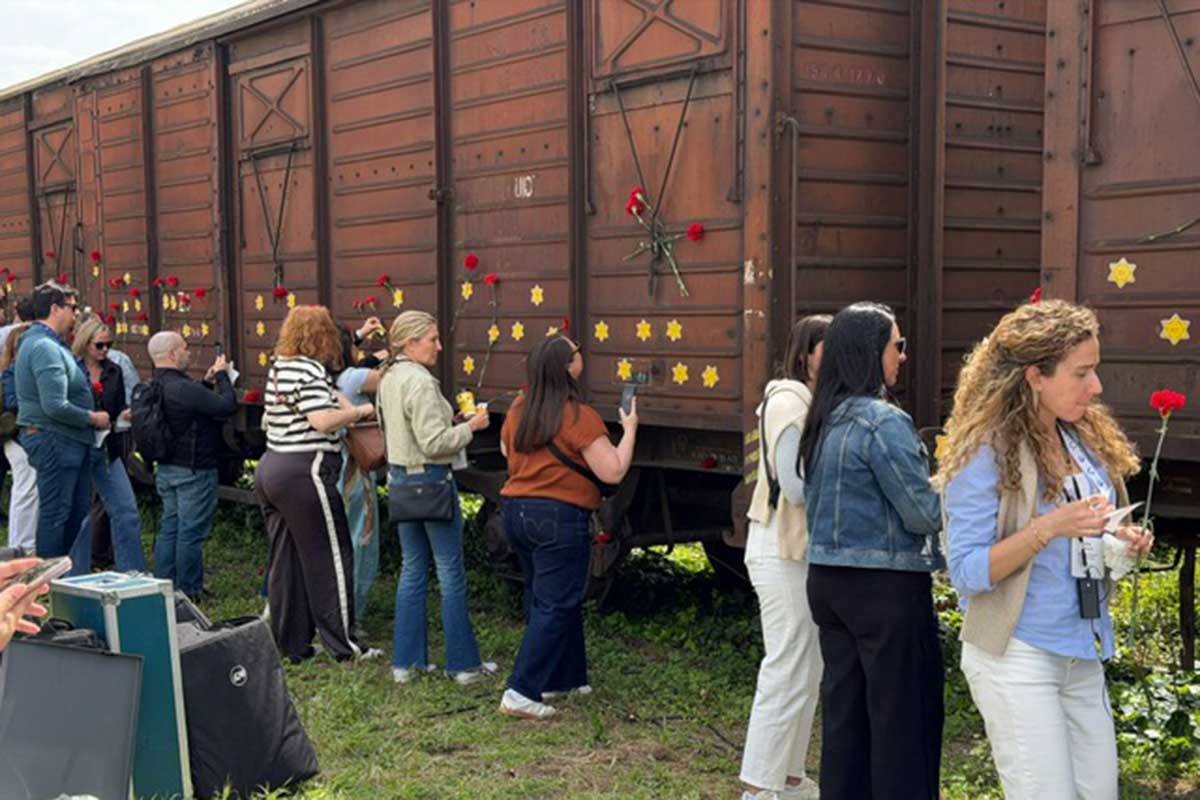
We were there for Yom HaShoah, Holocaust Remembrance Day, so we had the opportunity to bear witness to the tragic history of Jews in this city. They still have the trains the Nazis used on display. We visited that site, and we placed red carnations and yellow six-pointed stars, each with the name of a Holocaust victim, on the cattle cars that transported Jews to their deaths. It was a very symbolic and meaningful experience.
Learning the history of this city must have come as something of a shock.
We had meetings before we left that prepared us, but until you experience the scene and are part of the commemoration, you don’t realize the legacy of the destruction of that community. I think everyone there felt it very deeply. To see first-hand where people were sent to their slaughter reminded me that it is our responsibility to bear witness to the atrocities of the Holocaust and to carry forward the memory of that community and also the communities of our ancestors. It all comes back to “Never forget.”
Any other experiences from Thessaloniki that will stay with you?
We visited synagogues there and also a Jewish museum. At the museum, there were very powerful images of children who died and the items they left behind—bassinets and cribs. It was a stark reminder of how the community was destroyed. But in contrast, we also saw the work of the Federation and the Jewish Agency with Jewish youth and with elderly residents. That was a good reminder of how our donor dollars are put into action around the world.
From Thessaloniki, you traveled to Athens.
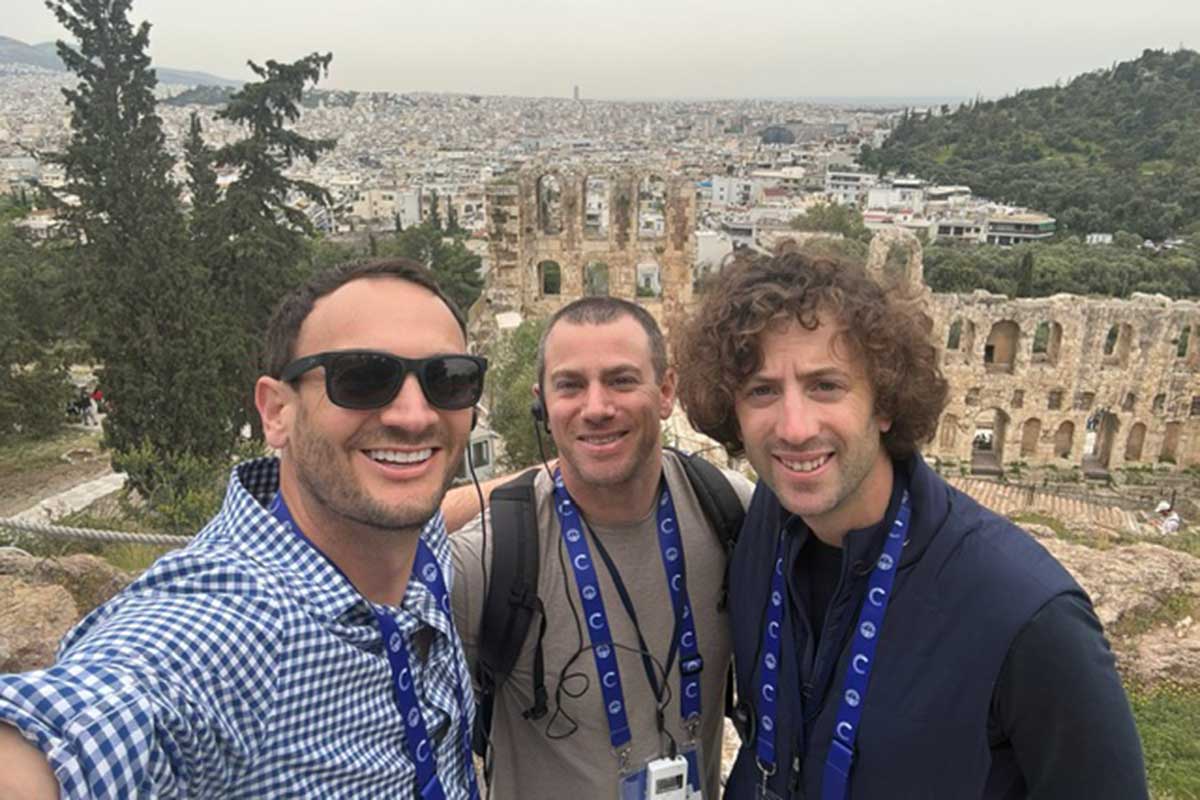
Yes, and there we had dinner with Noam Katz, the Ambassador of the State of Israel to Greece. We also had an evening of great shared fun with a traditional custom where you dance and break ceramic plates. We were singing and dancing, and we must have broken 600 plates. Woven throughout the serious moments on a Cabinet trip, there is bonding and laughter.
How did it feel to be a Jewish group traveling in Athens?
One of the interesting parts of a Cabinet trip is that you get to connect with local people. I met one man and the topic of Israel came up. After a while, the conversation started to turn dark, and he got to a point where he was so angry about actions that Israel had taken that I had to just respectfully end the conversation. The other thing we noticed in Athens was a significant amount of pro-Palestinian and anti-Israel graffiti throughout the city.
How did the group react to that?
People felt fear, which I think is totally natural. We talked about it, and our takeaway was that we were a room of proud and brave Jews. We don’t intend to hide. We will continue to expose society to the existence of proud Jews and fight for Jewish respect and integrity in a way that is intentional and respectful to others.
Has Cabinet fulfilled what you hoped it would be in your life?
Yes, and I would take it a step further. At the end of my first trip, which was to Azerbaijan, I had built connections and friendships with people, and I wanted to spend more time with them. Now, in year two, I get to spend even more time with people I have become close with, and the Cabinet journey becomes more emotional because you know you have a finite amount of time left. In years three through five, I anticipate that the time we will spend with each other will become even more important and precious.